Grease Trap Waste Disposal Control
|
Oil and grease in wastewater arising from normal operations of restaurants and food processing factories will need to be separated out, commonly by means of grease traps, before the wastewater is discharged from the premises. The oil and grease intercepted by grease traps, usually known as grease trap waste, needs to be removed regularly in order to ensure the proper functioning of the grease traps. For details of the maintenance of grease trap, please refer to the booklet "Grease Traps for Restaurants and Food Processors".
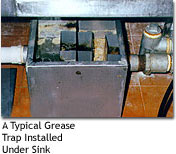
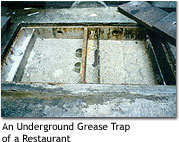
For small grease traps (eg. those installed under individual sinks), the grease trap waste could be removed manually by scooping it into watertight plastic bags and disposed of together with other kitchen refuse. For large grease traps, the restaurants and food processing factories should employ reputable collectors to collect their grease trap waste for proper disposal.
The Government has commissioned a Grease Trap Waste Treatment Facility (GTWTF) housed within the West Kowloon Transfer Station and has been receiving GTW since 2009. An oily by-product would be recovered from the grease trap waste and can be reused as biodiesel, an additive to energetic resources or a raw material in other manufacturing processes.
Grease trap waste collectors are welcome to use the GTWTF now by filling and submitting the application form for registration purpose. Grease trap waste collectors may also arrange for proper disposal of GTW at other GTWTFs.

|
|
|
   
|