Animal Waste Composting Plant (Closed for redevelopment)
Background information
First set up for the 2008 Olympic and Paralympic Equestrian Events in Hong Kong, the Animal Waste Composting Plant (AWCP) located at Ngau Tam Mei in the Yuen Long District was specially designed for treatment of horse stable waste using in-vessel composting technology. Comprising horse manure, straw or paper bedding materials, horse feed, etc., these wastes are rich in organic content and can be converted into useful organic compost suitable for landscaping, horticultural and agricultural uses.
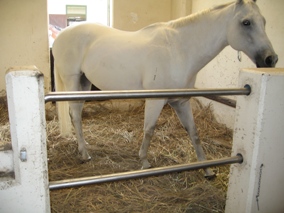

In-vessel Composting
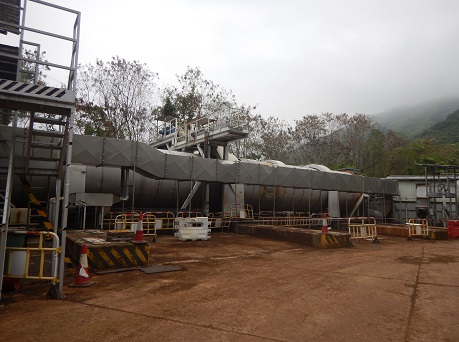
In-vessel composting takes place within a fully enclosed rotary composter. This enables better control of moisture content and temperature during the treatment process.
In-vessel composting also enables:
- Production of a more consistent quality compost
- Reduced use of bulking agent
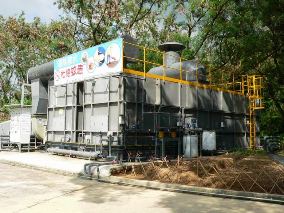
- Better odour control as potentially odorous air from the process can be easily collected for treatment
 |
|
Rotary in-vessel composter
|
Operation Details
Collection trucks deliver the horse stable waste to the AWCP and unloaded at the pre-treatment plant. Here, the unloaded waste is tested for moisture content. Waste is then fed into a hopper and is conveyed through a ferrous magnet separator, a non-ferrous metal separator and a disc screen where metals, non-ferrous materials and plastics in waste are removed. Waste is further mixed by a mixer before feeding by conveyors into the in-vessel composters for around 3-4 days of biodegradation. Odour arising from the process is eliminated by contact de-odourizer. The semi-matured compost is transferred into bunkers for curing about 42 – 45 days. After curing, quality of the mature compost is tested before it is marketed.
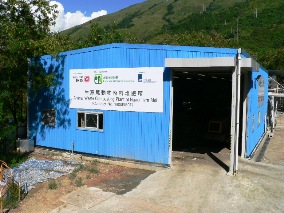
Pre-treatment building where waste is received and pre-treated
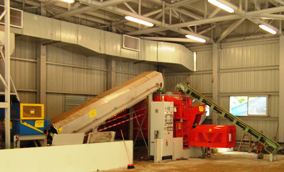
Pre-treatment process for feedstock preparation
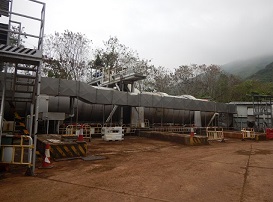
Rotary in-vessel composter where bio-degradation takes place
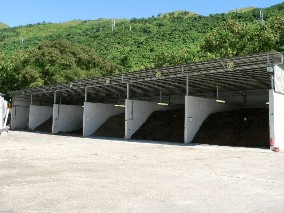
Bunkers for compost maturation
 |
|
|
Deodorisation system using Activated Carbon
|
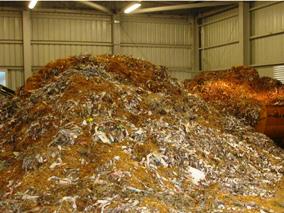
Raw horse stable waste
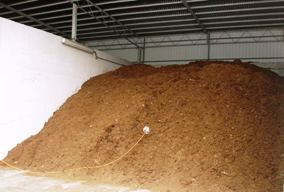
Compost after 33 days
Application for Free Compost
The compost produced in the AWCP is suitable for landscaping, horticultural and agricultural uses. Upon request, compost would be provided free of charge to government departments, schools and organizations recognised as Tax-Exempt Charities under the Inland Revenue Ordinance. Applicants should provide sufficient information to support the applications. Eligible parties shall apply for free compost by completing the "Free Compost Order Form" and send email to free_compost_application_awcp@epd.gov.hk or fax it to us at 3529 2715. The deadline for free compost applications is 2 June 2026.