Why Connect to Sewers?
Waste water, which may pollute the environment and harm your health, should be collected and treated before it is discharged. The most effective and reliable way to dispose of waste water is by connecting to public sewers leading to government treatment plants.
Major benefits of connecting to public sewers are:
- Safer and healthier living conditions;
- A halt to pollution caused by malfunctioning treatment facilities on site;
- No further need to operate, maintain and monitor treatment facilities on site;
- Easier compliance with pollution control legislation.
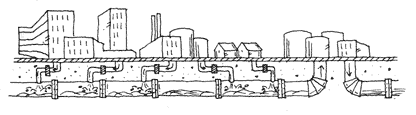
The government has plans to provide new sewers and improve existing public sewers in the territory. Most premises that are not currently served by public sewers will gradually be provided with one. Under the Water Pollution Control Ordinance, the government may send a notice to the owner of certain premises requiring that all waste water produced from the premises be conveyed to a specified location, the terminal manhole, for connection to the public sewer when one is available. It is an offence not to comply with the requirements in a notice. The maximum penalty is a fine of $100,000 and a daily fine of $5,000 if the offence is proved to be continued. In addition, the government may carry out the works on behalf of the owner and recover the costs from him.
note
"owner" in relation to any land, also includes-
"owner" in relation to any land, also includes-
- where the land is government land that is held under a licence or tenancy directly from the government, the licensee or tenant; and
- where the land is government land that is occupied unlawfully or without authorization of the government, the occupier of such land. Sewerage connections would not in any way legalize any unlawful or unauthorized occupation of government land.