8
ecology
(Terrestrial and Aquatic)
8.1
Introduction
8.1.1.1
This chapter presents an
assessment of potential impacts on ecological resources within the assessment
area, resulting from the construction and operation of the Project. The
baseline conditions of ecological components of the terrestrial and aquatic
environment were evaluated based on information from available literature and
field surveys conducted for the purposes of this EIA. Measures required to
mitigate any identified adverse impacts were recommended, where appropriate,
and residual impacts were assessed.
8.2
Environmental
Legislation, Standards and Criteria
8.2.1.1
This assessment makes reference to
the following Hong Kong Special Administrative Region (HKSAR) Government
ordinances, regulations, standards, guidelines, and documents when identifying
ecological importance of habitats and species, and evaluating and assessing
potential impacts of the Project on the ecological resources:
·
Environmental
Impact Assessment Ordinance (Cap.
499), and its subsidiary legislation,
which provides guidelines on the environmental impact assessment process;
·
Technical
Memorandum on Environmental Impact Assessment Process (EIAO-TM) Annex 8, which recommends the criteria to be used for evaluating
habitat and ecological impact;
·
EIAO-TM
Annex 16,
which sets out the general approach and methodology for assessment of
ecological impacts arising from a project or proposal, to allow a complete and objective
identification, prediction and evaluation of the potential ecological impacts;
·
EIAO
Guidance Note No. 3/2010 Flexibility and Enforceability of Mitigation Measures
Proposed in an Environmental Impact Assessment Report, which
provides guiding principles on the approach to assess the recommended
environmental mitigation measures in EIA reports;
·
EIAO
Guidance Note No. 6/2010 Some Observations on Ecological Assessment from the
Environmental Impact Assessment Ordinance Perspective, which
clarifies the requirements of ecological assessments under the EIAO;
·
EIAO
Guidance Note No. 7/2010 Ecological Baseline Survey for Ecological Assessment, which
provides general guidelines for conducting ecological baseline surveys in order
to fulfil requirements stipulated in the EIAO-TM.
·
EIAO
Guidance Note No. 10/2010 Methodologies for Terrestrial and Freshwater
Ecological Baseline Surveys, which introduces some methodologies in
conducting terrestrial and freshwater ecological baseline surveys in order to
fulfil requirements stipulated in the EIAO-TM;
·
Country
Parks Ordinance (Cap. 208),
which provides for the designation and management of country parks and special
areas. Country Parks are designated for the purpose of nature conservation,
countryside recreation and outdoor education. Special areas are created mainly
for the purpose of nature conservation.
·
Forests and
Countryside Ordinance (Cap. 96),
which prohibits felling, cutting, burning or destroying of trees and growing
plants in forests and plantations on Government land. Related subsidiary
regulations prohibit the selling or possession of listed, restricted and
protected plant species.
·
Wild
Animals Protection Ordinance (Cap.
170), under which the designated wild animals are protected from being
hunted, whilst their nests and eggs are protected from injury, destruction and
removal. All birds and most mammals, including marine cetaceans, are protected
under this Ordinance.
·
Protection
of Endangered Species of Animals and Plants Ordinance (Cap. 586) gives effect to the Convention on International Trade in
Endangered Species of Wild Fauna and Flora (CITES) in Hong Kong. It restricts the import and export of species
listed in CITES Appendices so as to
protect wildlife from overexploitation or extinction. The Ordinance is primarily
related to controlling trade in threatened and endangered species and
restricting the local possession of them.
·
Town
Planning Ordinance (Cap.
131), which provides for the designation of Coastal Protection Areas, Sites
of Special Scientific Interest, Conservation Area, Country Park, Green Belt or
other specified uses that promote conservation or protection of the
environment.
·
Town Planning Board Guidelines No. 12C for
Application for Development within Deep Bay Area under Section 16 of Cap. 131,
under which the Wetland Conservation Area and Wetland Buffer Area are
designated to conserve the ecological value of the Deep
Bay Area and prevent habitat fragmentation from
development. The guideline also details the precautionary approach to conserve
the ecological value of fish ponds and principle of “no-net-loss in wetland”.
·
Chapter 10 of the Hong Kong Planning Standard and Guidelines (HKPSG), which covers planning considerations relevant to
conservation. This chapter details the principles of conservation, the
conservation of natural landscape and habitats, historic buildings,
archaeological sites and other antiquities. It also describes enforcement
issues. The appendices list the legislation and administrative controls for
conservation, other conservation related measures in Hong Kong and Government
departments involved in conservation.
8.2.1.2
This section also makes reference
to the following international conventions and national legislation:
·
The International
Union for Conservation of Nature (IUCN)
Red List of Threatened Species, which provides taxonomic, conservation
status and distribution information on taxa that have been evaluated using the IUCN Red List
Categories and Criteria. This system is designed to determine the
relative risk of extinction, and the main purpose of the IUCN Red List is to catalogue and highlight those taxa that are
facing a higher risk of global extinction. The IUCN Red List also includes information on taxa that are either
close to meeting the threatened thresholds or that would be threatened were it
not for an ongoing taxon-specific conservation programme.
·
The People's
Republic of China National Protection Lists of Important Wild Animals and
Plants, which lists detailed Category I and Category II key protected
animals and plant species under Mainland Chinese Legislation.
·
The Convention
on Biological Diversity (the CBD),
which opened for signature at the Rio Earth Summit in 1992 with three main
objectives: to conserve biodiversity, to ensure sustainable use of the
components of biodiversity, and to share the benefits arising from the use of
genetic resources in a fair and equitable manner. There are currently over 190
Parties to the Convention, including China. In May 2011, the CBD was formally
extended to Hong Kong. The Environment Bureau and the Agriculture, Fisheries
and Conservation Department have embarked on an exercise to develop a
city-level Biodiversity Strategy and Action Plan (BSAP) under the CBD.
·
The
Convention on Wetlands of International Importance (the Ramsar Convention), under which Mai Po
Inner Deep Bay was declared a Wetland of International Importance (a Ramsar
site) in 1995. The Ramsar Convention
enters into force in Hong Kong in July 1992 and provides the framework for
national action and international cooperation for the conservation and wise use
of wetlands and their resources.
8.3
Assessment
Methodology
8.3.1
Assessment
Area
8.3.1.1
The assessment area for terrestrial ecology includes areas
within a 500m distance from the boundary of the Project site and other areas
likely to be impacted by the Project (Figure
8.1 refers). For aquatic
ecology, the assessment area is the same as the water quality impact assessment
area, which covers the Deep Bay Water Control Zone.
8.3.2
Literature
Review
8.3.2.1
The ecological characteristics of the assessment area were
identified through a comprehensive review of the available literature. This
review collated ecological information from various reports and publications
that included:
·
Biodiversity – newsletter of Agriculture, Fisheries
and Conservation Department (AFCD);
·
Mai Po Inner Deep Bay Ramsar Site Management
Plan (AFCD, 2011);
·
AFCD’s Biodiversity Database (AFCD, 2016);
·
Pteroptyx
maipo
Ballantyne, a new species of bent-winged firefly (Coleoptera: Lampyridae) from
Hong Kong, and its relevance to firefly biology and conservation (Ballantyne et
al. 2011);
·
Annual Report and other Publications of The
Hong Kong Bird Watching Society;
·
Register of Sites of Special Scientific
Interest (SSSIs) (PlanD, 2016);
·
A field guide to the terrestrial mammals of
Hong Kong (Shek 2006);
·
The Hong Kong Dragonflies (Tam et al., 2011 );
·
A new species of firefly from Hong Kong – Pteroptyx maipo Ballantyne, 2011 (Yiu,
2011);
·
Check List of Hong Kong Plants (Hong Kong
Herbarium, 2012) ;
·
Rare and Precious Plants of Hong Kong (Hu et al., 2003); and
·
Gymnosperms and angiosperms of Hong Kong (Xing et al., 2000)
8.3.2.2
The review also included the below relevant approved EIA
studies:
·
Yuen Long and Kam Tin Sewerage and Sewage
Disposal Stage 1 Package 1A-1T and 1B-1T – Environmental Impact Assessment
(EIA) (DSD, 2002);
·
Yuen Long and Kam Tin Sewerage and Sewage
Disposal Stage 2 –EIA (DSD, 2004); and
·
Proposed Development at Fung Lok Wai, Yuen Long
at Lot 1457 R.P. in D.D.123 – EIA (MLI Ltd, 2008).
8.3.2.3
A map showing the assessment areas of the approved EIA
studies reviewed and the 500m assessment area of this Project is provided in Figure
8.2.
8.3.3
Ecological
Survey Methodology
8.3.3.1
The ecological surveys followed the technical guidelines of
ecological assessment in Annexes 8 and 16 of EIAO-TM and relevant EIAO Guidance
Note 6/2010, 7/2010 and 10/2010. All field surveys were carried out in such
ways that no unnecessary stress or damage to the existing habitats and wildlife
was resulted.
8.3.3.2
Ecological surveys of the Project were conducted between
August 2016 and July 2017, covering both dry and wet seasons for a period of 12
months. Day-time and night-time surveys were conducted for major faunal groups
and night-time surveys were conducted Bent Winged Firefly (Pteroptyx maipo).
The schedule for the ecological surveys conducted is given in Table 8.1 and the survey locations are
presented in Figure
8.1.
Table
8.1 Ecological
Survey Schedule
|
Survey |
2016 |
2017 |
||||||||||
|
Wet Season |
Dry Season |
Wet Season |
||||||||||
|
Aug |
Sep |
Oct |
Nov |
Dec |
Jan |
Feb |
Mar |
Apr |
May |
Jun |
Jul |
|
|
Habitat and Vegetation (Day) |
✓ |
|
|
|
|
|
✓ |
|
|
|
|
|
|
Avifauna (Day) |
✓ |
✓ |
✓ |
✓ |
✓ |
✓ |
✓ |
✓ |
✓ |
✓ |
✓ |
✓ |
|
Avifauna (Night) |
|
✓ |
|
|
✓ |
|
✓ |
|
✓ |
|
✓ |
✓ |
|
Butterfly and Odonate (Day) |
|
✓ |
|
|
✓ |
|
|
|
|
✓ |
|
✓ |
|
Bent-winged Firefly (Night) |
✓ |
✓ |
✓ |
|
|
|
|
|
|
✓ |
✓ |
✓ |
|
Herpetofauna (Day) |
✓ |
|
✓ |
|
|
✓ |
|
|
✓ |
✓ |
|
|
|
Herpetofauna (Night) |
|
✓ |
|
|
✓ |
|
✓ |
|
|
✓ |
|
✓ |
|
Mammal (Day) |
|
✓ |
|
✓ |
|
✓ |
|
✓ |
|
✓ |
|
✓ |
|
Mammal (Night) |
|
|
✓ |
|
|
✓ |
|
|
✓ |
|
|
✓ |
|
Soft-bottom Benthos (Day) |
✓ |
|
|
|
|
✓ |
|
|
|
|
|
|
Habitat Mapping and Vegetation Survey
8.3.3.3
Habitats within the Assessment Area were identified by making
reference to the latest available aerial photographs obtained from Lands
Department (LandsD) and also ground-truthing on foot. Habitats identified have
been illustrated on the habitat map of an appropriate scale (e.g. 1:1000
to1:5000) to show the distribution and coverage of each habitat type.
8.3.3.4
Ecological characteristics of each identified habitat type,
such as size, vegetation type, dominant floral species present, species
abundance and diversity, community structure, naturalness, seasonal patterns
and inter-dependence of habitats and species, and presence of any features of
ecological importance, were discussed. For watercourses, physical attributes
such as type of riparian zone, channel width and depth, substrate type, and any
signs of disturbance were reported. Representative photographs of each habitat
type and any importance ecological features were recorded.
8.3.3.5
Vegetation survey were conducted via transects that were set
across representative patches of each habitat type. Floral species observed
during the surveys were identified to species level, with their relative
abundance recorded. Special attention was also paid to the presence of any rare
or protected species. A plant species list presenting the recorded plant
species and presence of species of conservation concern was established for the
Assessment Area. The plant species list also presented the conservation status,
the form (e.g. herbaceous, shrub, tree) and categorised whether the species was
native or exotic. Nomenclature and conservation status of floral species
followed Corlett et al. (2000), AFCD (2003) and Hong Kong
Herbarium and South China Botanical
Garden (2007, 2008, 2009, 2011).
8.3.3.6
Avifauna surveys were conducted monthly at suitable time
(usually in early morning) when birds are most active using the transect count
and point count methods. The presence and relative abundance of avifauna
species at various habitats were recorded visually and aurally. Night-time
surveys were also conducted to detect presence of nocturnal species. Survey
transects covered all identified habitat type within the Assessment Area.
8.3.3.7
Avifauna species were detected either by direct sighting or
by their call and identified to species level. Any notable behaviours such as
feeding, roosting and breeding were also recorded. For the surveys overlooking
the mudflats and mangroves in the Shan Pui River, the tidal level at the time
of the survey were taken into consideration and was generally 1.5m or below.
Bird species encountered outside the point count locations and walk transects
were also recorded. A comprehensive list of species recorded from the
Assessment Area was prepared, with wetland-dependence, conservation and/or
protection status indicated. Ornithological nomenclature in this report follows
Carey et al. (2001), Viney et al. (2005) and the most recent
updated list from Hong Kong Bird Watching Society.
Butterfly and
Odonate Survey
8.3.3.8
Butterflies and odonates (dragonflies and damselflies) within
the assessment area were surveyed. Larvae and pupae of butterflies were
actively searched. For odonates, special attention were given to their
potential habitats such as watercourses and ponds. The surveys were conducted
at suitable weather condition to avoid overcast weather when the dragonfly was
less active. All species observed were identified to species level. Relative
abundance of butterfly, dragonfly and damselfly were recorded. Nomenclature of
butterfly follows Lo & Hui (2010) and nomenclature of dragonfly and
damselfly follows Tam et al. (2011).
Herpetofauna Survey
8.3.3.9
Herpetofauna within the assessment area was surveyed. All
potential microhabitats (e.g., stones, crevices or underneath of rotten logs)
were actively searched and examined. Any over-turned rocks/objects during the
search were returned to their original location and orientation. In addition to
active searching, observation of exposed, basking or foraging reptiles was
recorded. Active searching for eggs and tadpoles of amphibians in aquatic
habitats were also conducted to identify the presence of any breeding
activities. Owing to the nocturnal behaviour of most herpetofauna species,
night-time surveys were also conducted. All reptiles and amphibians, in any
life forms, sighted were recorded. Nomenclature of amphibian and reptile
follows Chan et al. (2005) and Karsen et al. (1998),
respectively.
Mammal Survey
8.3.3.10
Surveys were conducted in areas which might potentially be
utilized by terrestrial mammals. Since most mammal species in Hong Kong occur
at low densities, surveys for mammals included both direct observation and
active searching for signs of mammal occurrence (including potential roost,
footprints and droppings). Mammal identification was made as accurate as
possible from the field signs encountered. In addition, any mammal directly
observed was identified.). Night-time surveys were conducted to supplement the
findings from day-time surveys. Flying mammals (e.g. bat species) were also
taken into account during the mammal survey. Nomenclature of mammal follows
Shek (2006).
Bent Winged
Firefly Survey
8.3.3.11
Firefly surveys were conduct shortly after dusk when
fireflies were most active. The survey covered the Assessment Area with
particular attention given towards given to their potential habitats, i.e.
mangroves and nearby vegetation. Records of firefly were made by direct
observation. Abundance and distribution of the Bent-winged Firefly were
recorded.
8.3.3.12
Three locations (refer to Figure
8.1)
at the intertidal areas were selected for the soft bottom benthos survey. At
each sampling sites, three replicates of grab samples over a 0.1m2
area seabed substrate were collected using a Van Veen Grab. Samples were sieved
through 0.5mm sieves and stained with Rose Bengal. Collected organisms were
counted, weighted and identified to the lowest practicable taxon as possible.
Abundance, biomass, species diversity H’ and evenness J were calculated for
pooled data, using the formulae:
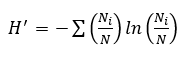
; and

where S is the total number of species in the sample,
N is the total number of individuals, and Ni is the number of
individuals of the ith species.
8.4
Baseline
Conditions
8.4.1
Project
Site
8.4.1.1
The Project area is located within the existing Yuen Long
Sewage Treatment Works (YLSTW), which falls within the Wetland Buffer Area
(WBA). Areas at the south of the Project site are made up of developed area,
mainly the Yuen Long Industrial Estate (YLIE). The northern and western sides
of the Project area are dominated by active and inactive fishponds of Fung Lok
Wai, while Shan Pui River runs along the eastern side of the Project site.
8.4.2
Site
of Conservation Importance
8.4.2.1
Sites of conservation importance, including Site of Special
Scientific Interest, Priority Site for Enhanced Conservation, Mai Po and Inner
Deep Bay Ramsar Site, Wetland Conservation Area and “Conservation Area” were
identified within the assessment area, while all of them were outside the Project
site. No egretry was recorded within the assessment area. A description of the
identified sites of conservation importance are presented in the following
paragraphs and their locations are shown in Figure
8.3.
Site of Special
Scientific Interest (SSSI)
8.4.2.2
The southern edge of Mai Po Marshes Site of Special
Scientific Interest (SSSI), which is zoned under Mai Po & Fairview Park
Outline Zoning Plan (OZP) No. S/YL-MP/6, falls within the north-eastern tip of
the assessment area outside the Project area. This SSSI is to conserve the
ecological value and function of the existing fishponds and mangroves. The Mai
Po Marshes SSSI contains areas of tidal shrimp ponds (gei wais) and
fishponds, as well as the largest mangrove area in Hong Kong, providing rich
food sources for migratory waterbirds and nesting habitats for a number of
species.
Priority Site
for Enhanced Conservation
8.4.2.3
The northern half of the Assessment area outside the Project
site, which includes mainly fishponds and Modified Watercourses, falls within
the Priority Site for Enhanced Conservation (the Priority Site). The Priority Site,
namely Deep Bay Wetland Outside Ramsar Site, was designated under the New
Nature Conservation Policy drawn up in 2004 and comprised approximately
1011.6ha of land (mainly fishponds) in the Deep Bay area (AFCD, 2015).
Mai Po and Inner
Deep Bay Ramsar Site
8.4.2.4
The northern edge of the assessment area outside the Project
site, which comprises mainly fishponds and Modified Watercourses, falls within
the Mai Po and Inner Deep Bay Ramsar Site (the Ramsar Site), providing foraging
habitats for waterbirds. About 1,500ha of wetland in the Mai Po and Inner Deep
Bay region was listed as a Ramsar Site under the Ramsar Convention on 4
September 1995 (AFCD, 2000). The Ramsar Site has a shallow bay with extensive
intertidal mudflats backed by mangroves, tidal shrimp ponds (gei wais),
fishponds and reedbeds. It serves as an important overwintering and refuelling
station site for the waterbirds during their migrations between the Arctic
Russia and Australia. The Ramsar Site supports a high diversity of birds,
including a number of globally threatened species, such as Black-faced
Spoonbill (Platalea minor), Saunders's Gull (Chroicocephalus
saundersi) and Nordmann's Greenshank (Tringa guttifer).
Wetland
Conservation Area and Wetland Buffer Area
8.4.2.5
The Project site and the southern part of the assessment
area, comprising mainly the hillside area north to Ng Uk Tsuen, Yuen Long
Industrial Estate (YLIE) and the upstream section of Shan Pui River, fall
within the Wetland Buffer Area (WBA). Likewise, the northern part of the
assessment area outside the Project site comprising the fishponds in Fung Lok
Wai and Nam Sang Wai as well as the confluence of Kam Tin River and Shan Pui
River, fall within the Wetland Conservation Area (WCA). The Town Planning Board
has adopted a two-pronged approach to land use planning control through the
designation of WCA and WBA to conserve the ecological value of the Deep Bay
wetland ecosystem and prevent habitat fragmentation from development. The WCA
covers the existing contiguous and adjoining active or inactive fishponds in
the landward part of the Ramsar Site with the planning intention to conserve
the ecological value of the fishponds which form an integral part of the
wetland ecosystem in the Deep Bay area. The strip of land of about 500m wide
along the landward side of the WCA is designated as the WBA to protect the
ecological integrity of the fishponds and wetlands within the WCA and to
prevent developments that would have a negative off-site impact on the
ecological value of fishponds (AFCD, 2000).
Conservation
Area
8.4.2.6
Part of the fishponds in Fung Lok Wai within the assessment
area as well as a small portion of mangroves and Modified Watercourses at Tai
Sang Wai in the north-eastern tip of the Assessment Area are under the zoning
of “CA” in the Lau Fau Shan and Tsim Bei Tsui OZP No. S/YL-LFS/8 and Nam Sang
Wai OZP No. S/YL-NSW/8 respectively. Both “CAs” are outside the Project site.
The planning intention of the zone is to conserve the ecological value of
wetland and fishponds which form an integral part of the wetland ecosystem in
the Deep Bay Area.
Egretry
8.4.2.7
No active egretry was recorded within the assessment area.
Tsim Bei Tsui Egretry, which is around 2.0 km northwest to the Project site,
and Tung Shing Lane egretry, which is around 2.8 km southeast to the Project
site, are the active egretries located closest to the assessment area in recent
years (Anon, 2017a). Likewise, Shing Uk Tsuen Egretry, which was abandoned in
2003 (Anon, 2003; Anon, 2004), was located around 1.1 km southwest to the
Project site.
8.4.3
Literature
Review
Habitat and
Vegetation
8.4.3.1
Eight types of habitat, including pond, mangrove,
watercourses, grassland/shrubland, Fung Shui woodland, orchard,
plantation/landscaped area and disturbed/urbanised area, were identified within
the assessment area in previous studies (DSD, 2002; DSD, 2004; MLI Ltd, 2008).
Only two flora species of conservation importance were potentially recorded
within the assessment area (MLI Ltd, 2008). The flora species of conservation
importance recorded in previous study are presented in Table 8.2.
Table 8.2 Flora
Species of Conservation Importance Previously Recorded within the Assessment
Area
|
Common Name (Scientific Name) |
Distribution in Hong
Kong (1) |
Status in Hong Kong |
Habitat Recorded (6) |
|
Incense Tree (Aquilaria sinensis) |
Common |
Cap. 586 (2) Category II (3) Vulnerable (4)(5) |
Woodland; Orchard |
|
Maile-scented Fern (Phymatodes
scolopendria) |
Rare |
- |
Pond |
Note:
(1)
Corlett
et al. (2000).
(2)
Protection
of Endangered Species of Animals and Plants Ordinance (Cap. 586).
(3) List of Wild Plants under State Protection
(promulgated by State Forestry Administration and Ministry of Agriculture on 4
August, 1999).
(4) IUCN (2017).
(5)
Fu
& Chin (1992).
(6)
MLI Ltd. (2008).
Pond
8.4.3.2
Pond was a major habitat dominating the assessment area
outside the Project area. It was a man-made habitat mostly bounded by vegetated
bunds with common herbaceous species, such as Guinea Grass (Panicum maximum),
Hairy Bur-marigold (Bidens pilosa) and Paspalum spp. Some
bunds were actively managed for commercial aqua-culture purpose. Fruit trees,
such as Wampi (Clausena lansium) and Longan (Dimocarpus longan),
were often found cultivated at pond bunds (DSD, 2002; DSD, 2004; MLI Ltd,
2008). One floral species of conservation importance, Maile-scented Fern (Phymatodes
scolopendria), which was likely to be a remnant of previously cultivated
plants, was recorded in Fung Lok Wai area at an inactive pond (Table 8.2 refers) but its exact location was not disclosed (MLI Ltd,
2008).
Mangrove
8.4.3.3
Mangrove stands were
identified along
the embankments of the channelised Kam Tin River and Shan Pui River within the
assessment area. Mangroves are known to be resources rich habitat, providing
food, shelter and nursery to a large number of wetland
(especially intertidal) fauna. Native mangrove species recorded in this habitat included
Spiny Bears Breech (Acanthus ilicifolius), Black Mangrove (Avicennia
marina), Aegiceras corniculatum and Kandelia obovata (DSD,
2002; DSD, 2004). The fast-growing, exotic mangrove species, Sonneratia
caseolaris and Sonneratia apetala, were also found amongst
the native mangrove species along the embankment of the downstream section of
the Kam Tin River (AFCD, 2005).
Watercourses
8.4.3.4
Watercourses identified within the assessment area included
mainly the lower courses of Kam Tin River and Shan Pui River, which are
channelised and subject to tidal motion. The mudflats and mangroves along the
two Modified Watercourses served as important feeding grounds of waterbirds
during the low-tide period. The water quality of the drainage channels had been
reported to be heavily polluted (DSD, 2002; DSD, 2004; MLI Ltd, 2008). Common
riparian vegetation recorded included Brachiaria spp. and
Panicum spp. (DSD, 2002).
Grassland/Shrubland
8.4.3.5
Grassland/shrubland were identified at the western part of
the assessment area on hillsides with graves, on which hill fires broke out
frequently (DSD, 2002; DSD, 2004). This habitat was dominated by pioneer
species, including fern species Linear Forked Fern (Dicranopteris linearis)
and grass species Burma-reed (Neyraudia reynaudiana) and
Guinea Grass. Small numbers of pioneer trees, such as Sumac (Rhus
hypoleuca) and Chinese Tallow Tree (Sapium sebiferum), as
well as shrubs Rough-leaved Holly (Ilex asprella), Rose Myrtle
(Rhodomyrtus tomentosa) and Dwarf Mountain Pine (Baeckea
frutescens), were also recorded in the habitat (DSD, 2002; DSD, 2004). The
outer edge of this vegetated area was identified as Fung Shui woodland
habitat in other previous studies (MLI Ltd, 2008).
Fung Shui Woodland
8.4.3.6
Fung Shui woodland, comprising native species or a mix of native
species and fruit trees around rural villages, were identified north to Ng Uk
Tsuen in the western part of the assessment area (MLI Ltd, 2008). The same vegetated area was
identified as grassland/shrubland habitat in other previous studies (DSD, 2002;
DSD, 2004).
Orchard
8.4.3.7
A small patch of orchard was identified at the edge of the
grassland/shrubland or Fung Shui Woodland habitat north to Ng Uk Tsuen in the
western tip of the Assessment Area. Orchard was a man-made habitat found
scattered among village areas, comprising mainly planted fruit trees with other
native and introduced tree and shrub species. One floral species of
conservation importance, Incense Tree, was recorded from this habitat (Table 8.2 refers) but its exact location was not disclosed location (MLI Ltd, 2008).
Plantation/Landscaped Area
8.4.3.8
A narrow belt of plantation/landscaped area was identified at
the eastern edge of Fung Lok Wai fishpond area within the assessment area.
Plantation/Landscaped area refers to areas managed intensively for landscape or
amenity purposes. Very low floral diversity was recorded from this habitat (MLI
Ltd, 2008). The same area was identified as disturbed/urbanised area habitat in
other previous studies (DSD, 2002; DSD, 2004).
Disturbed/Urbanised
Area
8.4.3.9
Urban/residential areas, which was an artificial habitat,
were found comprising the entire Project Site as well as industrial area and
village area in the southern part of the Assessment Area. More than half of the
plant species recorded in this habitat were exotic species planted for
landscape purposes, such Taiwan Acacia (Acacia confuse) and
Horsetail Tree (Casuarina equisetifolia) (DSD, 2002).
Fauna
Avifauna
8.4.3.10
A high diversity of waterbirds was recorded in the wetland
habitats in the vicinity of the assessment area in previous studies, with over
50 species that are of conservation importance as summarised in Table 8.3. The ponds, mudflats, watercourses
and mangroves in Deep Bay area provide significant foraging grounds for both
resident and migratory waterbirds. The complex of wetland habitats in Deep Bay
area belongs to the Ramsar Site and the Important Bird and Biodiversity Area
(IBA) and supports thousands of migratory waterbirds each year.
8.4.3.11
Pond habitat supports relatively high abundance and diversity
of wetland-dependent birds as compared to other habitats, particularly ponds in
Fung Lok Wai area. Given the sizes and connectivity with the wetland system,
ponds in Fung Lok Wai provide important feeding grounds for breeding, passage
and wintering populations of waterbirds and other wetland-associated species.
Many of these bird species recorded in Fung Lok Wai area are of conservation
concern, such as Black-faced Spoonbill (Platalea minor), Little Grebe (Tachybaptus
ruficollis), Little Egret (Egretta garzetta) and Red-billed
Starling (Spodiopsar sericeus) (MLI Ltd, 2008).
8.4.3.12
The complex of wetland habitats in Nam Sang Wai area,
including watercourse, pond, mangrove and reedbed, also serves as important
wintering site for migratory waterbirds. During low-tide period, the exposed
mudflats within Kam Tin River and Shan Pui River provide abundant food sources
for both large waterbirds and waders of species of conservation importance (Table 8.3 refers), including Black-faced
Spoonbill and Great Cormorant (Phalacrocorax carbo) (DSD, 2002). Raptor
species of conservation importance, including Eurasian Hobby (Falco
subbuteo), Crested Serpent Eagle (Spilornis cheela), Black Kite and
Eastern Marsh Harrier (Circus spilonotus), were also recorded hovering
in Nam Sang Wai over the pond areas as summarised in Table 8.3 (DSD, 2002).
8.4.3.13
While the bird species abundance and diversity in
grassland/shrubland and urbanised area habitats in the vicinity of assessment
were generally low (DSD, 2002; DSD, 2004). 15 species of conservation
importance (Table 8.3 refers), including Chinese Hwamei (Garrulax
canorus) and Chinese Grosbeak (Eophona migratoria) and
several raptor species, recorded from these habitats within or near the
assessment area in previous studies (MLI Ltd, 2008).
8.4.3.14
A considerable number of Great Cormorants were recorded
roosting on trees (Eucalyptus spp.) on pond bunds at the centre of Nam
Sang Wai (DSD, 2002). The peak roost counts of Great Cormorant in Nam Sang Wai
in recent years were 3,990 in December 2013, 4,360 in December 2014, 4,039 in
December 2015, 4,272 in December 2016 and 3,713 in January 2018 (Anon, 2014a;
Anon, 2015a; Anon, 2016a; Anon, 2017b; Anon, 2018). While the assessment area
covers only the northern tip of Nam Sang Wai, three major tree groups on which
the Great Cormorants roosted were located within the assessment area (Figure
8.4
refers). Great Cormorant is a winter visitor which is abundant in Deep Bay area
(Carey et al. 2001).
Table 8.3 Avifauna
Species of Conservation Importance Previously Recorded within/near the
Assessment Area
|
Common Name(1) (Scientific Name) |
Distribution in Hong Kong (2) |
Principal Status(3) |
Protection Status |
Habitat Recorded(4) |
|
Eurasian
Wigeon(11) (Anas penelope) |
Common |
W |
RC(5) |
Pond |
|
Indian
Spot-billed Duck(11) (Anas poecilorhyncha) |
Resident |
W,P |
RC(5) |
Pond |
|
Northern
Shoveler(11) (Anas clypeata) |
Abundant |
W |
RC(5) |
Pond |
|
Northern
Pintail(11) (Anas acuta) |
Abundant |
W |
RC(5) |
Pond |
|
Eurasian
Teal(11) (Anas crecca) |
Common |
W |
RC(5) |
Pond |
|
Little
Grebe(11) (Tachybaptus ruficollis) |
Common |
P |
LC(5) |
Pond |
|
Eurasian
Spoonbill(11) (Platalea leucorodia) |
Scarce |
W |
LC(5); Class II(6); Vulnerable(7); Near Threatened(8); Cap. 586(10) |
Pond |
|
Black-faced
Spoonbill(11) (Platalea minor) |
Common |
W |
PGC(5); Class II(6); Endangered(7)(8)(9) |
Pond; Modified Watercourse |
|
Black
Bittern(11) (Dupetor flavicollis) |
Scarce |
M |
LC(5) |
Pond |
|
Chinese
Pond Heron(11) (Ardeola bacchus) |
Common |
P |
PRC (RC)(5) |
Pond; Modified Watercourse |
|
Grey
Heron(11) (Ardea cinerea) |
Common |
W |
PRC(5) |
Pond |
|
Purple
Heron(11) (Ardea purpurea) |
Uncommon |
AM,P |
RC(5) |
Pond |
|
Great
Egret(11) (Ardea alba) |
Common |
P |
PRC (RC)(5) |
Pond; Mangrove |
|
Intermediate
Egret(11) (Egretta intermedia) |
Common |
M,P |
RC(5) |
Pond |
|
Little
Egret(11) (Egretta garzetta) |
Common |
P |
PRC (RC)(5) |
Pond |
|
Great
Cormorant(11) (Phalacrocorax carbo) |
Common |
W |
PRC(5) |
Pond |
|
Western
Osprey(11) (Pandion haliaetus) |
Common |
W |
RC(5); Rare(7); Near Threatened(8); Cap. 586(10) |
Pond |
|
Crested
Serpent Eagle (Spilornis cheela) |
Uncommon |
R,M |
(LC)(5); Class II(6); Vulnerable(7); Near Threatened(8); Cap. 586(10) |
Shrubland |
|
Greater
Spotted Eagle(11) (Clanga clanga) |
Scarce |
W |
GC(5); Class II(6); Rare(7); Endangered(8); Vulnerable(9); Cap. 586(10) |
Shrubland |
|
Eastern
Imperial Eagle(11) (Aquila heliaca) |
Common |
W |
GC(5); Class I(6); Vulnerable(7)(9); Endangered(8); Cap. 586(10) |
Pond; Shrubland |
|
Crested
Goshawk (Accipiter trivirgatus) |
Uncommon |
R |
Class II(6); Rare(7); Near Threatened(8); Cap. 586(10) |
Shrubland |
|
Japanese
Sparrowhawk (Accipiter gularis) |
Uncommon |
M |
Class II(6); Cap. 586(10) |
Shrubland |
|
Black
Kite(11) (Milvus migrans) |
Common |
W,R |
(RC)(5); Class II(6); Cap. 586(10) |
Pond; Shrubland |
|
Eastern
Marsh Harrier(11) (Circus spilonotus) |
Common |
W |
LC(5); Class II(6); Near Threatened(8); Cap. 586(10) |
Pond |
|
White-bellied
Sea Eagle(11) (Haliaeetus leucogaster) |
Uncommon |
R |
(RC)(5); Class II(6); Indeterminate(7); Vulnerable(8); Cap. 586(10) |
N/A |
|
Eastern
Buzzard(11) (Buteo japonicus) |
Common |
W |
Class II(6); Cap. 586(10) |
Pond; Shrubland |
|
Slaty-breasted Rail(11) (Gallirallus striatus) |
Scarce |
R |
RC(5) |
Pond |
|
Watercock(11) (Gallicrex cinerea) |
Scarce |
M |
RC(5) |
Pond |
|
Eurasian
Coot(11) (Fulica atra) |
Common |
W |
RC(5) |
Pond |
|
Black-winged
Stilt(11) (Himantopus himantopus) |
Common |
W |
RC(5) |
N/A |
|
Pied
Avocet(11) (Recurvirostra avosetta) |
Abundant |
W |
RC(5) |
Pond |
|
Grey-headed
Lapwing(11) (Vanellus cinereus) |
Scarce |
W |
LC(5) |
Pond |
|
Eurasian
Curlew(11) (Numenius arquata) |
Abundant |
W/M |
RC(5); Near Threatened(8)(9) |
Pond |
|
Spotted
Redshank(11) (Tringa erythropus) |
Abundant |
W/M |
RC(5) |
Pond |
|
Common Redshank(11) (Tringa totanus) |
Common |
W |
RC(5) |
Pond |
|
Marsh
Sandpiper(11) (Tringa stagnatilis) |
Common |
M,W |
RC(5) |
Pond |
|
Common
Greenshank(11) (Tringa nebularia) |
Abundant |
M,W |
RC(5) |
Pond |
|
Wood
Sandpiper(11) (Tringa glareola) |
Common |
M,W |
LC(5) |
Pond |
|
Red-necked
Stint(11) (Calidris ruficollis) |
Abundant |
M |
LC(5); Near Threatened(9) |
Pond |
|
Temminck's
Stint(11) (Calidris temminckii) |
Uncommon |
M,W |
LC(5) |
Pond |
|
Oriental
Pratincole(11) (Glareola maldivarum) |
Passage migrant |
M |
LC(5) |
Pond |
|
Black-headed Gull(11) (Chroicocephalus ridibundus) |
Common |
W |
PRC(5) |
Pond |
|
Greater
Coucal (Centropus sinensis) |
Common |
R |
Class II(6); Vulnerable(7) |
Pond; Modified Watercourse; Shrubland |
|
Asian
Barred Owlet (Glaucidium cuculoides) |
Uncommon |
R |
Class II(6); Cap. 586(10) |
Shrubland |
|
Common
Kestrel (Falco tinnunculus) |
Common |
AM,W |
Class II(6); Cap. 586(10) |
Pond; Shrubland |
|
Eurasian
Hobby (Falco Subbuteo) |
Uncommon |
M,Su |
(LC)(5); Class II(6); Cap. 586(10) |
Pond |
|
Peregrine
Falcon(11) (Falco peregrinus) |
Scarce |
R,W |
(LC)(5); Class II(6); Rare(7); Near Threatened(8); Cap. 586(10) |
Pond |
|
Japanese
Paradise-Flycatcher (Terpsiphone atrocaudata) |
Scarce |
M |
LC(5); Near Threatened(8)(9) |
Shrubland |
|
Collared
Crow(11) (Corvus torquatus) |
Uncommon |
R |
LC(5); Near Threatened(8)(9) |
Pond; Shrubland |
|
Chinese
Penduline-Tit (Remiz consobrinus) |
Common |
M,W |
RC(5) |
Pond |
|
Oriental
Skylark (Alauda gulgula) |
Scarce |
W,P |
LC(5) |
Pond |
|
Zitting
Cisticola (Cisticola juncidis) |
Common |
W |
LC(5) |
Pond |
|
Chinese
Hwamei (Garrulax canorus) |
Common |
R |
Near Threatened(8); Cap. 586(10) |
Shrubland |
|
Red-billed Starling(11) (Spodiopsar sericeus) |
Common |
W |
GC(5) |
Pond; Shrubland |
|
White-cheeked Starling (Spodiopsar cineraceus) |
Common |
W |
PRC(5) |
Pond |
|
Bluethroat (Luscinia svecica) |
Common |
W |
LC(5) |
Pond |
|
Red-throated
Pipit (Anthus cervinus) |
Common |
M,W |
LC(5) |
Pond |
|
Chinese
Grosbeak (Eophona migratoria) |
Uncommon |
M |
LC(5) |
Pond; Shrubland |
|
Yellow-breasted
Bunting (Emberiza aureola) |
Common |
M |
RC(5); Endangered(8)(9) |
Pond |
Notes:
(1)
All wild birds are protected
under Wild Animals Protection Ordinance (Cap. 170).
(2)
AFCD (2017). Hong Kong
Biodiversity Database.
(3)
Carey et al. (2001): R=resident; W=winter visitor; M=migrant; AM=autumn
migrant; Su=summer visitor; P=present all year, exact composition unknown
(4)
DSD (2002); DSD (2004); MLI
Ltd. (2008); AFCD (2016)
(5)
Fellowes et al. (2002): GC=Global Concern; LC=Local Concern; RC=Regional
Concern; PRC=Potential Regional Concern; PGC: Potential Global Concern.
* Letters in parentheses indicate that the assessment is on the basis of
restrictedness in nesting and/or roosting sites rather than in general
occurrence.
(6)
List of Wild Animals under State Protection (promulgated
by State Forestry Administration and Ministry of Agriculture on 14 January,
1989).
(7)
Zheng, G. M. and Wang, Q. S.
(1998).
(8)
Jiang et al. (2016).
(9)
IUCN (2017).
(10) Protected under Protection
of Endangered Species of Animals and Plants Ordinance (Cap. 586).
(11) Wetland-dependent species
(including wetland-dependent species and waterbirds).
Butterfly and
Odonate
8.4.3.15
The western part of the assessment area comprising a mosaic
of both wet and dry habitats within the WBA in between Fung Lok Wai and Ng Uk
Tsuen supported the greatest species richness of butterfly compared to other
habitats within the assessment area (MLI Ltd, 2008). The pond and modified
watercourse habitats, which are not suitable breeding and roosting ground for
butterfly, dominated the assessment area and limited butterfly species richness
and abundance were recorded from ponds and modified watercourses in previous
studies. Given the limited range and extent of terrestrial habitats, the
butterflies recorded in Fung Lok Wai and Nam Sang Wai were largely common and
widespread species that feed on common flora during larval and adult stages
(DSD, 2002, DSD, 2004; MLI Ltd, 2008). Four butterfly species of conservation
importance – Dark Palm Dart (Telicota ohara), Grass Demon (Udaspes
folus), Spotless Grass Yellow (Eurema laeta) and Small Cabbage White
(Pieris rapae) – were likely recorded within the assessment area in
previous studies (Table 8.4 refers).
8.4.3.16
Dragonflies recorded in the vicinity of assessment area were
largely associated with pond habitat in Fung Lok Wai and all dragonfly species
previously recorded within the Assessment Area were common and widespread in
Hong Kong (DSD, 2002, DSD, 2004; MLI Ltd, 2008). Only one odonate species of
conservation importance, Four-spot Midget (Mortonagrion hirosei), was
previously recorded within the assessment area (AFCD, 2016) (Table
8.4 refers). This species is
highly restricted to coastal habitats, including reedbeds, mangroves and
marshes with short, dense grass (Stanton & Allcock, 2011, Tam et al.,
2011).
Table
8.4 List
of Butterfly and Odonate Species of Conservation Importance Previously Recorded
within the Assessment Area
|
Common Name (Species Name) |
Distribution and Conservation Status in Hong Kong (1) |
Protection Status |
|
Butterfly |
||
|
Dark Palm Dart (Telicota ohara) |
Rare |
- |
|
Grass Demon (Udaspes folus) |
Rare |
- |
|
Small Cabbage White (Pieris rapae) |
Rare |
- |
|
Spotless Grass Yellow (Eurema laeta) |
Very Rare |
- |
|
Odonate |
||
|
Four-spot Midget (Mortonagrion
hirosei), |
Common |
GC(3); Near Threatened(4) |
Note:
(1) AFCD (2017).
(2) MLI Ltd (2008); AFCD (2016).
(3) Fellowes et al. (2002): GC=Global Concern
(4) IUCN (2017).
Bent-winged Firefly
8.4.3.17
The Bent Winged Firefly Pterotyx maipo is an endemic
firefly species that was discovered in the Deep Bay area (Yiu, 2011) and was
first recorded from Hong Kong Wetland Park in July 2009 (AFCD, 2010). This
species is the first record of genus Pteroptyx (Bent-winged Firefly),
which is primarily a mangrove-dependent firefly group, from mainland China and
Hong Kong (Ballantyne et al. 2011). Pteroptyx maipo were recorded
in several localities within the Ramsar Site, including Hong Kong Wetland Park,
Mai Po Nature Reserve, Tin Shui Wai and near Tsim Bei Tsui. Small numbers were
also recorded in mangrove around the lower section of Kam Tin River within the
assessment area (Yiu, 2011). Transitional habitats, i.e. mangroves, reedbeds
and estuaries, were found to support the largest number of adult Pterotyx
maipo recorded and was the only location where larvae were recorded (Yiu,
2011).
Herpetofauna
8.4.3.18
All amphibian species previously recorded within the
assessment area were common and widespread in Hong Kong and not of conservation
importance (DSD, 2002, DSD, 2004; MLI Ltd, 2008; AFCD, 2016).
8.4.3.19
Majority of the reptile species recorded within the
assessment area were common and widespread in Hong Kong (DSD, 2002, DSD, 2004;
MLI Ltd, 2008; AFCD, 2016). Five reptile species of conservation importance –
Indo-Chinese Rat Snake (Ptyas korros) and Mangrove Water Snake (Enhydris
bennettii), Common Rat Snake (Ptyas mucosus), Chinese Cobra (Naja
atra) and Chinese Water Snake (Enhydris chinensis) – were recorded
within the assessment area (MLI Ltd, 2008; AFCD, 2016) (Table
8.5 refers). Indo-Chinese Rat
Snake was habitat generalist and recorded from the hillside shrubland habitat
north to Ng Uk Tsuen while Mangrove Water Snake inhabited mangrove specifically
and was recorded in freshwater fishpond habitat in Fung Lok Wai (Karsen et
al. 1998; MLI Ltd, 2008). Locations of other reptile species of
conservation importance were not specified (AFCD, 2016).
Table
8.5 List
of Reptile Species of Conservation Importance Previously Recorded within the
Assessment Area
|
Common Name (Scientific Name) |
Distribution in Hong Kong(1) |
Protection Status |
Habitat Recorded(2)(3) |
|
Mangrove Water Snake (Enhydris
bennettii) |
Recorded in the muddy coastal areas in Deep Bay area |
LC(3) |
Pond |
|
Chinese Water Snake (Enhydris
chinensis) |
Distributed in freshwater or brackish wetlands in
central and northern New Territories |
Vulnerable(5) |
N/A |
|
Indo-Chinese Rat Snake (Ptyas korros) |
Widely distributed |
PRC(3); Endangered(4); Vulnerable(5) |
Shrubland |
|
Common Rat Snake (Ptyas mucosus) |
Widely distributed |
PRC(3); Endangered(4)(5) |
N/A |
|
Chinese Cobra (Naja atra) |
Widely distributed |
PRC(3); Vulnerable(4)(5)(6); Cap. 586(7) |
N/A |
Note:
(1) AFCD (2017).
(2) MLI Ltd (2008); AFCD (2016).
(3) Fellowes et al. (2002): LC=Local Concern; PRC=Potential Regional Concern.
(4) Zheng, G. M. and Wang, Q. S. (1998).
(5) Jiang et
al. (2016).
(6) IUCN (2017).
(7) Protected under Protection of Endangered
Species of Animals and Plants Ordinance (Cap. 586).
Mammal
8.4.3.20
Five mammal species of conservation importance were recorded
within or in the vicnity of the assessment area, including Eurasian Otter (Lutra
lutra), Leopard Cat (Prionailurus bengalensis), Small Indian
Civet (Viverricula indica), Small Asian Mongoose (Herpestes javanicus)
and Japanese Pipistrelle (Pipistrellus abramus) (DSD, 2002; DSD, 2004;
MLI Ltd, 2008; AFCD, 2016) (Table
8.6 refers).
8.4.3.21
Small Asian Mongoose and Small Indian Civet were likely found
in ponds in Fung Lok Wai (MLI Ltd, 2008) while Japanese Pipistrelle were found
flying above ponds in Nam Sang Wai and Fung Lok Wai near the Assessment Area
(DSD, 2002; DSD, 2004). Eurasian Otter and Leopard Cat were also recorded
within the assessment area (AFCD, 2016) but the exact locations of these mammal
species of conservation importance were not presented. Eurasian Otter has a
highly restricted distribution in Deep Bay area in Hong Kong (Shek, 2006).
8.4.3.22
Shek (2006) suggested that more mammal species of
conservation importance were known to occur in Nam Sang Wai or similar habitats
in Deep Bay area, such as Greater Bandicoot Rat (Bandicota indica),
Ryukyu Mouse (Mus caroli) and some bat species. Given the high mobility
of these mammal species, sightings of these species could possibly be made in
the similar habitats within the assessment area.
Table
8.6 List
of Mammal Species of Conservation Importance Previously Recorded within the
Assessment Area
|
Common Name (Scientific Name) |
Distribution and
Conservation Status in Hong Kong(1) |
Protection Status |
Habitat Recorded (2) |
|
Japanese Pipistrelle (Pipistrellus
abramus) |
Very Common |
Cap.
170(8) |
Pond |
|
Eurasian Otter (Lutra
lutra) |
Rare; Species
of conservation concern |
RC(3); Class
II(4); Endangered(6); Near
Threatened(7); Cap.
170(8); Cap.
586(9) |
N/A |
|
Small Indian Civet (Viverricula
indica) |
Very Common |
Class
II(4); Vulnerable(6); Cap.
170(8); |
Pond |
|
Small Asian Mongoose (Herpestes
javanicus rubrifrons) |
Uncommon |
Vulnerable(6); Cap.
170(8) |
Pond |
|
Leopard Cat (Prionailurus
bengalensis) |
Uncommon |
Vulnerable(5)(6); Cap.
170(8); Cap.
586(9) |
N/A |
Note:
(1) AFCD (2017).
(2) DSD (2002); DSD (2004); MLI Ltd (2008);
AFCD (2016).
(3) Fellowes et al. (2002): RC=Regional Concern.
(4) List of Wild Animals under State Protection
(promulgated by State Forestry Administration and Ministry of Agriculture on 14
January, 1989).
(5) Zheng, G. M and Wang, Q. S. (1998).
(6) Jiang et
al. (2016).
(7) IUCN (2016).
(8) Protected under Wild Animals Protection
Ordinance (Cap. 170).
(9) Protected under Protection of Endangered
Species of Animals and Plants Ordinance (Cap. 586)
Soft-bottom Benthos
8.4.3.23
Due to the lack of relevant literature, there is no specific
information on the existing ecological baseline condition of soft-bottom
benthic fauna within the assessment area.
8.5
Survey
Findings
8.5.1
Habitat
and Vegetation
8.5.1.1
A total of nine habitat types, including developed area,
plantation, orchard, shrubland, grassland, reedbed, mangrove, pond (both active
and inactive) and modified watercourse, were recorded within the 500m assessment
area from recent surveys. Habitat maps and representative photographs of
habitats recorded within assessment area are shown in Figure
8.4
and Appendix
8.1.
The only habitat identified within the Project site is developed area.
8.5.1.2
The sizes of these habitats within the assessment area are
summarised in below Table 8.7. The flora recorded during the
ecological surveys are listed in Appendix
8.2. A total of two flora species of
conservation importance were recorded. The indicative locations and
representative photographs of the species of conservation importance are
presented in Figure
8.4
and Appendix
8.3. A summary of flora species of
conservation importance recorded within the Assessment Area are presented in Table 8.8.
Table 8.7 Habitats
Recorded within the Assessment Area
|
Habitat Type |
Total Habitat Area (ha) |
Percentage of Area |
|
|
Within Project Area |
Within 500m Assessment Area |
||
|
Developed Area |
7.8 |
41.2 (including Project Area) |
28.6% |
|
Plantation |
- |
2.6 |
1.8% |
|
Orchard |
- |
0.4 |
0.3% |
|
Shrubland |
- |
11.8 |
8.2% |
|
Grassland |
- |
2.9 |
2.0% |
|
Reedbed |
- |
7.0 |
4.8% |
|
Mangrove |
- |
4.6 |
3.2% |
|
Pond (Active) |
- |
30.0 |
20.8% |
|
Pond (Inactive) |
- |
16.9 |
11.7% |
|
Modified Watercourse |
- |
26.8 (3.1km) |
18.6% |
|
Total |
7.8 |
144.2 |
100% |
Table 8.8 List
of Flora species of conservation importance recorded within the Assessment Area
during Field Surveys
|
Species |
Distribution in Hong
Kong (1) |
Protection Status |
Habitat Recorded |
|
Incense Tree (Aquilaria sinensis) |
Common |
Cap. 586 (2); Category II (3) ; Vulnerable (4)(5) |
Shrubland |
|
Lamb of Tartary (Cibotium barometz) |
Very Common |
Cap. 586 (2); Category II (3); Vulnerable (5) |
Shrubland |
Note:
(1) Corlett et
al. (2000).
(2) Protected under Protection of Endangered
Species of Animals and Plants Ordinance (Cap. 586).
(3) List of Wild
Plants under State Protection (promulgated by State Forestry Administration and
Ministry of Agriculture on 4 August, 1999).
(4) IUCN (2017).
(5) Fu & Chin
(1992).
Developed Area
8.5.1.3
Developed areas within the assessment area mainly comprised
roads, roadside plantings, residential area, industrial area and public
utilities. This habitat is mostly located at the southern and southwestern
parts of the assessment area, covering the existing YLSTW, YLIE, Ng Uk Tsuen
and Leon Court, and is the only habitat recorded within the Project site. Human
disturbance was prominent in this habitat due to the daily operation of the
YLSTW, industrial activities from YLIE and the existing residential development
in the vicinity.
8.5.1.4
Vegetation recorded in this habitat mainly comprised
landscaping/ornamental and roadside planting and exotic plants, such as Bauhinia
spp., Paper-bark Tree (Melaleuca cajuputi subsp. cumingiana), Khaya
senegalensis, Queen Crape Myrtle (Lagerstroemia speciose) and Tall
Bottle-brush (Callistemon viminalis) on roadsides, Mock Lime (Aglaia
odorata), Royal Palm (Roystonea regia) and Frangipani (Plumeria
rubra) in village area, and Chinese
Banyan, Bamboo Palm (Dypsis lutescens), Chinese Hibiscus (Hibiscus
rosa-sinensis), Pink Powder Puff (Calliandra haematocephala), Lalang
Grass (Imperata cylindrica var. major) and Bidens alba in the
existing YLSTW. No flora species of conservation importance was recorded.
Plantation
8.5.1.5
Patches of plantation were recorded at the north-western tip
of Nam Sang Wai in the eastern assessment area as well as at the eastern edge
of Fung Lok Wai in the northern assessment area. No flora species of
conservation importance was recorded.
8.5.1.6
The plantation at Nam Sang Wai mainly consists
of exotic trees.
The exotic Eucalyptus spp., Paper-bark Tree and Horsetail Tree (Casuarina
equisetifolia) formed the top canopy at a height of above
10m. Some younger planted trees such as Tall
Bottle-brush (Callistemon viminalis) and
Cuban Bast
were also recorded along roadside. The understorey of the plantation at Nam
Sang Wai was dominated by the shrub Lantana (Lantana
camara) and herbs Guinea Grass, Wedelia trilobata and Bidens
alba.
8.5.1.7
The plantation at Fung Lok Wai was
densely occupied by
exotic trees Cuban Bast, Taiwan Acacia and White Popinac (Leucaena
Leucocephala) that formed a canopy height of about 10m. The ground cover
was
extensively covered by grass Lalang Grass.
Orchard
8.5.1.8
A small orchard is located adjacent
to the hillside shrubland north to Ng Uk Tsuen. No flora species of
conservation importance was recorded. It had a simple structure and supported
mainly fruit trees, including Lychee (Litchi chinensis), Longan, Wampi,
Jackfruit (Artocarpus heterophyllus), Papaya (Carica papaya) and
Common Banana (Musa x paradisiaca). The ground layer of the orchard was open
and colonised by limited herbs such
as Uni-spike
Kyllinga (Kyllinga
nemoralis)
and Brittle
False Pimpernel (Lindernia crustacea) in most spots, but
the climber
Kudzu (Pueraria
lobata) and the escaped crop species Greater Yam (Dioscorea alata) thrived
in and
covered certain spots in this habitat.
Shrubland
8.5.1.9
Shrubland was identified on
the small
hill north to Ng Uk Tsuen in the western assessment
area. This habitat was dominated by small trees Chinese Hackberry (Celtis
sinensis), Camphor Tree (Cinnamomum camphora), Pond Spice (Litsea
glutinosa), and Elephant's Ear (Macaranga tanarius var. tomentosa),
shrubs Hairy
Fig (Ficus hirta), Microcos (Microcos nervosa), Fragrant Litsea
(Litsea cubeba), Chinese Privet (Ligustrum sinense), and Pop-gun Seed (Bridelia
tomentosa), as well as herbaceous species Giant Alocasia
(Alocasia
macrorrhizos)
and Short-spiked Pepper (Piper sarmentosum) on the ground. As the
shrubland is very close to the village and associated
orchards,
some fruit tree species such as Longan, Lychee, Wampi and
Jackfruit were recorded in the shrubland as well. These fruit trees are
generally young village planting with a canopy of about 4m in height.
8.5.1.10
Two flora species of conservation importance, Incense Tree (Aquilaria
sinensis) and Lamb of Tartary (Cibotium barometz), were recorded in the shrubland north to Ng
Uk Tsuen (Figure
8.4 refers). The recorded
individuals of Incense Tree were mainly young trees or seedlings. The tallest young
tree reached 4m in height, while the saplings were averagely 1-2m in height.
Grassland
8.5.1.11
Scattered patches of grassland habitats were recorded within
the assessment area at hillside north to Ng Uk Tsuen, adjacent to ponds at Fung
Lok Wai and Tai Sang Wai, as well as on the lawn by Shan Pui River at Nam Sang
Wai. Due to the differences of the nearby habitat types and levels of human disturbance
received, the vegetation composition of these grassland habitats varied. No flora species of
conservation importance was recorded in this habitat.
8.5.1.12 For
the grassland are
located on hillside near the shrubland north of Ng Uk
Tsuen, grasses
likely took over the ground after the previous vegetation cover in these areas
was cleared by hill fires given the presence of nearby
graves. This
habitat was dominated by herbs species such as
the exotic
Redtop (Melinis repens), Bidens alba and
Billygoat-weed
(Ageratum conyzoides). Scattered
shrub species such as Lantana, Oblong-leaved Litsea (Litsea
rotundifolia var. oblongifolia) and Fragrant Litsea (Litsea
cubeba) were present on the periphery
of this grassland where it started transitioning to
shrubland. Scattered fruit trees such as Jackfruit, Common Banana, Longan and
Lychee were also
recorded in low density on the grassland.
8.5.1.13
The grassland habitats adjacent to
ponds at Fung Lok Wai and Tai Sang Wai were likely derived from
areas cleared for anthropogenic purposes. These grasslands were dominated
by herbs species
Pycreus polystachyos, Bidens alba and Climbing Fern (Lygodium
japonicum). Isolated individuals of self-sown tree saplings including
Taiwan Acacia, Chinese Tallow Tree and Elephant’s Ear, as well as small patches
of small shrubs including Common Melastoma (Melastoma malabathricum) and
Rose Mallow (Urena lobata) were distributed sparsely throughout
the grassland.
8.5.1.14
The lawn-like grassland at Nam
Sang Wai on the
southeastern edge of the Assessment Area was dominated by herbaceous species
including the native Goose Grass (Eleusine indica) and Ditch Millet (Paspalum
scrobiculatum var. orbiculare), Brittle
False Pimpernel
and Blunt
Signal-grass (Brachiaria mutica). Scattered shrub
species such as
Lantana and trees dominated by China-berry (Melia
azedarach), Chinese Hackberr and Lebbeck Tree (Albizia lebbeck).
Reedbed
8.5.1.15
Reedbed habitat was recorded colonizing the periphery of some
abandoned ponds at Nam Sang Wai. No flora species of conservation
importance was recorded in this habitat. Common Reedgrass (Phragmites
australis) and the exotic herbaceous Narrow-leaved Cat-tail (Typha
angustifolia) dominated this habitat. The lack of water exchange and/or low
water level led to the rapid colonisation of Common Reedgrass at the abandoned
ponds and the reedbed could further encroach into the center of the ponds and
turn into more extensive reedbed areas without anthropogenic
interference/management.
Mangrove
8.5.1.16
Strips of continuing mangrove stands were recorded along the
banks of the tidally influenced Shan Pui River and Kam Tin River in the
north-eastern portion of the assessment area. This habitat supported low
floral diversity, with no flora species of
conservation importance recorded. Dominant species recorded in this habitat
include the true mangroves Spiny Bears Breech (Acanthus ilicifolius), Aegiceras corniculatum and Kandelia obovate as
well as the mangrove associate species Leather Fern (Acrostichum aureum).
Similar to many other mangrove communities in Hong Kong, invasion of the exotic
Sonneratia caseolaris and Sonneratia apetala were widely observed
in the mangrove habitat in the assessment area, particularly in the area to the
immediate east of the Project site, the tall exotic mangroves Sonneratia spp.
grew extensively and dominated the outer edge of the habitat towards the centre
of the river, prohibiting the growth of native mangroves at the inner side. The
canopy of Sonneratia spp. was approximately 5-8m tall, while the canopy
of native mangroves was only 2-4m tall. In between the mangrove stands and
river embankment, strips of Malacea Galingale (Cyperus malaccensis) were
often present and blurred the boundary between these two habitats.
8.5.1.17
Great Egret, Little Egret and Chinese Pond Heron, which are
all avifauna species of conservation importance, were recorded roosting at
night at the mangrove strip northeast and east (AFCD UNPUBLISHED DATA) to the
Project site (Figure
8.4 refers).
Pond
8.5.1.18
The pond habitats are the dominant
habitats within the assessment area (covering over 30% of the area) and were
mainly recorded at Fung Lok Wai and Nam Sang Wai. No flora species of conservation
importance was recorded in this habitat. The active
ponds were
managed for culture fisheries and were drained periodically for fish
harvesting, water quality control and adjustment of pond profiles. Bunds of
these active ponds were largely bare due to grass-cutting activities by
fishermen. Some common weeds such as Bidens alba, Billygoat-weed and
Peacock-plume Grass (Chloris barbata) were recorded. Fruit trees
including Common Banana, Jackfruit, Longan and Papaya were also found to be
planted on the pond bunds.
8.5.1.19
The inactive ponds were not actively managed or abandoned.
For the inactive ponds at Nam Sang Wai, their bunds are
overgrown by grasses including Blunt Signal-grass and Guinea Grass, and
self-sown shrub and tree species such as Lantana, Elephant’s Ear and China-berry.
Few colonies of Common Reedgrass spreading from the nearby
reedbed were found on edges of the pond. For the inactive ponds at Fung Lok
Wai, the pond bunds were over-grown by thick layers of herbaceous species such
as Blunt Signal-grass, Guinea Grass and Bidens alba. Some
colonies of Blunt Signal-grass submerging in water was developed on the
pond edges. Self-sown
trees including White Popinac and Elephant’s Ear were also found on the pond
bunds and small stands of Nymphaea spp. were recorded on a few inactive
ponds in Fung Lok Wai.
Modified
Watercourse
8.5.1.20
Modified watercourses recorded within the assessment area
included mainly the sections of channelised Shan Pui River and Kam Tin River,
as well as some narrower nullahs running through YLIE and the ponds at Fung Lok
Wai. This habitat was the third largest habitat within the assessment area. Water flow and water level of the modified
watercourses recorded within the assessment area were highly subjected to tidal
change. No
flora species of conservation importance was recorded.
8.5.1.21
The channel width of Shan Pui River and Kam Tin River was around over 100 m to around
130 m. The channel at the confluence of Shan Pui River and Kam Tin River
located northeast to the Project site was around 250 m to around 390 m wide,
with an area of around 10 ha. Extensive area of benthic mudflat was exposed
along the channels, particularly at the confluence during low tide. Islands and strips of mangroves dominated by Spiny Bears
Breech, Leather Fern, and Sonneratia spp. were scattered in the
channels, providing standing points for large waterbirds. Grasses such
as Malacea Galingale and Guinea Grass were often found at the lower part and
upper part of the concrete walls respectively on the embankment of the
channels.
8.5.1.22
Nullah N1 (approximately 10m wide) running along the southern
fringe of the Project site was completely hard paved and therefore supported
very limited vegetation except saplings of some self-sown trees such as Cuban Bast
and White Popinac and grasses/herbs such as Guinea Grass, Bidens
alba and Australian Bluestem (Bothriochloa bladhii).
Nullah N2 (approximately 5m wide) running through the ponds in Fung
Lok Wai was lined by concrete blocks and overgrown by trees and tall
grasses, particularly at its junction to Shan Pui River.
Dominant species recorded at N2 include Sonneratia spp., Elephant’s
Ear, Leather Fern and Couch Grass (Cynodon
dactylon). Given the narrowness and their highly
artificial feature, these nullahs were utilised by limited fauna with
occasional records of waterfowl.
8.5.2
Terrestrial
Fauna
Avifauna
8.5.2.1
A total of 110 avifauna species were recorded within the
assessment area. While the avifauna community was dominated by species that are
commonly distributed in Hong Kong, 39 species of conservation importance were
recorded (Table 8.10 refers). The full list of
avifauna species recorded, their protection status, and the habitats in which
they were recorded are presented in Appendix
8.4A. Low diversity and abundance of avifauna were recorded within
the Project site, with Chinese Pond Heron being the only avifauna species of
conservation importance recorded (Table
8.10 refers). No breeding or
roosting behaviour of any avifauna within the site was recorded. Given the
scarce abundance of Chinese Pond Heron recorded within the Project site, the
highly developed Project site was unlikely to be a key habitat for the avifauna
species of conservation importance.
8.5.2.2
Given the extensive coverage of wetland habitats within
assessment area, particularly pond (over 30% of the assessment area) and
modified watercourse (~18.5% of the assessment area), a large number of waterbirds
(44 wetland-dependent species) were recorded. The pond habitats supported the
greatest diversity while the modified watercourse habitats, particularly Shan
Pui River and Kam Tin River, supported the highest abundance of avifauna
species of conservation importance. The avifauna species of conservation
importance recorded within the assessment were dominated by wetland-dependent
species (30 out of 39 species), majority of which were also
overwintering/migratory species (23 out of 39 species) (Table
8.10 refers). They were found
to be mainly associated with the modified watercourse at Shan Pui and Kam Tin
River as well as pond habitats in Fung Lok Wai and Nam Sang Wai. The diversity
and abundance of avifauna recorded in reedbed and mangrove habitats were
relatively low. Birds, notably the ardeids, were mostly found resting on trees
of mangrove habitats during the surveys. The monthly abundance and diversity of
avifauna species of conservation importance recorded during the surveys are
tabulated in Table
8.9 and the usage of wetland
habitats within assessment area by avifauna species of conservation importance
is presented in Appendix
8.5.
Table
8.9 Monthly Abundance and Diversity of
Avifauna Species of Conservation Importance Recorded during Field Surveys
|
Avifauna Species of Conservation Importance |
2016 |
2017 |
||||||||||
|
Wet Season |
Dry Season |
Wet Season |
||||||||||
|
Aug |
Sep |
Oct |
Nov |
Dec |
Jan |
Feb |
Mar |
Apr |
May |
Jun |
Jul |
|
|
Abundance |
*** |
*** |
*** |
***** |
***** |
******* |
***** |
****** |
*** |
** |
** |
** |
|
Diversity |
++ |
+++ |
+++++ |
+++++ |
+++++ |
++++++ |
++++++ |
+++++ |
+++ |
++ |
++ |
++ |
Note:
Maximum number
of individuals of avifauna species of conservation importance recorded:
“**” = <100 individuals; “***” = ~100 – 200
individuals; “*****” = ~400 – 500 individuals; “******” = ~500 – 600
Individuals; “*******” = >600 individuals
Diversity:
“++” = <10 species; “+++” = 11 – 15 species; “+++++” = 21 – 25 species;
“++++++” = > 25 species
8.5.2.3
As shown in Table
8.9, peaks of avifauna
species diversity and abundance were recorded between November 2016 and March
2017, i.e. the dry season months, during the surveys. Over 35 avifauna species
of conservation importance, with a total of over 2,500 individuals (monthly
bird counts range from over 450 to over 600 individuals), were recorded during
the dry season months of the surveys. Avifauna species of
conservation importance recorded during dry season months were mostly
overwintering/migratory waterbirds, with a total peak count of over 2,000
individuals of 23 overwintering/migratory waterbirds species of conservation
importance recorded. Great Cormorant was the most abundant species recorded
(with a total bird count of over 850 individuals) and the individuals utilised
active ponds north to Nullah N2 in Fung Lok Wai and Nam Sang Wai most (P2 &
P4, Appendix
8.5). Pied Avocet was the
second most abundant species (with a total bird count of over 300 individuals),
while they were only recorded from the modified watercourse of Shan Pui River
and Kam Tin River (MW1 – MW3, Appendix
8.5), majority of the
individuals were recorded from the confluence of Shan Pui River and Kam Tin
River (MW1, Appendix
8.5). Large number of
Black-winged Stilt, Great Cormorant and Chinese Pond Heron were also recorded
utilising the confluence of Shan Pui River and Kam Tin River during dry season
(MW1, Appendix
8.5). The globally threatened
Black-faced Spoonbill was consistently recorded foraging at the confluence of
Shan Pui River and Kam Tin River during the migratory and wintering seasons
with a peak monthly count of eight individuals.
They were also occasionally recorded from the upper course of Shan Pui
River along YLIE. Apart from the
modified watercourse habitat, Black-faced Spoonbill were only recorded once at
the active pond in Fung Lok Wai.
8.5.2.4
On the contrary, only 21 avifauna species of conservation
importance, with a total peak count of around 900 individuals (monthly peak
counts range from less than 100 to around 200 individuals), were recorded in
the wet season months of the surveys. While 17 wetland-dependent species of
conservation importance were recorded, ardeids, which are all common and
present all year round in Hong Kong (including Little Egret, Great Egret and
Chinese Pond Heron) constituted over half of the total bird count and were the
most abundant avifauna species of conservation importance recorded during wet
season. The ardeids mainly utilised modified watercourse at Shan Pui River and
Kam Tin River as well as ponds in Fung Lok Wai during wet season months.
Besides the ardeids, ponds in Fung Lok Wai were mainly utilised by Little Grebe
during the wet months of the surveys (P2 & P3, Appendix
8.5).
8.5.2.5
In general, a large number of waterbirds were recorded
foraging within the Kam Tin River and Shan Pui River, especially during
low-tide period at the exposed mudflats which largely followed the tideline.
The mudflats at the channel served as important foraging and resting ground for
waterbirds – waders and ardeids foraged mainly on the exposed mudflats of the
watercourses; while ducks occurred throughout the channel and rested on the
exposed mudflats. Majority of the waterbirds were recorded from the confluence
of Shan Pui River and Kam Tin River (MW1, Appendix
8.5) that more than 1,200 individuals of around 25 avifauna
species of conservation importance were recorded from the confluence of Shan Pui River and Kam Tin River during recent surveys. In contrast, Shan Pui River adjacent to the Project site
(MW2, Appendix
8.5) and the upper course of
Shan Pui River along Yuen Long Industrial Estate (MW3, Appendix
8.5) both supported
comparatively less waterbirds, with around 350 individuals of less than 20 avifauna species of conservation importance recorded
in each of these two sections of Shan Pui River. The discrepancies in utilisation of MW1, MW2 and MW3 by
waterbirds were likely due to the availability of mudflats along Shan Pui
River. Despite belonging to the same
river system and the fact that MW1 was located directly downstream of MW2,
extensive islands of mudflats were formed at the confluence/MW1, which were
also partially exposed during high-tide period, as Shan Pui River and Kam Tin
River join to become a wider channel (~250m to ~390m wide) that stretches
around 500m in the northeast part of the assessment area. Strips of mudflats
were exposed along the embankment of the upper course of Shan Pui River
adjacent to the Project site and YLIE (MW2 & MW3) during low tide and the distribution
of waterbirds on these mudflats depended on the impact of tidal motion. It
should also be noted that the section of Shan Pui River adjoining the Project
site at MW2 were invaded by fast-growing exotic Sonneratia spp. that
the availability of mudflat was further reduced. The strips of mudflats at MW2
and MW3 had a significantly smaller coverage (~1.3 ha and ~2.5 ha of mudflat at
MW2 and MW3 respectively) than the islands of mudflats at MW1 (over ~7 ha).
8.5.2.6
Active ponds in Nam Sang Wai provided foraging habitat for
ardeids, waders and kingfishers while a significant number of Great Cormorants
were recorded roosting on the Eucalyptus trees surrounding the inactive
ponds in Nam Sang Wai (P4, Appendix
8.5). Due to the extensive
coverage of the active and inactive ponds in Fung Lok Wai, which is estimated
to cover over 25% of the assessment area, they generally supported
comparatively higher diversity and abundance of waterbirds, including ardeids,
ducks, waders and kingfishers, within the assessment area. Over
1,000 individuals of 22 avifauna species of conservation importance were
recorded from the ponds in Fung Lok Wai while only less than 300 individuals of
12 avifauna species of conservation importance were recorded from the ponds in
Nam Sang Wai. The wetland-dependent species of conservation importance,
Red-billed Starling, was found associated with the ponds in the northwest edge
of the assessment area in Fung Lok Wai. Great Cormorants were also recorded
foraging in active ponds and roosting on the trees near inactive fishponds in
Fung Lok Wai. Within the Fung Lok Wai
area, the active ponds north to Nullah N2 (P2, Appendix
8.5) were generally larger in size and were observed to be more actively managed
than the ponds adjacent to the Project site (P1, Appendix
8.5) that they supported a
significantly higher number of large waterbirds (i.e. ardeids and cormorants)
and greater diversity of avifauna species of conservation importance. More than
600 individuals of over 20 avifauna species of conservation importance were
recorded from active ponds north to
Nullah N2 during
recent surveys. In contrast, only less than 200 individuals of less than 10
avifauna species of conservation importance, with no duck or
waders, were recorded from ponds adjacent to the Project site (P1, Appendix
8.5). In particular, the ponds adjacent to Project site supported
little overwintering waterbirds that although Great Cormorant were most
abundantly recorded at P1, majority of the avifauna species of conservation
recorded were waterbirds species that are present all year round.
8.5.2.7
Little Egret, Great Egret and Chinese Pond Heron, which are
all species of conservation importance, were recorded roosting at night in the
mangrove habitat northeast to the Project site (Figure
8.4 refers) during night-time
surveys in June 2017. Great Egret was recorded with a maximum of 20
individuals, while Chinese Pond Heron and Little Egret were recorded with a maximum
of 10 individuals separately. The ardeid night roost observed during the field
surveys was searched but not found during night-time surveys in July 2017.
Further site checkes were conducted and ardeids were observed roosting in the
mangrove habitat northeast to the Project site again in July 2018. Ardeids
(over 60 individuals) were also observed roosting at the mangrove strip east of
the Project site in December 2018 but the ardeid night roost northeast to the
Project site was not observed during the site visits (Figure
8.4 refers). In a night roost, the birds land directly in the trees and
perch quickly on a suitable branch where they will sleep for the night that the
site would not be used for breeding activity.
8.5.2.8
Besides waterbirds, several raptor species of conservation
importance, including Black Kite, Crested Serpent Eagle, Eastern Buzzard,
Eastern Marsh Harrier and Western Osprey, were also recorded in flight overhead
of the wetland habitats. Occasional records of three raptor species of
conservation importance, namely Black Kite Eastern Buzzard and Crested Serpent
Eagle, were also made from the shrubland habitat north to Ng Uk Tsuen.
Table 8.10 List
of Avifauna Species of Conservation Importance Recorded within the Assessment
Area during Field Surveys
|
Common Name (Scientific Name)(1) |
Distribution in Hong Kong(2) |
Principal Status (3) |
Protection Status |
Habitat Recorded |
|
Eurasian Wigeon(10) (Anas penelope) |
Common |
W |
RC(4) |
Modified Watercourse |
|
Northern Shoveler(10) (Anas clypeata) |
Abundant |
W |
RC(4) |
Pond; Modified Watercourse |
|
Northern Pintail(10) (Anas acuta) |
Abundant |
W |
RC(4) |
Modified Watercourse |
|
Eurasian Teal(10) (Anas crecca) |
Common |
W |
RC(4) |
Modified Watercourse |
|
Tufted Duck(10) (Aythya fuligula) |
Uncommon |
W |
LC(4) |
Pond; Modified Watercourse |
|
Little Grebe(10) (Tachybaptus ruficollis) |
Common |
P |
LC(4) |
Pond |
|
Black-faced Spoonbill(10) (Platalea minor) |
Common |
W |
PGC(4); Class II(5); Endangered(6)(7)(8) |
Pond; Modified Watercourse |
|
Chinese Pond Heron(10) (Ardeola bacchus) |
Common |
P |
PRC (RC)(4) |
Project area; Developed Area; Grassland; Mangrove; Reedbed; Pond; Modified Watercourse |
|
Grey Heron(10) (Ardea cinerea) |
Common |
W |
PRC(4) |
Pond; Modified Watercourse |
|
Great Egret(10) (Ardea alba) |
Common |
P |
PRC (RC)(4) |
Mangrove; Pond; Modified Watercourse |
|
Intermediate Egret(10) (Egretta intermedia) |
Common |
M,P |
RC(4) - |
Pond; Modified Watercourse |
|
Little Egret(10) (Egretta garzetta) |
Common |
P |
PRC (RC)(4) |
Grassland; Mangrove; Pond; Modified Watercourse |
|
Great Cormorant(10) (Phalacrocorax carbo) |
Common |
W |
PRC(4) |
Mangrove; Pond; Modified Watercourse |
|
Western Osprey(10) (Pandion haliaetus) |
Common |
W |
RC(4); Rare(6); Near Threatened(7); Cap. 586(9) |
In flight |
|
Black Kite(10) (Milvus migrans) |
Common |
W,R |
(RC)(4); Class II(5); Cap. 586(9) |
Grassland; Shrubland; Reedbed; Pond; Modified Watercourse |
|
Crested Serpent Eagle (Spilornis cheela) |
Uncommon |
R,M |
(LC)(4); Class II(5); Vulnerable(6); Near Threatened(7); Cap. 586(9) |
Shrubland |
|
Eastern Marsh Harrier(10) (Circus spilonotus) |
Common |
W |
LC(4); Class II(5); Near Threatened(7) Cap. 586(9) |
Pond; |
|
Besra (Accipiter virgatus) |
Scarce |
R |
Class II(5); Cap. 586(9) |
In flight |
|
Eastern Buzzard(10) (Buteo japonicus) |
Common |
W |
Class II(5); Cap. 586(9) |
Plantation; Grassland; Mangrove; Pond; Modified Watercourse |
|
Amur Falcon (Falco amurensis) |
Rare |
- |
Class II(5); Near Threatened(7); Cap. 586(9) |
Modified Watercourse |
|
Black-winged Stilt(10) (Himantopus himantopus) |
Common |
W |
RC(4) |
Mangrove; Pond; Modified Watercourse |
|
Pied Avocet(10) (Recurvirostra avosetta) |
Abundant |
W |
RC(4) |
Modified Watercourse |
|
Eurasian Curlew(10) (Numenius arquata) |
Abundant |
W/M |
RC(4); Near Threatened(7)(8) |
Modified Watercourse |
|
Spotted Redshank(10) (Tringa erythropus) |
Abundant |
W/M |
RC(4) |
Modified Watercourse |
|
Common Redshank(10) (Tringa totanus) |
Common |
W |
RC(4) |
Modified Watercourse |
|
Marsh Sandpiper(10) (Tringa stagnatilis) |
Common |
M,W |
RC(4) |
Pond; Modified Watercourse |
|
Common Greenshank(10) (Tringa nebularia) |
Abundant |
M,W |
RC(4) |
Pond; Modified Watercourse |
|
Wood Sandpiper(10) (Tringa glareola) |
Common |
M,W |
LC(4) |
Pond; Modified Watercourse |
|
Temminck's Stint(10) (Calidris temminckii) |
Uncommon |
M,W |
LC(4) |
Modified Watercourse |
|
Black-headed Gull(10) (Chroicocephalus ridibundus) |
Common |
W |
PRC(4) |
Modified Watercourse |
|
Heuglin's Gull(10) (Larus fuscus) |
Common |
W,M |
LC(4) |
Modified Watercourse |
|
Common Emerald Dove (Chalcophaps indica) |
Scarce |
R |
Vulnerable(6) |
Shrubland |
|
Greater Coucal (Centropus sinensis) |
Common |
R |
Class II(5); Vulnerable(6); |
Grassland; Shrubland; Orchard; Mangrove; Reedbed; Pond; Modified Watercourse |
|
Collared Scops Owl (Otus lettia) |
Common |
R |
Class II(5); Cap. 586(9) |
Plantation; Orchard |
|
Collared Crow (10) (Corvus torquatus) |
Uncommon |
R |
LC(4); Near Threatened(7)(8) |
Developed Area; Pond; Modified Watercourse |
|
Chinese Penduline-Tit (Remiz consobrinus) |
Common |
M,W |
RC(4) |
Reedbed |
|
Zitting Cisticola (Cisticola juncidis) |
Common |
W |
LC(4) |
Pond |
|
Red-billed Starling(10) (Spodiopsar sericeus) |
Common |
W |
GC(4) |
Plantation; Pond; Modified Watercourse |
|
White-cheeked Starling (Spodiopsar cineraceus) |
Common |
W |
PRC(4) |
Pond |
Note:
(1)
All wild birds are protected under Wild Animals Protection Ordinance
(Cap. 170).
(2)
AFCD (2017). .
(3)
Carey et al. (2001):
R=resident; W=winter visitor; M=migrant; P=present all year, exact composition
unknown
(4)
Fellowes et al. (2002):
GC=Global Concern; LC=Local Concern; RC=Regional Concern; PRC=Potential
Regional Concern; PGC: Potential Global Concern.
* Letters in parentheses indicate that the assessment is on the basis of
restrictedness in nesting and/or roosting sites rather than in general occurrence.
(5)
List of Wild Animals Under State Protection (promulgated by State
Forestry Administration and Ministry of Agriculture on 14 January, 1989).
(6)
Zheng, G. M. and Wang, Q. S. (1998).
(7)
Jiang et al. (2016).
(8)
IUCN (2017
(9)
Protected under Protection of Endangered Species of Animals and Plants
Ordinance (Cap. 586).
(10) Wetland-dependent species
(including wetland-dependent species and waterbirds).
Butterflies
8.5.2.9
A total of seventy butterfly species were recorded within the
assessment area. The full list of butterfly species recorded, their protection
status, and the habitats in which they were recorded are presented in Appendix
8.4B. The uphill habitats north to Ng Uk
Tsuen, covering shrubland, grassland and orchard habitats, supported the
greatest diversity and abundance of butterfly. The Project site supported very
low diversity and abundance of Common or Very Common butterfly species with no
records of any species of conservation importance. While most of the recorded
butterfly species recorded within the assessment area were also Common or Very
common in Hong Kong (AFCD, 2017), eight species of conservation importance –
Common Awl (Hasora badra), Forget-me-not (Catochrysops strabo),
Plain Hedge Blue (Celastrina lavendularis), Metallic Cerulean (Jamides
Alecto), Cornelian (Deudorix epijarbas), Courtesan (Euripus
nyctelius), Swallowtail (Papilio
Xuthus) and Small Cabbage White (Pieris
rapae) –
were recorded (Table 8.11 refers).
8.5.2.10
Common Awl, Plain Hedge Blue, Courtesean, Swallowtail,
Metallic Cerulean, Cornelian and Forget-me-not were recorded from the habitats,
including shrubland, grassland and orchard, at hillside north to Ng Uk Tsuen.
Forget-me-not was also recorded from the grassland north of the Project site.
Small Cabbage White were recorded at the bunds of active ponds in Fung Lok Wai
and Nam Sang Wai.
Table 8.11 List
of Butterfly Species of Conservation Importance Recorded within the Assessment
Area during Field Surveys
|
Common Name (Species Name) |
Distribution in Hong
Kong (1) |
Protection Status |
Habitats Recorded |
|
Common Awl (Hasora
badra) |
Very Rare |
LC(2) |
Shrubland |
|
Forget-me-not (Catochrysops
strabo) |
Very Rare |
- |
Grassland, Orchard |
|
Plain Hedge Blue (Celastrina
lavendularis) |
Very Rare |
LC(2) |
Shrubland |
|
Metallic Cerulean (Jamides
alecto) |
Very Rare |
- |
Shrubland; Grassland |
|
Cornelian (Deudorix
epijarbas) |
Rare |
- |
Grassland |
|
Courtesan (Euripus
nyctelius) |
Very
Rare |
- |
Shrubland |
|
Swallowtail (Papilio
xuthus) |
Rare |
- |
Shrubland; Grassland |
|
Small Cabbage White (Pieris
rapae) |
Rare |
- |
Pond |
Note:
(1)
AFCD (2017).
(2)
Fellowes et al. (2002): LC:
Local Concern.
Odonates
8.5.2.11
A total of twenty-five odonate species were recorded within
the assessment area. The full list of odonate species recorded, their
protection status, and the habitats in which they were recorded are presented
in Appendix
8.4C. Pond habitats, particularly in Fung
Lok Wai, supported the greatest diversity and abundance of odonate. The Project
site supported very low diversity and abundance of common or abundant odonate
species with no records of any species of conservation importance. Other than
the uncommon Elusive Adjutant (Aethriamanta brevipennis brevipennis),
all odonate species recorded during the survey are considered to be Common or
Abundant in Hong Kong (AFCD, 2017). Four species of conservation importance
–Coastal Glider (Macrodiplax cora), Emerald Dwarf (Nannophyopsis
clara), Ruby Darter (Rhodothemis rufa) and Scarlet Basker (Urothemis
signata) – were recorded within the assessment area (Table 8.12 refers).
8.5.2.12
Coastal Glider, Ruby Darter and Scarlet Basker were recorded
frequently from the pond habitat at Fung Lok Wai as well as the grassland and
shrubland habitat at hillside north to Ng Uk Tsuen. Single record of Emerald
Dwarf was made at the shrubland north to Ng Uk Tsuen. Scarlet Basker were also
recorded once from the grassland habitat north of the Project site.
Table 8.12 List
of Odonate Species of Conservation Importance Recorded within the Assessment
Area during Field Surveys
|
Common Name (Species Name) |
Distribution in Hong Kong (1) |
Protection Status |
Habitats Recorded |
|
Coastal Glider (Macrodiplax cora) |
Common |
LC(2) |
Pond; Grassland |
|
Emerald Dwarf (Nannophyopsis clara) |
Common |
LC(2) |
Shrubland |
|
Ruby Darter (Rhodothemis rufa) |
Common |
LC(2) |
Pond; Shrubland |
|
Scarlet Basker (Urothemis signata) |
Common |
LC(2) |
Pond; Grassland, Shrubland |
Note:
(1)
AFCD (2017).
(2)
Fellowes et al. (2002): LC:
Local Concern.
Herpetofauna
8.5.2.13
A total of eight reptile and nine amphibian species were
recorded within the assessment area. The full list of herpetofauna species
recorded, their protection status, and the habitats in which they were recorded
are presented in Appendix
8.4D. The Project site supported very low
diversity and abundance of herpetofauna with no records of herpetofauna of
conservation importance. While most of the recorded herptaofauna were widely
distributed in Hong Kong (AFCD, 2017), four reptile species [Indo-Chinese Rat
Snake (Ptyas korros), Common Rat Snake, Chinese Cobra and Four-clawed
Gecko (Gehyra mutilata)] and two amphibian
species [Spotted Narrow-mouth Frog (Kalophrynus interlineatus) and Chinese Bullfrog (Hoplobatrachus rugulosus)] of conservation importance were recorded (Table 8.13 refers).
8.5.2.14
Individuals of Indo-Chinese Rat Snake and Common Rat Snake
were recorded from the orchard and shrubland habitats at hillside north to
Ng Uk Tsuen as well as reedbed in Nam Sang Wai and the grassland to the north
of the Project site respectively. A single individual of Chinese Cobra and
Four-clawed Gecko was recorded from the orchard at hillside north to Ng Uk
Tsuen and along the access road at Nam Sang Wai respectively.
8.5.2.15
Calls of Spotted Narrow-mouthed Frog were recorded from the
grassland at hillside north to Ng Uk Tsuen and the plantation at Fung Lok Wai while a single individual of
Chinese Bullfrog was seen on the pond bund in Fung Lok Wai.
Table 8.13 List
of Herpetofauna Species of Conservation Importance Recorded within the
Assessment Area during Field Surveys
|
Common Name (Species Name) |
Distribution in Hong
Kong(1) |
Protection Status |
Habitats Recorded |
|
Indo-Chinese Rat Snake (Ptyas korros) |
Widely distributed throughout Hong Kong. |
PGC(2); Vulnerable(4) |
Orchard; Shrubland |
|
Common Rat Snake (Ptyas mucosus) |
Widely distributed throughout Hong Kong. |
PGC(2); Endangered(4); Cap.586(6) |
Reedbed, Grassland |
|
Chinese Cobra (Naja atra) |
Found throughout the territory. |
PGC(2); Vulnerable(4)(5); Cap.586(6) |
Orchard |
|
Four-clawed Gecko (Gehyra mutilata) |
Widely but thinly distributed throughout Hong Kong. |
Vulnerable(4) |
Developed Area |
|
Spotted Narrow-mouthed Frog (Kalophrynus
interlineatus) |
Widely distributed from low to moderate altitudes in
northern and central New Territories. |
Near Threatened(4) |
Grassland; Plantation |
|
Chinese Bullfrog (Hoplobatrachus
rugulosus) |
Widely distributed in Lantau Island and New Territories. |
PGC(2); Class II(3); Endangered(4) |
Pond |
Note:
(1) AFCD (2017).
(2) Fellowes et al. (2002): PGC: Potential Global
Concern.
(3) List of Wild Animals under
State Protection (promulgated by State Forestry Administration and Ministry of
Agriculture on 14 January, 1989).
(4) Jiang et al. (2016).
(5) IUCN (2017).
(6) Protected under Protection
of Endangered Species of Animals and Plants Ordinance (Cap. 586).
Mammals
8.5.2.16
A total of six mammal species were recorded within the
assessment area. The full list of mammal species recorded, their protection
status, and the habitats in which they were recorded are presented in Appendix
8.4E. All of the mammals recorded are
species of conservation importance, including Small Asian Mongoose, Chinese
Noctule and four unknown bat species (Table 8.14 refers). Two of the unknown bat
species were recorded within the Project area.
8.5.2.17 Individuals of Small Asian
Mongoose were recorded from the modified watercourse close to Nam Sang Wai and
inactive ponds in Fung Lok Wai. Bats, included Chinese Noctule and four unknown
bat species, were encountered foraging along the roadside vegetation at Nam Sang Wai and over fishponds within
the wider Assessment Area. Individuals
of two of the
unknown bat species were also recorded
foraging around streetlights within and on the fringes of the Project site. No
bat roosts were identified during the surveys.
Table 8.14 List
of Mammal Species of Conservation Importance Recorded within the Assessment
Area during Field Surveys
|
Common Name (Species Name) |
Distribution in Hong
Kong(1) |
Protection Status |
Habitats Recorded(6) |
|
Small Asian Mongoose (Herpestes javanicus) |
Uncommon |
Vulnerable(3); Cap. 170(4); Cap. 586(5) |
Pond; Modified Watercourse |
|
Chinese Noctule (Nyctalus plancyi) |
Common |
PRC(2); Cap. 170(4) |
Roadside vegetation along main drainage channel |
|
Unknown Bat Species 1 |
- |
Cap. 170(4) |
Developed area on fringes of and within Project Site |
|
Unknown Bat Species 2 |
- |
Cap. 170(4) |
Roadside vegetation along main drainage channel |
|
Unknown Bat Species 3 |
- |
Cap. 170(4) |
Roadside vegetation along main drainage channel and fish
ponds; |
|
Unknown Bat Species 4 |
- |
Cap. 170(4) |
Roadside vegetation along main drainage channel |
Note:
(1) AFCD (2017).
(2) Fellowes et al. (2002): PRC: Potential Regional
Concern.
(3) Jiang et al. (2016).
(4) Protected under Wild Animals
Protection Ordinance (Cap. 170).
(5) Protected under Protection
of Endangered Species of Animals and Plants Ordinance (Cap. 586).
(6) Actual habitats where the
bat species were recorded could not be accurately ascribed given the low light
levels during surveys as well as the high mobility and propensity for bats to
use interface habitats.
Bent-winged
Fireflies
8.5.2.18
A low abundance of Bent-winged Firefly was recorded along the
mangrove edge in Tai Sang Wai at the northeastern tip of the assessment area (Figure
8.4 refers). Records of
Bent-winged Firefly were only made from the mangrove habitat at Tai Sang Wai.
Given that this species of firefly is an endemic species to Hong Kong, it is
considered as a species of conservation importance although its conservation
status has not yet been reviewed.
Soft-bottom
Benthos
8.5.2.19
Benthic grab sampling surveys were conducted at sampling
sites B1, B2 and B3 (Figure
8.1 refers). No species of
conservation importance were identified from the grab samples. A total of 7 species
from 5 groups (Amphipod, Crab, Gastropod, Oligochaete and Polychaete) were
identified. Species number, density, biomass, Species Diversity (H’) and Species Evenness (J) at every sampling
site during dry season and wet season are tabulated in Table 8.15. While only 3 to 5 species were recorded from each sampling
site, the abundance of benthos recorded varied from 7 individuals to 101
individuals at each sampling site. A total of 62 individuals of 6 species, with
polychaetes being the dominant benthos, were recorded during the wet season
surveys and a total of 185 individuals of 5 species, with polychaetes and amphipods
being the dominant benthos, were recorded during the dry season surveys. The
lists of collected specimens during dry season and wet season are reported in Appendix
8.4E.
Table 8.15 Total
Abundance and Biomass Recorded from Each Benthos Sampling
|
Sampling Site |
Number of Species |
Number of Individual |
Biomass (g) |
Species Diversity (H’) |
Species Evenness (J) |
|
Wet Season |
|||||
|
B1 |
4 |
16 |
0.32 |
0.69 |
0.50 |
|
B2 |
3 |
7 |
0.15 |
1.00 |
0.91 |
|
B3 |
3 |
16 |
0.51 |
1.02 |
0.93 |
|
Dry Season |
|||||
|
B1 |
3 |
101 |
0.65 |
0.90 |
0.82 |
|
B2 |
3 |
20 |
0.08 |
1.01 |
0.92 |
|
B3 |
5 |
64 |
0.33 |
1.00 |
0.62 |
8.6
Ecological
Value
8.6.1.1
The ecological importance of recorded habitats was evaluated
in accordance with the EIAO-TM Annex 8 criteria and presented in Table 8.16 to Table 8.24
below.
Species of conservation importance identified from recent survey findings and
literature review of previous studies (DSD, 2002; DSD, 2004; MLI Ltd, 2008) are
summarized in Appendix
8.6
and
their representative photographs are presented in Appendix
8.3.
Developed Area
8.6.1.2
Developed area within the assessment area comprised mainly
roads and access paths, roadside vegetation, residential areas, open space,
industrial area and public utilities and was subjected to high level of human
disturbances. This habitat supported moderate to high diversity but low
abundance of flora species, with majority of them being exotic and/or
planted/ornamental species, as well as low to moderate faunal diversity and
abundance. It is highly re-creatable and has low ecological potential. The
ecological value of this habitat is therefore considered low.
Table 8.16 Ecological
Evaluation of Developed Area within the Assessment Area
|
Criteria |
Developed Area |
|
Naturalness |
Low |
|
Size |
Large (41.2 ha) |
|
Diversity |
Project area § Low to
moderate floral diversity (61 species), but most are exotic and/or planted § Low faunal diversity (35
species in total) Assessment area
outside the Project area § Moderate to
high floral diversity (109 species), but most are exotic and/or planted § Low to moderate faunal diversity (45
species in total) |
|
Rarity |
§ Very common
man-made habitat in Hong Kong. Recent Survey § One avifauna
and two mammal species of conservation importance recorded within Project
area from recent survey § Two
avifauna, one reptile and two mammal species of conservation importance
recorded within assessment area from recent survey Previous Study § No previous
records of species of conservation importance |
|
Re-creatability |
High |
|
Fragmentation |
None |
|
Ecological linkage |
The developed area in the southern assessment area,
covering the Project site, YLIE and Ng Uk Tsuen, falls within the WBA. Small area of developed area in the northern assessment
area, which were mostly roads and access paths in Fung Lok Wai and Nam Sang
Wai, falls within the Priority Site, WCA, CA and the Ramsar Site. |
|
Potential value |
Low |
|
Nursery ground |
No records of nursey or
breeding ground |
|
Age |
N/A |
|
Abundance/ Richness of
Wildlife |
Low to Moderate |
|
Ecological Value |
Low |
Plantation
8.6.1.3
Plantation habitats within the assessment area were
artificially created and mainly comprised urban plantation with low to moderate
floral and faunal diversity and low wildlife richness. The ecological value of
this habitat is low given its small size and scattered nature. This habitat is
considered as of low ecological value.
Table 8.17 Ecological
Evaluation of Plantation within the Assessment Area
|
Criteria |
Plantation |
|
Naturalness |
Low – artificial
habitat |
|
Size |
Small (2.6 ha) |
|
Diversity |
§ Low to
moderate floral and faunal diversity (46 flora and 48 fauna species) |
|
Rarity |
§ Common man-made
habitat in Hong Kong. Recent Survey § Three
avifauna and one amphibian species of conservation importance recorded from
recent survey Previous Study § No previous
records of species of conservation importance |
|
Re-creatability |
High |
|
Fragmentation |
Moderate |
|
Ecological linkage |
The plantation habitat recorded within the
assessment area falls within the Priority Site, WCA, CA and the Ramsar Site. |
|
Potential value |
Low |
|
Nursery ground |
No records of nursey
or breeding ground |
|
Age |
Young |
|
Abundance/ Richness of
Wildlife |
Low |
|
Ecological Value |
Low |
Orchard
8.6.1.4
Orchard habitat within the assessment area supported low
floral diversity of predominantly introduced and planted fruit tree and crop
species. This habitat supported low abundance but low to moderate diversity of
fauna, particularly butterflies. Given that this is a man-made habitat which
was highly disturbed by human activities (e.g. noise, farming), the ecological
value of this habitat is considered low.
Table 8.18 Ecological
Evaluation of Orchard within the Assessment Area
|
Criteria |
Orchard |
|
Naturalness |
Low – artificial
habitat |
|
Size |
Very Small (0.4 ha) |
|
Diversity |
§ Low floral
diversity (21 species) § Low to moderate faunal diversity (54
species in total) |
|
Rarity |
§ Common
man-made habitat in Hong Kong. Recent Survey § Two
avifauna, one butterfly and two reptile species of conservation importance
recorded from recent survey Previous Study § One flora species
of conservation importance recorded from previous studies |
|
Re-creatability |
High |
|
Fragmentation |
Intact but isolated |
|
Ecological linkage |
§ The orchard habitat is within the WBA. |
|
Potential value |
Low |
|
Nursery ground |
No records of nursey
or breeding ground |
|
Age |
N/A |
|
Abundance/ Richness of
Wildlife |
Low |
|
Ecological Value |
Low |
Shrubland
8.6.1.5
Shrubland habitat within the assessment area was a
semi-natural habitat derived from disturbed grassland through natural succession.
This habitat supported moderate to high floral and faunal diversity. This
habitat is linked to the pond, grassland and orchard habitats within the
assessment area, thus supporting the greatest diversity and abundance of
butterflies amongst all recorded habitats. While this habitat has the potential
to succeed to woodland if time is allowed for maturation and natural
succession, this habitat was prone to human disturbance (hill fire) given the
number of graves present around the hillside. The ecological value of this
habitat is therefore considered low to moderate.
Table 8.19 Ecological
Evaluation of Shrubland within the Assessment Area
|
Criteria |
Shrubland |
|
Naturalness |
Low to moderate |
|
Size |
Moderate (11.8 ha) |
|
Diversity |
§ Moderate to
high floral diversity (110 species) § Moderate to high faunal diversity (113
species in total) |
|
Rarity |
§ A common
habitat in Hong Kong. Recent Survey § Two flora,
four avifauna, five butterfly, three dragonfly and one reptile species of
conservation importance recorded from recent survey Previous Study § One flora,
fifteen avifauna, three butterfly and one reptile species of conservation
importance recorded from previous studies |
|
Re-creatability |
Re-creatable if time
is allowed for maturation and natural succession |
|
Fragmentation |
Low but isolated on
the small hill knoll north to Ng Uk Tsuen |
|
Ecological linkage |
§ Structurally
connected to the adjacent pond habitat at Fung Lok Wai § The
shrubland habitat is within
the WBA. |
|
Potential value |
Low to moderate |
|
Nursery ground |
No records of nursey
or breeding ground |
|
Age |
Young |
|
Abundance/ Richness of
Wildlife |
Low to moderate |
|
Ecological Value |
Low to Moderate |
Grassland
8.6.1.6
The grassland habitats supported moderate floral diversity
and moderate to high faunal diversity. Similar to the shrubland habitat, the
grassland habitats were interspersed amongst both dry and wet habitats, hence
also supporting significant diversity and abundance of butterflies amongst the
recorded habitats. The grassland habitats recorded within the assessment all
experienced significant human disturbance, e.g. the hillside grassland north to
Ng Uk Tsuen undergone occasional hill fire and clearance for grave sweeping
while the grassland in Nam Sang Wai was formed for public recreation. The
ecological value of this habitat is therefore considered low.
Table 8.20 Ecological
Evaluation of Grassland within the Assessment Area
|
Criteria |
Grassland |
|
Naturalness |
Low |
|
Size |
Small (2.9 ha) |
|
Diversity |
§ Moderate
floral diversity (81 species) § Moderate to high faunal diversity (95
species in total) |
|
Rarity |
§ Common
habitat in Hong Kong. Recent Survey § Five
avifauna, four butterfly, two dragonfly, one reptile and one amphibian species
of conservation importance recorded from recent survey Previous Study § No previous
records of species of conservation importance |
|
Re-creatability |
High |
|
Fragmentation |
High |
|
Ecological linkage |
§ Structurally
connected to pond and mangrove habitats § Grassland
habitats north to Ng Uk Tsuen and in Nam Sang Wai were within the WBA while
grassland in Fung Lok Wai and Tai Sang Wai were within WCA, CA and the
Priority Site. |
|
Potential value |
Low |
|
Nursery ground |
No records of nursey
or breeding ground |
|
Age |
Young |
|
Abundance/ Richness of
Wildlife |
Low to moderate |
|
Ecological Value |
Low |
Reedbed
8.6.1.7
Reedbed is the early stage of natural succession from wetland
to dry land. The lack of water exchange and/or low water level led to the rapid
colonisation of Common Reedgrass at the abandoned ponds. The reedbed could
further encroach into the center of the ponds without anthropogenic
interference/management such as vegetation removal by cutting or herbicide
spraying (WWF-HK, 2013). It is an uncommon habitat type found mainly near
coastal areas in Northwestern New Territories. While the faunal diversity and
abundance recorded were also low due to the unique habitat structure and floral
composition – very low floral diversity, with Common Reedgrass being the
predominant species, reedbed is known to provide food sources (invertebrates)
and roosting habitats for a range of cryptic bird species of conservation
importance, particularly migrants and winter visitors (Allcock et al.,
2013). The ecological value of this habitat is therefore considered moderate to
high.
Table 8.21 Ecological
Evaluation of Reedbed within the Assessment Area
|
Criteria |
Reedbed |
|
Naturalness |
Moderate to high |
|
Size |
Small compared to other
habitats within the assessment area (7.0 ha). While the assessment
area covers only the northern tip of Nam Sang Wai, contiguous reedbed of such
size in Nam Sang Wai is uncommon in Hong Kong that it is in fact the second largest
reedbed in Hong Kong. |
|
Diversity |
§ Very low
floral diversity (9 species) § Low faunal diversity (36
species in total) |
|
Rarity |
§ Uncommon
habitat § Reedbed is known to provide food sources
(invertebrates) and roosting habitats for a range of cryptic bird species of
conservation importance, particularly migrants and winter visitors (Allcock et al., 2013). Recent Survey § Four
avifauna and one reptile species of conservation importance recorded from
recent survey Previous Study § No previous
records of species of conservation importance |
|
Re-creatability |
Moderate – successful
cases of reedbed recreation and establishment as wetland mitigation measure
(e.g. as wildlife habitat, clean-up filtration beds) have been reported in
Hong Kong |
|
Fragmentation |
Low to moderate |
|
Ecological linkage |
§ Functionally
connected to the pond, mangrove and modified watercourse habitat within the
assessment area and in Deep Bay area, forming a complex wetland system § The reedbed
habitat was within the WCA and the Priority Site. |
|
Potential value |
Moderate – values
could be increased if manged as wildlife habitat |
|
Nursery ground |
No records of nursey
or breeding ground. |
|
Age |
Young |
|
Abundance/ Richness of
Wildlife |
Low |
|
Ecological Value |
Moderate to High |
Mangrove
8.6.1.8
Part of the mangrove habitat along the embankments of Kam Tin
River and Shan Pui River was planted to serve as an environmentally friendly
channel design measure during the channelization works of the two rivers (TDD,
1996). The mangrove habitat within the assessment area supported low floral
diversity with invasion of the exotic mangroves Sonneratia spp. The
faunal diversity and abundance recorded was also low. Nonetheless, Ardeids
including Great Egret, Little Egret and Chinese Pond Heron, which are all
species of conservation importance, were recorded roosting at the mangrove
habitat northeast to the Project site at night in June 2017 and July 2018 and
at the mangrove habitat east to the Project site at night in December 2018. A
low abundance of Bent-winged firefly was also recorded at the mangrove habitat
in Tai Sang Wai at the north-eastern tip of the assessment area. Removal of the
tall exotic Sonneratia spp., which would prohibit the growth of
the short native mangrove species, could also be regularly carried out to enhance
the value of this habitat. The ecological value of this habitat is therefore
considered moderate.
Table 8.22 Ecological
Evaluation of Mangrove within the Assessment Area
|
Criteria |
Mangrove |
|
Naturalness |
Moderate – some were
natural and some were remnants of the planted mangroves |
|
Size |
Small (4.7 ha) |
|
Diversity |
§ Low floral
and faunal diversity (28 species and 38 species respectively) |
|
Rarity |
Common but important
habitat along natural coastline in Hong Kong Recent Survey § Seven
avifauna species of conservation importance recorded from recent survey § Great
Egret, Little Egret and Chinese Pond Heron recorded roosting at night at the
mangrove strip east and north east to the Project site § Endemic
bent-winged fireflies recorded at mangrove in Tai Sang Wai Previous Study § One
avifauna species of conservation importance recorded from previous study |
|
Re-creatability |
Low |
|
Fragmentation |
Moderately fragmented
and isolated within the channelized watercourse |
|
Ecological linkage |
§ Functionally
connected to the pond, modified watercourse and reedbed habitat within the
assessment area and in Deep Bay area, forming a complex wetland system § The
mangrove habitat was within the WBA, WCA, CA. SSSI, the Priority Site and the
Ramsar Site. |
|
Potential value |
Moderate |
|
Nursery ground |
No records of nursey
or breeding ground |
|
Age |
Young |
|
Abundance/ Richness of
Wildlife |
Low |
|
Ecological Value |
Moderate |
Pond
8.6.1.9
The pond habitats recorded within the assessment area were artificial
habitats created for commercial fishing, with the inactive ones being abandoned
in recent decades likely due to the decline of the pond fish aquaculture. This
habitat supported the greatest abundance of dragonfly as well as the greatest
diversity and abundance of avifauna, majority of which are wetland-dependent
and/or overwintering species, amongst all habitats recorded. The active ponds
generally supported greater abundance and diversity of avifauna than the
inactive ponds as there were more prey available. The active ponds would also
be periodically drained, which allowed birds to access prey. Nonetheless, a
significant number of Great Cormorants were recorded roosting on the Eucalyptus
trees surrounding the inactive ponds in Nam Sang Wai. Given the large size and
continuity of the habitat, as well as its linkage to the wetland habitats in
Deep Bay area, the ecological value of this habitat is considered moderate to
high.
Table 8.23 Ecological
Evaluation of Pond within the Assessment Area
|
Criteria |
Pond |
|
Naturalness |
Low |
|
Size |
Large (Active: 30.0
ha; inactive: 16.9 ha ) |
|
Diversity |
§ Moderate
floral diversity (73 species) § Moderate to
high faunal diversity (116 species in total) |
|
Rarity |
§ Uncommon habitat
that is mainly restricted to northwestern New Territories § Three major Eucalyptus tree groups of the Great Cormorant roost in Nam Sang
Wai were recorded on the pond bunds of inactive ponds in Nam Sang Wai within
the assessment area Recent Survey § Twenty-two
avifauna, one butterfly, three dragonfly, one amphibian and two mammals
species of conservation importance recorded from recent survey Previous Study § One flora,
fifty avifauna, one reptile and three mammals species of conservation
importance recorded from previous studies |
|
Re-creatability |
Readily re-creatable |
|
Fragmentation |
Low, forming
continuous cover in Fung Lok Wai and Nam Sang Wai |
|
Ecological linkage |
§ Functionally
connected to the reedbed, mangrove and modified watercourse habitat within
the assessment area and in Deep Bay area, forming a complex wetland system § The pond
habitat was within the WCA, CA. SSSI, the Priority Site and the Ramsar Site. |
|
Potential value |
Moderate – active ones
could be enhanced by ecologically-friendly aquacultural measures and inactive
ones could be properly managed to maximise use by waterfowl and wildlife |
|
Nursery ground |
No records of nursey
or breeding ground |
|
Age |
Varied, depending on
period of operation/inactivity, but generally over 30 years |
|
Abundance/ Richness of
Wildlife |
High, particularly
avifauna and dragonfly |
|
Ecological Value |
Moderate to High |
Modified
Watercourse
8.6.1.10
The modified watercourse habitats recorded within the
assessment area covered Shan Pui River and Kam Tin River as well as two small
narrow nullahs N1 and N2. Nullah N1 and the lower course of Nullah N2 has been
completely paved by concrete and both nullahs supported limited waterfowl or
other fauna. Therefore, the ecological values of these two nullahs are
considered low.
8.6.1.11
Shan Pui River and Kam Tin River were channelized in late
1990s with environmentally friendly channel design measures such as planting of
mangroves and retaining of the soft bottom substrate to enhance the ecological
value of the rivers (TDD, 1996). The modified watercourses were heavily
polluted and supported very limited diversity but varying abundance (7
individuals to 101 individuals) of aquatic fauna. However, the two modified
watercourses supported moderate diversity and high abundance of avifauna,
particularly wetland-dependent and overwintering species, including the
endangered Black-faced Spoonbill. The ecological value of this habitat is
considered moderate to high.
Table 8.24 Ecological
Evaluation of Modified Watercourse within the Assessment Area
|
Criteria |
Modified Watercourse |
|
|
Shan Pui River and Kam Tin River |
Nullahs N1 and N2 |
|
|
Naturalness |
Low to Moderate |
Very Low |
|
Size |
Large (~25.3 ha, ~1.6
km) |
Small (~ 1.4ha, 1.5
km) |
|
Diversity |
§ Low to
moderate floral diversity (39 species) § Moderate
diversity of avifauna (61 species) but very low diversity of other fauna (10
terrestrial species in total and 7 aquatic species) |
|
|
Rarity |
§ Typical
estuarine environment in western waters in Hong Kong, i.e. channelized
watercourse lined with mangroves Recent Survey § Twenty-nine
avifauna and one mammal species of conservation importance recorded from
recent survey Previous Study § Three
avifauna species of conservation importance recorded from previous studies |
§ Typical and
widespread habitat type in Hong Kong Recent Survey § Five
avifauna species of conservation importance recorded from recent survey Previous Study § No previous
records of species of conservation importance |
|
Re-creatability |
High |
|
|
Fragmentation |
Low |
|
|
Ecological linkage |
§ Functionally
connected to the reedbed, mangrove and pond habitat within the assessment
area and in Deep Bay area, forming a complex wetland system § The
modified watercourse habitat of Shan Pui River and Kam Tin River was within
the WBA, WCA, CA, SSSI, the Priority Site and the Ramsar Site. |
§ No
ecologically linkage with other habitats given the small size of the nullahs § The nullahs
were within the WBA, WCA, CA and the Priority Site. |
|
Potential value |
Low – but there is
some scope for increase in ecological value if pollution loads decrease in
both Shan Pui River and Kam Tin River. |
|
|
Nursery ground |
No records of nursey
or breeding ground |
|
|
Age |
Young, around 20 years |
|
|
Abundance/ Richness of Wildlife |
§ High
abundance of avifauna, particularly wetland-dependent and overwintering
species; but very low abundance of other terrestrial fauna. § Varying abundance (7
individuals to 101 individuals) of aquatic fauna. |
Low abundance of
wildlife |
|
Ecological Value |
Moderate to High |
Low |
8.7
Impact Identification and Evaluation
8.7.1
Construction
Phase
8.7.1.1
As discussed in Section
2, the proposed works mainly include the demolishment of existing facilities
within YLSTW and construction of upgraded treatment and ancillary facilities
within the existing boundaries of YLSTW.
8.7.1.2
No direct impacts to natural habitats or sites of ecological
importance are anticipated as the construction works are confined to the
boundary of the existing YLSTW. Indirect impacts from construction disturbance
on sites and species of conservation importance as well as natural habitats and
wildlife are the major potential ecological impacts arising during construction
phase as detailed in the below sections.
No
Direct Impact on Sites of Conservation Importance or Natural Habitats
8.7.1.3
The Project site is located within the existing YLSTW, which
comprises solely developed area. While the Project site is situated within the
WBA, all construction works would be confined to the boundary of the existing
YLSTW to avoid direct impacts on the natural habitats or other recognised sites
of conservation importance identified within the assessment area. The Project
would only cause a direct loss of approximately 7.8ha developed area habitat
within the existing YLSTW during construction phase. No direct loss of natural
habitats would be expected.
8.7.1.4
The Project site is of low ecological value (Table 8.16 refers) that only low diversity and
abundance of common and widely distributed fauna were recorded. While two
species of conservation importance, i.e. Chinese Pond Heron and two unknown bat
species, were recorded within the Project site, but the site is unlikely to be
a key habitat for the species as discussed in Section 8.5.2.1. The Project site is also highly
disturbed and has no functional ecological linkage with other habitats.
8.7.1.5
Tree
felling (approx. 154 trees) and transplantation (tentatively 3 trees) of common
ornamental species within the Project site (e.g. Ficus microcarpa, Koelreuteria
bipinnata, and Casuarina equisetifolia) would be required during
construction phase (Section 10 refers). Most of the vegetation within the
site would be retained – of particular note is the preservation of most of the
peripheral planting along the boundary of the YLSTW, which screens the site
from the adjacent natural habitats. The direct ecological impact of loss
of developed area habitat and associated impacts to vegetation are therefore
expected to be Minor. No ecological
mitigation measures would be required.
Indirect Impacts
Disturbance from
Construction Activities
8.7.1.6
The construction activities of the Project involve mainly
demolition of structures of the existing YLSTW, site preparation/clearance,
piling works and construction of, superstructures/E&M/utilities, pipe works
and roadworks. While the works area would be restricted within the boundary of
the existing YLSTW, the temporary increase in disturbances, including noise,
dust emission, glare and other human activities etc, induced by construction
activities at the Project site could pose indirect impacts on nearby sites of
conservation importance and sensitive wetland habitats, as well as the
associated fauna species of conservation importance.
Disturbance
Impacts on Sites of Conservation Importance and Ecologically Sensitive Areas
8.7.1.7
The Project site falls within the WBA and is adjacent to the
boundaries of WCA, CA, and the Priority Site, whilst the southern fringe of the
Ramsar Site and Mai Po Marshes SSSI are located at least 370m and 400m north to
the Project area respectively (Figure 8.3 refers). The wetland habitats within the assessment area
serve as important feeding/roosting ground for migratory and overwintering
waterbirds that majority of the wetland dependent birds recorded within the
assessment area (44 species in total, 30 of which were of conservation
importance) were using the wetland habitats in these recognised sites of
conservation importance. The construction disturbances could cause the deterioration
of habitat quality and decrease of bird usage as well as subsequent decrease in
wildlife density of the sensitive wetland habitats within the recognised sites
of conservation importance in the vicinity of the works area. The sensitivity of the
wetland habitats would generally be considered higher during the peak visiting
period of the migratory and overwintering avifauna, i.e. dry season (Section 8.5.2.3 refers) given the greater number of
species of conservation importance affected (Appendix
8.5 refers).
8.7.1.8
Amongst the wetland habitats within the assessment area (Appendix
8.5 refers), of particular note is the confluence of Shan Pui
River and Kam Tin River located northeast to the Project site (i.e. the
mudflats in the modified watercourses) (MW1, Appendix
8.5) as well as the active ponds north to Nullah N2 in Fung Lok
Wai (P2, Appendix
8.5), which are all located largely within the WCA, CA and
Priority Site. The northern end of MW1 and P2 also falls within the edge of Ramsar
Site. The wetland habitats in these two areas supported the greatest diversity
and abundance of migratory and overwintering waterbirds observed within the
assessment area (Sections 8.5.2.2 to 8.5.2.6 and Appendix
8.5 refer) and are considered the key wetland habitats (i.e. MW1
and P2) for those species.
Confluence of
Shan Pui River and Kam Tin River
8.7.1.9
The confluence of Shan Pui River and Kam Tin River (MW1, Appendix
8.5) supported the greatest
diversity and abundance of overwintering waterbirds, including the globally
threatened Black-faced Spoonbill, as recorded during the field surveys (Section 8.5.2.5 refers), though
waterbirds could also be recorded foraging and resting on the exposed mudflats
along other sections of the two watercourses. Similar to other wetland habitats
within the assessment area, the confluence, however, supported significantly
less abundance of avifauna species of conservation importance during the wet
season. Compared to other wetland habitats within the assessment area, the abundance
and diversity of avifuana species of conservation importance at the confluence
were “Very High” during dry seasons, and “Low to Moderate” during wet seasons (Appendix
8.5 refers). The confluence
of Shan Pui River and Kam Tin River covers an area of over 10ha and the islands
of mudflats at the confluence is separated over 100 m from the closest Project
boundary, with centre of the mudflat in the middle of the confluence locating
at least over 200 m from the Project site (Appendix
8.5 refers). The impacts of
construction disturbance on the confluence are expected to be Moderate during
dry season and Minor to Moderate during wet season if unmitigated. Mitigation measures are detailed in Section 8.10.3.
Active ponds north to Nullah N2 in Fung Lok Wai
8.7.1.10
For the active ponds north to Nullah N2 in Fung Lok Wai
within the assessment area (P2, Appendix
8.5), while these ponds are
located at the edge of Fung Lok Wai and are estimated to constitute less than
10% of the Fung Lok Wai pond area, they are structurally and functionally
linked with the fishponds outside the assessment area and supported a variety
of waterbirds species of conservation importance including large waterbirds
(ardeids and Great Cormorant), ducks and waders. These ponds were also
ultilised more by birds during the dry season that they supported “Moderate to
High” abundance and diversity of avifauna species of conservation importance
during dry seasons, and “Low to Moderate” abundance & “Moderate” diversity
during wet seasons (Appendix
8.5 refers). The active ponds
north to Nullah N2 in Fung Lok Wai are located at least around 150 m to over
270 m from the closest Project boundary (Appendix
8.5 refers). The impacts of
construction disturbance on the active ponds north to Nullah N2 in Fung Lok Wai
are therefore expected to be Moderate during dry season and Minor to
Moderate during wet season if unmitigated. Mitigation measures are
detailed in Section 8.10.3.
Wetland Habitats adjacent to Project Site
8.7.1.11
The wetland habitats in proximity to the Project site include
the mangrove strip and modified watercourse at Shan Pui River to the immediate
east of Project site (MG & MW2, Appendix
8.5)
as well as active ponds to the immediate north and west of the Project site in
Fung Lok Wai (P1, Appendix
8.5).
While these sites are already subject to some disturbances from the operation
of the existing YLSTW and YLIE, the magnitude of construction disturbances is
anticipated to be greater than the disturbances from the daily of operation of
the YLSTW and YLIE and these sites could be more prone to the construction
disturbances given the short separation distance from the Project site.
Nonetheless, these habitats supported comparatively less diversity and
abundance of waterbirds than the key wetland habitats. On the other hand, the
seasonal variation in bird records between the dry and wet season months could
also be observed from MW2 and P1 (Appendix
8.5 refers) that the sensitivity of these
habitats would be higher during dry season with the presence of some
migratory/overwintering waterbirds. While ardeid night roosts were recorded
from the mangrove strip east to the Project site (Figure
8.4
refers), no breeding/nursery behaviour was recorded and the mangrove habitats
within the assessment were not a key habitats for the migratory/overwintering
waterbirds that the abundance and diversity of avifauna species of conservation
importance recorded during both dry and wet season were significantly lower
than other wetland habitats (Appendix
8.5 refers).
The disturbance impacts are therefore considered Moderate for MW2 and Minor
to Moderate for P1 during dry season, and Minor during wet season
for both P1 & MW2 if unmitigated. Likewise, the disturbance impact on the
mangrove strip adjacent to the Project site is considered Minor to Moderate
all year round if unmitigated. Mitigation measures are detailed in Section 8.10.3.
Other Wetland
Habitats within the Assessment Area
8.7.1.12
For other wetland habitats within the assessment area,
including upper course of Shan Pui River along YLIE (MW3), inactive ponds in
Fung Lok Wai (P3), active and inactive ponds in Nam Sang Wai (P4), active ponds
in Tai Sang Wai, mangrove other than the strip adjacent to the Project site and
reedbed, while they are also within different recognised sites of conversation
importance, they are generally located further from the Project site and
supported comparatively low or very low abundance and diversity of avifauna
species of conversation importance, with only MW3 and P4 supporting slightly
more avifauna in dry season (Appendix
8.5 refers). The disturbance
impact on P3, reedbed and mangrove habitats other than the strip to the
immediate east of the Project site (Appendix
8.5) are therefore considered
Minor all year around. The active ponds in Tai Sang Wai within the
assessment are located over 400m from the Project site that the disturbance
impacts are considered Negligible. While one end of MW3 is only around 50m from
the closest Project boundary, it runs away from the southeastern corner of the
Project site and stretches over 460m long (Appendix
8.5 refers). The disturbance
impact on the MW3 is therefore considered Minor to Moderate during dry
season and Minor during wet season. Amongst the ponds of P4 (Appendix
8.5 refers), the active ponds
are located at least around 140m from the Project site and the inactive ponds
are located over 270m from the site. The impacts of construction disturbance
are therefore considered Minor to Moderate during dry season and Minor
during wet season for active ponds in Nam Sang Wai. and Minor during dry
season and Negligible during wet season for the inactive ponds in Nam Sang
Wai.
Disturbance
Impacts on Species of Conservation Importance and Migratory/Overwintering
Waterbirds
8.7.1.13
The Project site is located adjacent to a number of wetland
habitats which supported significant diversity and abundance of migratory and overwintering
waterbirds. Certain waterbirds are sensitive to human disturbances that the
indirect disturbance impacts of the construction activities (e.g. construction
noise and increase in human activities), if unmitigated, might consequently
cause the waterbirds to avoid using the habitats near the works boundary.
Construction Noise Disturbance
8.7.1.14
The potential response of waterbirds to disturbance varies
from minor response like head turning scanning to behavioural changes like taking
flight, reducing feeding/roosting time or increasing agonistic behaviour,
depending on the sensitivity of the waterbirds and the level of disturbances.
In general, high level of disturbance could cause birds to move away to areas
which are less disturbed and within their noise tolerances or reduce the
foraging efficiency of birds that remain in the affected area. While the
sensitivity of waterbirds to the same level of disturbance varies among
different species, for example Common Redshank is more sensitive to noise
disturbance than Eurasian Curlew and Little Ringed Plover (Cutts et al.,
2008 & 2013), residents are typically
more tolerant of disturbance than migrant birds (Klein et al., 1995). As such, the noise
disturbance from construction activities of this Project on waterbirds that are
present all year round (e.g. ardeids) are expected to be less significant than
the disturbance impacts on migratory/overwintering waterbirds given the
generally higher tolerance of residents to disturbance.
8.7.1.15
While in many instances higher level of stimuli from
construction works, e.g. construction noise, would cause greater level of
disturbance, waterbirds were found to be especially prone to the intrusion of
human activities into the wetland habitats (e.g. presence of personnel or
plants on mudflat or crest and bankside of wetland) and high level of irregular
construction noise (Cutts et al., 2008 & 2013). As such, the
demolition works using breakers mounted on excavators and percussive piling
works are expected to be the more disturbing construction activities to be
undertaken for this Project given the use of heavy machineries with generally
higher construction noise levels as compared to other general construction
activities of the Project, including site clearance/formation, superstructure,
roadworks and pipe works or other quieter demolition/foundation methods such as
demolition by crusher and bored piling by reverse circulation drill. Demolition
works using breakers mounted on excavators and percussive piling works would
therefore pose greater impacts on the nearby waterbirds, particular
migratory/overwintering waterbirds. Previous studies and observations suggested
that waterbirds could assimilate more readily to ongoing and regular noise
than sudden/explosive irregular noise event at a similar noise level. For
instance, irregular and high level of construction noise, e.g. irregular and
high level of percussive piling noise, could cause moderate to high level of
disturbance to waterbirds while regular pilling noise of similar noise level
would only cause moderate level of disturbance that could become habituated
readily by the waterbirds without any accompanied visual disturbance. In
general, construction noise of above background noise level is likely to cause
low to moderate level of disturbance that would trigger some degree of
responses, which could be readily habituated, in waterbirds (Cutts et al.,
2008 & 2013).
8.7.1.16
It is notice that while there is no established
criteria/threshold for construction noise tolerance of water birds in Hong Kong
or similar urbanised environment, the unmitigated construction noise levels at
all the noise assessment points are predicted to exceed relevant noise control
standards for domestic premises stipulated under the Annex 5 of EIAO-TM (Section 4.2 refers) during the
construction phase in the absence of mitigation measures (refer to Section 8.10.3 for mitigated scenario)
according to Section 4.7. This degree of construction noise levels could potentially
cause moderate level of disturbance to the waterbirds.
8.7.1.17
It is worth noting that during the wet season months, the key
wetland habitats for waterbirds (Sections
8.7.1.8 to 8.7.1.11 and Appendix
8.5 refer), as well as the wetland habitats nearby the Project
site were actually dominated by comparatively low abundance of
disturbance-tolerant resident waterbirds that are common and present all year
round (mainly ardeids) (Section 8.5.2.4 and Appendix
8.5). It should be noted that while wetland habitats comprise
almost 60% of the assessment area (with over 70 ha of ponds and modified
watercourses with mudflat), there are about 1,500 ha of wetland in the Ramsar
Site north to the assessment area. Serious impacts to the waterbirds using the wetland
habitats near the Project site is therefore unlikely given the ability of birds
to move away from sources of disturbance as well as the ample of
well-connected, continuing and extensive wetland habitats available within and
in the vicinity of the assessment area (HyD, 1998). Furthermore, the key
habitats that supported the most avifauna species of conservation importance
are all located further from the Project site (MW1 and P2, Section 8.7.1.8 and Appendix
8.5 refer) and the wetland habitats in close vicinity to the
Project site (MW2 & P1, Appendix
8.5 refers) are significantly less utilised by the waterbirds,
particular migratory/overwintering ones. Nonetheless, given the generally high
diversity and abundance of overwintering waterbirds recorded from the
assessment area and the high construction noise level, the impact from
construction noise disturbance is considered Moderate for
migratory/overwintering waterbirds and Minor to Moderate for the more
tolerant waterbirds that are present all year if unmitigated. Mitigation
measures are detailed in Section 8.10.3.
Vibration Disturbance from Potential Percussive Piling Works
8.7.1.18
Apart from construction noise, ground-borne vibration due to
potential percussive piling works (insignificant vibration from bored piling
works by reverse circulation drill) at the Project site could also disturb
waterbirds foraging or resting in wetland habitats nearby the site. Tides in
Hong Kong are mainly semi-diurnal and the higher high tides occur mostly
overnight in winter and during the day in summer (HKO, 2017). As such,
migratory/overwintering waterbirds that utilise the mudflats along Shan Pui
River close to the Project site would be particularly prone to the vibration
disturbance. On the contrary, in summer, waterbirds would be more often driven
off from the mudflats along watercourses to nearby ponds or other wetland
habitats at daytime by the higher high tides that they would be less likely to
be affected by vibration and noise due to potential percussive piling works at
the Project site in close vicinity to Shan Pui River. Wetland habitats located
in close vicinity from the Project site, i.e. Shan Pui River and ponds adjacent
to Project site (MW2 & P1, Appendix
8.5), supported significantly
less diversity and abundance of waterbirds that were mostly resident, and that the
key wetland habitats that supported the most migratory/overwintering
waterbirds, i.e. confluence of Shan Pui River and Kam Tin River and active
ponds north to Nullah N2 in Fung Lok Wai (MW1&P2, Appendix
8.5), are located farther
from the Project site. The impact from the vibration due to potential
percussive piling works for migratory/overwintering waterbirds is therefore
considered Minor to Moderate for migratory/overwintering waterbirds and Minor
for nearby resident waterbirds during summer if unmitigated. Mitigation
measures are detailed in Section 8.10.
Disturbance due to increased human
activities to Waterbirds
8.7.1.19
Apart from construction noise, disturbance to waterbirds
caused by construction activities could have been largely attributed to the
increased presence of people/visual stimuli associated with such activities
such as movement of plants or workers operating outside of machinery (Cutts et
al., 2008 & 2013). Most of the existing peripheral plantings along the
metal fence within the existing YLSTW would all be retained to serve as tree
barriers to shield the sensitive waterbirds in the pond (i.e. Fung Lok Wai) and
modified watercourse habitats (i.e. Shan Pui River). The dense vegetation at
the mangrove habitat along the eastern site boundary outside the Project site (Section 8.5.1.16 refers) could also further
screen the foraging waterbirds at the modified watercourses at Shan Pui River
immediately east to the Project site. The impacts of disturbance due to
increased human activities to waterbirds are therefore considered Minor.
Nonetheless, given the short separation distance between the Project site and
ponds in Fung Lok Wai and Shan Pui River, implementation of good site practices
as detailed in Chapters 3 to 6 and Section
8.10.4.3 would still be recommended
to further minimise the construction/visual disturbance on the waterbirds using
the Fung Lok Wai ponds and Shan Pui River as much as possible.
Artificial Lighting/Glare
8.7.1.20
Artificial lighting/glare could also affect light sensitive
wildlife including the endemic Bent-winged Firefly, the ardeids roosting at
night at the mangrove strip northeast and east to the Project site, the Great
Cormorant roosting on trees at inactive ponds in Nam Sang Wai and the mammal
species of conservation importance (Table 8.14 refers). The artificial lighting/glare could attract,
disorient or disrupt the light-sensitive cycle of the light sensitive/nocturnal
species, subsequently affecting their migration, foraging/predation and
breeding success and causing the reduction of faunal density in the area.
However, given that the construction hours would be from 07:00 to 19:00 that no
night-time construction works would be required under this Project and the
boundary of the Project site is lined by tall peripheral planting (particularly
along the northern and eastern boundary), the impacts of construction
lighting/glare disturbance are considered Minor. Nonetheless, in light
of the presence of light-sensitive fauna species of conservation importance in
the vicinity of the Project site, implementation of good site practices as
detailed in Section 8.10.4.3 would still be recommended to minimise the impacts of the artificial
lighting/glare as much as possible.
Disturbance to Ardeid Night Roost
8.7.1.21 While there are no
night-time works under this Project and the impacts of construction
lighting/glare disturbance are considered Minor for light-sensitive
sensitive fauna species of conservation importance in the vicinity of the
Project site, ardeids habitually return to the night roost at every evening at
around an hour before sunset and the construction activities (construction
hours: 07:00 to 19:00) would potentially briefly interfere with the nigh roosts
for up to around 2 hours and cause disturbance impacts (mainly construction
noise) on the ardeids night roosts in the mangrove strips northeast and east to
the Project site (Section 8.5.2.7 refers). The roosting ardeid could potentially relocate to
another optimal nearby roosting location or other site along Shan Pui River.
Nonetheless, a change in night roosting site is unlikely to trigger a decline
in population as their breeding/nursery site are not affected (MTRC, 2010).
Furthermore, ardeid night roosts are known for their highly changeable
locations and roosting population that the roosting location can be in temporal
basis and even change from day to day on a small scale. It has been observed in
multiple cases in Hong Kong that the night roosting sites were rather unstable
and the change in their location could happen naturally. The fluctuation of
roosting population, abandonment or change in locations of roosting site
without major nearby environmental change has been observed in roosts of
various scale (from less than 100 to near 2,000 ardeids) and locations in Hong
Kong (HKJC, 2005; Lee et al., 2004; MTRC, 2010). In fact, the location
of night roosts observed within the assessment area had varied – a night roost
that was initially observed in June 2017 in the mangrove strip northeast to the
Project site could not be found in subsequent surveys in July 2017, but ardeids
were observed roosting at night in similar locations again in July 2018. During
the site check in December 2018, night roost was observed at the mangrove strip
east to the Project site but no night roost was found near the mangroves
northeast to the Project site (Section 8.5.2.7 refers). Given that
ardeids are generally more tolerant to disturbances (Section 8.7.1.14 refers) and short interface of the construction hours and
ardeids roosting hours, the unmitigated impacts from the construction noise
disturbance are expected to be Minor to Moderate on the ardeid night
roost given the short separation distance. Mitigation measures are detailed in Section 8.10 and good site practices as detailed in Chapters 3 to 6 and
Section 8.10.4.3 should also be implemented to minimise the impacts of
construction/visual disturbance on the ardeid night roost as much as possible.
Disturbance
Impacts on Terrestrial Habitats, Vegetation and other Fauna
8.7.1.22
Dust generated during the construction phase (e.g.
construction machinery, improper storage or dumping of construction materials)
could degrade the habitats adjacent to works areas. Construction dust could
cover the leaves of plants in adjacent habitats and may affect photosynthesis,
respiration and transpiration of the plant and allow the penetration of
phytotoxic gaseous pollutants, thus changing the vegetation structure and/or
reducing the quality of habitat (Farmer, 1993). With the implementation of
mitigation measures and good site practices as detailed in Section 3 to
minimise the potential dust impact during the construction phase, no adverse air
quality impact due to the construction of YLEPP is anticipated.
The impacts of construction dust disturbance on terrestrial and wetland
habitats, vegetation and other associated fauna are therefore considered Minor
for ponds, mangrove, plantation, shrubland and grassland to the immediate north
of the Project site, and Negligible for orchard and other grassland
within the assessment area given their fair distance from the Project site.
Deterioration of
Water Quality of Watercourses and Ponds
Land-based
construction and construction run-off
8.7.1.23
Wastewater generated from general land-based construction
works (e.g. general cleaning and polishing, wheel washing, dust suppression,
utility installation, etc.) and construction site runoff (e.g. runoff and
erosion of exposed bare soil and earth, earth working area and stockpiles,
etc.) could potentially pose indirect impacts on the water quality of the
adjoining modified watercourses, i.e. Shan Pui River and nullah N1, as well as the
adjacent ponds in Fung Lok Wai.
8.7.1.24
The wastewater and construction site run-off is generally
characterized by high concentrations of suspended solid (SS) and elevated pH.
Release of uncontrolled site run-off would increase the SS levels and turbidity
in the nearby aquatic environment. The suspended particles could potentially
injure the aquatic organisms and clog their respiratory and feeding systems,
while the increased turbidity could reduce photosynthetic rate of aquatic
plants, and affect feeding and other activities of fauna by hindering their
vision. The uncontrolled wastewater discharge and construction site run-off may
also contain a certain amount of grease and oil as well as bentonite slurries,
concrete washings and other grouting materials, which are strongly alkaline.
Accidental spills of oils and other chemicals from construction site could
affect aquatic communities, resulting in lethal/sublethal impacts (e.g. direct
mortality, reproductive retardation) on aquatic organisms.
8.7.1.25
No aquatic species of conservation importance, which are
highly susceptible to water quality impacts, were recorded from modified
watercourses within the assessment area. Those ponds and the watercourses were
not observed as breeding ground of any aquatic species or herpetofauna species
either. However, the aquatic/benthic species are important food source for the
foraging waterbirds along Shan Pui River and the deterioration or decline of
the food source could in turn cause decrease of bird usage. With the
implementation of mitigation measures and good site practices as detailed in Section
5 to minimise the potential impacts on water quality from land-based
construction and construction run-off to the nearby modified watercourse and
ponds, no adverse water quality impact due to the construction of YLEPP is
anticipated. The ecological impacts arising from water quality deterioration
due to land-based construction works are therefore expected to be Minor.
Accidental
Spillage and Potential Contamination of Surface Water and Groundwater
8.7.1.26
The use of chemicals such as engine oil and lubricants, and
their storage as waste materials has the potential to impact water quality if
spillage occurs and enters adjacent water environment. Waste oil may infiltrate
into the surface soil layer, or runoff into the nearby water environment,
increasing hydrocarbon levels. Groundwater pollution may also arise from the
improper use and storage of chemicals and petroleum products within the site
area where groundwater infiltrates into the area. Infiltration of groundwater
may occur at area where there are faults and/or fissures in the rock mass.
While the waters at Shan Pui River only supported low benthic species diversity
and highly varying richness, the modified watercourses and water environment adjacent
to the Project site serve as foraging ground of large number of waterbirds (Section 8.5.2.5 refers). With the implementation of
mitigation measures and good site practices as detailed in Section 5 to
minimise chance of accidental spillage and potential contamination of surface
water and groundwater, no adverse water quality impact due to the construction
of YLEPP is anticipated. The ecological impacts arising from water quality
deterioration due to accidental spillage and potential contamination of surface
water and groundwater are therefore expected to be Minor.
Drawdown of Groundwater
Table
8.7.1.27
Some active ponds in Fung Lok Wai are located in close proximity
to the Project site (P1, Appendix
8.5). While direct rainfall was the major source of
water for the ponds (Section 9 refers), drawdown of water table from
deep excavation could also potentially affect those ponds. However, it is of
standard engineering practices to provide waterproofing system and hydraulic
cut-off whenever deep excavation is required to avoid the ingress of
groundwater into excavation zone that the chance of water table drawdown would
be unlikely. No adverse impacts from
potential drawdown of groundwater table of ponds adjacent to Project site are
therefore anticipated. Nonetheless, in light of the short separation distance between
the Project site and the nearby ponds, groundwater observation wells and
recharge wells will be provided along with dewatering wells at the northern and
western side of the site to verify the acceptability of
any unlikely drawdown of water table from the proposed works. Groundwater table will be
closely monitored as per s.7.239 of GS for Civil Engineering Works published by
CEDD with action and limit levels at the observation well. In case of any
unlikely events of abnormal drawdown of groundwater table near the excavation
area, groundwater dewatering will stop and water will be pumped into the
recharge wells to recover the normal groundwater table as necessary.
8.7.2
Operation
Phase
8.7.2.1
No direct ecological impacts would be expected during
Operation phase of the Project. whereas potential indirect impacts on the
surrounding/off-site habitats and associated fauna would likely be resulted, as
presented in the following sections.
Indirect Impacts
Disturbance to Habitats,
Site of Conservation Importance and Species of Conservation Importance
8.7.2.2
The level of human activities involved during the operation
phase of the YLEPP is expected to be similar to that of the existing YLSTW. The
office hour of the proposed YLEPP would be from 09:00 to 17:30 that the
external lighting system required for the YLEPP in the evening is expected to
be low and would not affect nearby wildlife, particularly the light-sensitive
endemic Bent-winged Firefly, the ardeids roosting at night nearby the Project
site, the Great Cormorant roosting on trees at inactive ponds in Nam Sang Wai
and the nocturnal mammal species of conservation importance, at night time.
Furthermore, while most buildings of the proposed YLEPP will be around 18 mPD,
most of the peripheral planting along the existing Project boundary, which are
mostly Ficus microcarpa that range from around 10 m to 18 m tall, will
be preserved and could therefore screen the light from the adjacent natural
habitats. The glare would be further minimized through landscape design and
control of lighting system. The use of large
areas of reflective material on the outer surfaces of the buildings at the
YLEPP would also be avoided to minimise the risk of aerial collisions from
birds. Disturbance impacts from the operation of the YLEPP, including human
activities and lighting/glare, to the ecological value of the nearby sites of
conservation importance, as well as to the wildlife, particularly waterbirds
and light-sensitive wildlife, using the associated wetland habitats are
therefore anticipated to be Minor. Nonetheless, in light of the presence
of light-sensitive fauna species of conservation importance in the vicinity of
the Project site, implementation of good site practices as detailed in Section 8.10.4.3 would still be recommended to further minimise the impacts of
the artificial lighting/glare from the light system required at night as much
as possible.
Changes in Water Quality during Normal Plant Operation
8.7.2.3
Although the sewage flow is expected to increase from 70, 000
to 180, 000 m3/day due to the increase in sewage flow upon
completion of sewerage under interfacing projects, extension of village
sewerage, as well as the population growth, the Project operation shall meet
the “Requirement of no net increase in pollution load to Deep Bay”. Therefore, the treatment
level of sewage would be upgraded from secondary treatment (existing YLSTW) to
tertiary treatment (proposed YLEPP) with a more stringent effluent discharge
standards that include parameters are not covered in secondary treatment (e.g.
total nitrogen, total phosphorous and E. coli etc.) to improve the effluent
quality, which in turn could improve the water quality of Shan Pui River. Certain
effluent quality parameters would be improved due to the adoption of more
advanced treatment technology, for example, the E. coli count per 100mL
would be reduced from approximately 200,000 to 100 and suspended
solids (mg/L)
would be reduced to one third in the effluent under tertiary treatment as
compared to secondary treatment standard. The assumed effluent qualities of
YLSTW and YLEPP are detailed in Section
5.
Reduce in
Suspended Solids (SS) Levels
8.7.2.4
The effect of SS on aquatic organisms depends on several
factors, such as species tolerance, life mode of organisms (sessile or
free-swimming), growth form or orientation of sessile organisms and water
movement. Sessile filter feeders are susceptible to deleterious impacts from
elevated SS in the water column through smothering and clogging of their
respiratory and feeding apparatus. Increased turbidity due to elevation in SS
may reduce the amount of light reaching beneath the water surface. Lethal (e.g.
mortality) and sub-lethal (e.g. slow growth rate and low in reproductive
success rate) impacts on marine life may occur. These impacts may eventually
cause the reduction in population size of aquatic communities/populations and
affect the foraging efficiency of the associated waterbirds.
8.7.2.5
Despite the increase in sewage capacity, operation of this
Project would reduce the SS levels downstream of the discharge in nearby waters
in Shan Pui River and in Deep Bay when compared with the baseline condition (Section 5 refers). No adverse impacts
on the aquatic communities or the associated waterbirds would be anticipated.
Improvement in
Dissolved Oxygen Levels (DO)
8.7.2.6
The DO levels in water column are negatively correlated to SS
levels in water column combined with a number of other physical or biotic
factors. Elevated SS reduces light penetration, lowers the photosynthetic rate
of phytoplankton and so lowers the rate of oxygen production in the water
column. Oxidation of dead algae following potential eutrophication and algal
bloom induced by the release of inorganic substances could also consume some of
the oxygen in the water. If DO levels are depleted to low levels, aquatic
organisms and fish, especially those in early life stages may be unable to
tolerate such conditions and suffer suffocation or hypoxia-induced mortality
and/or stress including reduced feeding and growth rate.
8.7.2.7
Despite the increase in sewage capacity, operation of this
Project would improve the DO levels predicted at all ecological resources when
compare with the baseline condition (Section
5 refers). No adverse impacts on the aquatic communities or the associated
waterbirds would be anticipated.
Reduce in Release
of Nutrients
8.7.2.8
High nutrient levels in marine water may trigger rapid
increase in phytoplankton, resulting in algal bloom. When a large number of
algae die, degradation of dead algae would cause sudden drop in dissolved
oxygen which leads to suffocation of fish and other marine organisms. The
phytoplankton may also produce biotoxins which could be lethal to fish and the
associated waterbirds.
8.7.2.9
Despite the increase in sewage capacity, the Total Inorganic
Nitrogen (TIN), Unionized Ammonia (UIA), Total Nitrogen (TN) and Total
Phosphorus (TP) levels predicted at all ecological resources during the
operation of this Project would be reduced when compare with the baseline
condition (Section 5 refers). No
adverse impacts on the aquatic communities or the associated waterbirds would
be anticipated.
8.7.2.10
The water quality of Shan Pui River is expected to be
improved under the operation of the proposed YLEPP, minimizing the pollution
level and also the risk of algal bloom in Shan Pui River and Deep Bay (due to
the predicted decrease in the SS and nutrient level as well as increase in DO)
in the long term. The model predicted that the proposed YLEPP would reduce the
TIN, UIA, TN, TP, SS and E.coli levels in inner Deep Bay. The overall DO
levels were predicted to be improved due to the reduction in overall pollution
loads discharge in inner Deep Bay. Therefore, no adverse ecological impacts due
to the changes in SS, DO and nutrient levels under the operation of this
Project would be resulted.
Slight Increase in
Salinity
8.7.2.11
While effluent discharge would be increased, slight increase
in salinity is predicted at downstream of Shan Pui River and Deep Bay area due to
the increased salinity in the effluent discharge. The slight increase in
salinity predicted at all ecological/fisheries resources in Deep Bay area,
including the Mai Po Marshes SSSI, Ramsar Site/Inner Deep Bay SSSI and Oyster
Culture Area (Section 9 refers),
would comply well with the relevant Water Quality Objective (Section 5 refers), with a maximum
increase of up to 0.9 ppt/9.2% increase in mean salinity as compared with the
baseline condition in salinity predicted at Mai Po Marshes SSSI. The confluence
of Shan Pui River and Kam Tin River within the assessment area as well as the
downstream section of Shan Pui River in Inner Deep Bay area are of typical
estuarine environment that the mangrove-lined channels are intertidal and
sometime receive back flushing from Inner Deep Bay (MLI
Ltd, 2008).
Due to the influence of the discharge from the Pearl River, the Inner Deep Bay
area experiences fluctuating salinity which could range from 3.2 to 29.2 ppm (Section 5 refers). Shan Pui River
nearby the Project site would therefore be exposed to variating salinity of a
range similar to the existing condition under the tidal influence that no
adverse impacts on the aquatic communities or the associated waterbirds are
anticipated. Likewise, given that 70% of the total mangrove area in Hong Kong
occurs along the south coast of Deep Bay at typical estuarine environment and
the mangroves at the outlet of the estuaries had been substantially expensing
(WWF-HK, 2013), the capability of mangrove to tolerate variating salinity in
the brackish zone is evident. No unacceptable ecological impacts would
therefore be anticipated from the slight increase in salinity at Shan Pui River
and the Deep Bay area.
Changes in
Hydrodynamic Properties, Sedimentation Rate and Hydrology during Normal Plant
Operation
8.7.2.12
The design sewage capacity is expected to be increased from
70,000 m3/day of the existing YLSTW to 180,000 m3/day of
the proposed YLEPP and there are no changes in the discharge outlet. The
increased sewage discharge of the proposed YLEPP could potentially affect the sedimentation
rate or benthic mudflats and associated waterbirds in the vicinity of the
discharge outlet along Shan Pui River.
8.7.2.13
According to the water quality modelling results (Section 5, Appendix 5.2 and Appendix 5.3 refers), no significant
changes in the sedimentation rate near the discharge outlet would be observed
and the predicted change in sedimentation rate in inner Deep Bay would be
negligible during normal plant operation. In view of the fact that the quantity of discharge effluent from YLEPP would be
insignificant compared to the flow of Shan Pui River, the changes in
hydrodynamic properties and hydrology during normal plant operation would be
negligible. Therefore, the ecological
impacts on the mudflats along Shan Pui River and the associated wildlife due to
the changes in hydrodynamic properties, sedimentation rate and hydrology during
normal plant operation would be negligible.
Changes in Water
Quality during Emergency Discharge from YLEPP
8.7.2.14
Emergency discharge due to emergency situations (e.g.
power/equipment failure) may occur at the proposed YLEPP. Despite the increase
in sewage capacity in the proposed YLEPP, the location of emergency discharge
and the chance of occurrence for the emergency discharge would be the same as
the existing YLSTW.
8.7.2.15
With the emergency overflow of untreated sewage, it is
predicted that the increase in BOD, TIN, UIA, TN, TP, E. coli and SS would
cause a short-term deterioration of the water quality near the proposed outlet
location, i.e. at Shan Pui River to the immediate east of the Project site and
the ecological resources located closer to the outlet of Shan Pui River, i.e.
Mai Po Marshes SSSI, Ramsar Site/Inner Deep Bay SSSI and mangroves at Inner
Deep Bay (Section 5 refers), in case
of the emergency discharge period.
However, the water quality conditions would quickly recover once after
the termination of emergency discharge given the dilution effect with flowing
brackish water along Shan Pui River (Section
5 refers). The more distant ecological/fisheries resources, i.e. Oyster
Culture Area, was found not to be affected during or after the emergency
discharge event (Section 5 refers).
In addition, Shan Pui River only supported low benthic species diversity of
highly varying richness that any potential impacts to the aquatic benthic
environment would be unlikely. The emergency discharge would not cause
long-term or unacceptable water quality impact on the nearby watercourses. No
unacceptable ecological impacts are anticipated due to the changes in water
quality during emergency discharge from YLEPP.
Potential
Disruption of Existing Flight Paths of Birds
8.7.2.16
The roof of the tallest existing building within the YLSTW is
around 18 mPD and the tallest buildings surrounding the Project site at YLIE
are around 23 mPD. The height of most buildings of the proposed YLEPP will be
around 18 mPD, except for the bird watching deck at the northeastern part of
the site which will be around 23 mPD. Although the height of the open
sedimentation/aeration tanks dominating the northeast part of the existing
YLSTW ranges from around 5 to 8 mPD only, the rest of the boundaries of the
existing YLSTW are lined with buildings and concrete tanks that are mostly of
around 14 to 18 mPD. The northeastern part of the site are also lined with
dense and tall peripheral planting of mostly Ficus microcarpa that are
around 18 m tall along the northern boundary and mostly around 10 m to 15 m
tall along the eastern boundary (Appendix
10.1 refers). Furthermore,
given the presence of the open sedimentation and aeration tanks at the existing
YLSTW, and the low abundance and diversity of avifauna recorded at the Project
site (Appendix
8.4 refers) during the
surveys, it is unlikely that the Project site constitutes the existing flight
paths of birds in the vicinity. Apart from the open sedimentation/aeration
tanks at the northeast part of the existing YLSTW, the height of most buildings
of the proposed YLEPP would only be slightly taller than most buildings of the
YLSTW but similar to the tallest existing buildings and peripheral planting at
the existing YLSTW. Given that the general height profile of the buildings of
the proposed YLEPP will be similar to that of the buildings at the existing
YLSTW and shorter than the surrounding tall buildings at YLIE, it is expected
that the proposed YLEPP would not have any adverse impacts on the existing
flight paths of birds in the area, including the breeding ardeids, and roosting
Black-faced Spoonbill and Great Cormorant.
Bird
Collision
8.7.2.17
Installation of solar panels at rooftop of some structures of
YLEPP is proposed as initial ideas on green features as discussed in Section 2. The Project site is mostly
surrounded by extensive area of calm waterbodies, including ponds and modified
watercourses, that potential of bird collision with the surface of solar panels
may occur when the panels are reflective and birds confuse the solar panels as
adjacent waterbodies and try to land on their surfaces. While around 50% of the
roof area at the proposed YLEPP (approximately 0.9 ha) would be equipped with
solar panels, each size would typically be around 1.5m x 1.5m. Furthermore, the
bird collision risks from solar panels had actually been found to be low
according to scientific and incidental data (Harrison et al., 2017) and
solar panels are typically of dark coloured and non-reflective inclined surface
that the chance of birds attempting to drink or rest on the solid surface would
be unlikely. The ecological impacts arising from bird collision are therefore
expected to be Minor. However, given the diversity and abundance of
waterbirds recorded from the wetland habitats nearby the Project site,
environmental friendly design of the solar panels, as detailed in Section 8.10.4.4 would still be
recommended to minimise the potential impacts as much as possible.
8.8
Evaluation
of Ecological Impacts
8.8.1.1
Potential ecological impacts on
the identified habitats within the Assessment Area associated with the
construction and operation of the Project have been evaluated in accordance
with the Annex 8 of the EIAO-TM, as presented in Table 8.25 to Table 8.33.
Table
8.25 Evaluation
of Unmitigated Ecological Impacts to Developed Area within the Assessment Area
|
Criteria \ Habitats |
Developed Area |
|
Habitat quality |
§ Developed
area habitats within the assessment area mostly fall within the WBA, except
for the roads and access paths in Fung Lok Wai and Nam Sang Wai § Developed
area habitats is of low ecological value § The Project
site covers solely the existing YLSTW and is highly disturbed |
|
Species |
§ Low to
moderate floral diversity and low faunal diversity (61 flora and 35 fauna
species) were recorded within the Project site § Moderate to
high floral diversity and low to moderate faunal diversity (109 flora and 45
fauna species) were recorded within assessment area outside the Project site.
§ 2 avifauna,
1 reptile and 2 mammal of conservation importance recorded from recent survey
and no previous records of species of conservation importance § Only one
avifauna and two mammal of conservation importance were recorded within the
Project site, but the Project site is not a key habitat for the recorded
species |
|
Size/Abundance |
§ Direct
impact to ~7.8ha of developed area due to demolition of existing YLSTW and
construction of the proposed YLEPP § Indirect impact
to ~33.4 ha of developed area outside the Project site due to disturbance and
increased human activities. |
|
Duration |
§ Permanent
habitat loss of ~7.8ha of developed area habitat. § Construction
phase indirect impacts due to disturbance and increased human activities
would be temporary. § Operation
phase indirect impacts due to disturbance and increased human activities
would be permanent. |
|
Reversibility |
§ Permanent
habitat loss of developed area habitat would be irreversible § Construction
phase indirect impacts due to disturbance and increased human activities
would be reversible. § Operation
phase indirect impacts due to disturbance and increased human activities
would be irreversible. |
|
Magnitude |
Low |
|
Overall Impact Evaluation |
Minor |
Table 8.26 Evaluation
of Unmitigated Ecological Impacts to Plantation within the Assessment Area
|
Criteria \ Habitats |
Plantation |
|
Habitat quality |
Low |
|
Species |
§ Low to
moderate floral and faunal diversity (46 flora and 48 fauna species) § 3 avifauna
and 1 amphibian species of conservation importance recorded from recent
survey and no previous records of species of conservation importance |
|
Size/Abundance |
§ Habitat
would not be directly affected. § Indirect
impact on ~2.6 ha of plantation due to disturbance and increased human
activities. |
|
Duration |
§ Construction
phase indirect impacts due to disturbance and increased human activities
would be temporary. § Operation
phase indirect impacts due to disturbance and increased human activities would
be permanent. |
|
Reversibility |
§ Construction
phase indirect impacts due to disturbance and increased human activities
would be reversible. § Operation
phase indirect impacts due to disturbance and increased human activities
would be irreversible. |
|
Magnitude |
Very low |
|
Overall Impact Evaluation |
Minor |
Table 8.27 Evaluation
of Unmitigated Ecological Impacts to Orchard within the Assessment Area
|
Criteria \ Habitats |
Orchard |
|
Habitat quality |
Low |
|
Species |
§ Low floral
and low to moderate faunal diversity (21 flora and 54 fauna species) § 2 avifauna,
1 butterfly and 2 reptile species of conservation importance recorded from
recent survey and one flora species of conservation importance recorded from
previous studies |
|
Size/Abundance |
§ Habitat
would not be directly affected. § Indirect
impact on ~0.4 ha of orchard due to disturbance and increased human
activities. |
|
Duration |
§ Construction
phase indirect impacts due to disturbance and increased human activities
would be temporary. § Operation
phase indirect impacts due to disturbance and increased human activities
would be permanent. |
|
Reversibility |
§ Construction
phase indirect impacts due to disturbance and increased human activities
would be reversible. § Operation
phase indirect impacts due to disturbance and increased human activities
would be irreversible. |
|
Magnitude |
Given the distance from the
orchard habitat and the proposed works areas (>440m), the magnitude of both
construction phase and operation phase impacts would be negligible |
|
Overall Impact Evaluation |
Negligible |
Table 8.28 Evaluation
of Unmitigated Ecological Impacts to Shrubland within the Assessment Area
|
Criteria \ Habitats |
Shrubland |
|
Habitat quality |
Low to moderate |
|
Species |
§ Moderate to
high floral and faunal diversity (110 flora and 113 fauna species) § 2 flora, 4
avifauna, 5 butterfly, 3 dragonfly and 1 reptile species of conservation importance
recorded from recent survey § 1 flora, 15
avifauna, 3 butterfly and 1 reptile species of conservation importance
recorded from previous studies |
|
Size/Abundance |
§ Habitat
would not be directly affected. § Indirect
impact on ~11.8 ha of shrubland due to disturbance and increased human
activities. |
|
Duration |
§ Construction
phase indirect impacts due to disturbance and increased human activities
would be temporary. § Operation
phase indirect impacts due to disturbance and increased human activities
would be permanent. |
|
Reversibility |
§ Construction
phase indirect impacts due to disturbance and increased human activities
would be reversible. § Operation
phase indirect impacts due to disturbance and increased human activities
would be irreversible. |
|
Magnitude |
Very low |
|
Overall Impact Evaluation |
Minor |
Table 8.29 Evaluation
of Unmitigated Ecological Impacts to Grassland within the Assessment Area
|
Criteria \ Habitats |
Grassland |
|
Habitat quality |
Low |
|
Species |
§ Moderate floral
diversity and moderate to high faunal diversity (81 flora and 95 fauna
species) § 5 avifauna,
4 butterfly, 2 dragonfly, 1 reptile and 1 amphibian species of conservation
importance recorded from recent survey and no previous records of species of
conservation importance |
|
Size/Abundance |
§ Habitat
would not be directly affected. § Indirect
impact on ~2.9 ha of grassland due to disturbance and increased human
activities. |
|
Duration |
§ Construction
phase indirect impacts due to disturbance and increased human activities
would be temporary. § Operation
phase indirect impacts due to disturbance and increased human activities
would be permanent. |
|
Reversibility |
§ Construction
phase indirect impacts due to disturbance and increased human activities
would be reversible. § Operation
phase indirect impacts due to disturbance and increased human activities
would be irreversible. |
|
Magnitude |
Moderate for the grassland to
the immediate north of the Project site, negligible for other grassland
habitats within the assessment area given the fair distance (>300m) |
|
Overall Impact Evaluation |
§ Minor for
the grassland to the immediate north of the Project site § Negligible
for other grassland habitats |
Table 8.30 Evaluation of Unmitigated Ecological Impacts
to Reedbed within the Assessment Area
|
Criteria \ Habitats |
Reedbed |
|
Habitat quality |
The reedbed habitat falls within
the WCA and the Priority Site and is of Moderate to High ecological value |
|
Species |
§ Very low
floral diversity and low faunal diversity (9 flora and 36 fauna species) § 4 avifauna and
1 reptile species of conservation importance recorded from recent survey and
no previous records of species of conservation importance |
|
Size/Abundance |
§ Habitat
would not be directly affected. § Indirect
impact on ~7.0 ha of reedbed due to disturbance and increased human
activities. |
|
Duration |
§ Construction
phase indirect impacts due to disturbance and increased human activities
would be temporary. § Operation
phase indirect impacts due to disturbance and increased human activities
would be permanent. |
|
Reversibility |
§ Construction
phase indirect impacts due to disturbance and increased human activities
would be reversible. § Operation
phase indirect impacts due to disturbance and increased human activities
would be irreversible. |
|
Magnitude |
Very low given the fair distance
(>270m) |
|
Overall Impact Evaluation |
Minor |
Table 8.31 Evaluation
of Unmitigated Ecological Impacts to Mangrove within the Assessment Area
|
Criteria \ Habitats |
Mangroves |
|
Habitat quality |
§ Most
mangrove habitats within the assessment area fall within the WCA, CA. SSSI,
the Priority Site and the Ramsar Site. § Mangroves
located to the immediate east of the Project site are within the WBA § In general,
mangroves within assessment area are of Moderate ecological value |
|
Species |
§ Low floral
and faunal diversity (28 flora and 38 flora species) § 7 avifauna
species of conservation importance recorded from recent survey and 1 avifauna
species of conservation importance recorded from previous study § Great Egret,
Little Egret and Chinese Pond Heron were recorded roosting at night on
mangrove strip east and north-east to the Project site, but the night roost
was only observed on mangrove strip east to the Project site during the
recent site checks. § Endemic bent-winged
fireflies recorded at mangrove in Tai Sang Wai from recent survey |
|
Size/Abundance |
§ Habitat
would not be directly affected. § Indirect
impact on ~4.7 ha of mangrove due to disturbance and increased human
activities. |
|
Duration |
§ Construction
phase indirect impacts due to disturbance and increased human activities
would be temporary. § Operation
phase indirect impacts due to disturbance and increased human activities
would be permanent. |
|
Reversibility |
§ Construction
phase indirect impacts due to disturbance and increased human activities
would be reversible. § Operation
phase indirect impacts due to disturbance and increased human activities
would be irreversible. |
|
Magnitude |
§ Moderate to
High for mangrove strips adjacent to the east of Project area § Low to Very
Low for other mangrove habitats within the assessment area |
|
Overall Impact Evaluation |
§ Minor to
Moderate for mangrove strips adjacent to the east of Project area due to
indirect impacts on ardeid night roost. § Minor for
other mangrove habitat within the assessment area |
Table 8.32 Evaluation
of Unmitigated Ecological Impacts to Ponds within Assessment Area
|
Criteria \ Habitats |
Active Ponds in Fung Lok Wai adjacent to Project Site (P1, Appendix
8.5) |
Active Ponds north to Nullah N2 at Fung Lok Wai (P2, Appendix
8.5) |
Inactive Ponds in Fung Lok Wai (P3, Appendix
8.5) |
Ponds in Nam Sang Wai (P4, Appendix
8.5) |
Ponds in Tai Sang Wai |
|
|
Habitat quality |
§ Ponds
within the assessment area generally are of Moderate to High ecological value |
|||||
|
§ All ponds
in Fung Lok Wai fall within the WCA and Priority Site. |
§ All ponds
in Nam Sang Wai within the assessment area fall within WCA and Priority Site |
§ Ponds in
Tai Sang Wai fall within the Ramsar Site and SSSI. |
||||
|
§ All active
ponds in Fung Lok Wai within the area, i.e. P1 & P2, fall within the CA § P2 also
fall within the CA and Ramsar Site Ponds of P2 are generally
larger in size and were more actively managed than ponds of P1 |
§ Small part
of inactive ponds in Fung Lok Wai within the assessment area fall within the
Ramsar Site. |
|||||
|
Species |
§ In general,
ponds supported moderate floral diversity and moderate to high faunal
diversity, with 22 avifauna, 1 butterfly, 3 dragonfly, 1 amphibian and 2
mammals species of conservation importance recorded from recent survey |
|||||
|
§ Over 1,000
individuals of 22 avifauna species of conservation importance were recorded
from ponds in Fung Lok Wai |
§ Only less
than 300 individuals of 12 avifauna species of conservation importance were
recorded from the ponds in Nam Sang Wai § Relatively
lower number of waterbirds were also recorded from active ponds in Nam Sang
Wai given their smaller coverage within the assessment area § Eucalyptus
trees surrounding the inactive ponds in Nam Sang Wai are known as part of the
roosting site of Great Cormorants § Compared to
other wetland habitats within the assessment area, P4 supported “Low to
Moderate” abundance and “Low” diversity of avifuana species of conservation
importance during dry seasons, and “Very Low” abundance & “Very Low to
Low” diversity during wet seasons (Appendix
8.5). |
§ No species
of conservation importance were recorded from ponds in Tai Sang Wai within
the assessment area give the minimal coverage. |
||||
|
§ P1
supported significantly lower abundance and diversity of species of
conservation importance, with only 1 dragonfly and less than 200 individuals
of less than 10 avifauna species of conservation importance (with no duck or
waders), recorded from recent surveys § Compared to
other wetland habitats within the assessment area, P1 supported “Low”
abundance and diversity of avifuana species of conservation importance during
dry seasons, and “Very Low” abundance & “Very Low to Low” diversity
during wet seasons (Appendix
8.5). |
§ P2
supported higher number of large waterbirds and greater diversity of avifauna
species of conservation importance than other ponds within assessment area,
with more than 600 individuals of over 20 avifauna species of conservation
importance during recent surveys. § Compared to
other wetland habitats within the assessment area, P2 supported “Moderate to
High” abundance and diversity of avifuana species of conservation importance
during dry seasons, and “Low to Moderate” abundance & “Moderate”
diversity during wet seasons (Appendix
8.5). § P2 also
supported higher diversity of species of conservation importance, with 1
butterfly, 3 dragonfly, 2 amphibian and 1 mammals species of conservation
importance recorded from recent survey |
§ P3 also
supported relatively lower number of waterbirds compared to P2 due to lack of
active management, with less than 200 individuals of less than 10 avifauna species
of conservation importance. § Compared to
other wetland habitats within the assessment area, P3 supported “Low”
abundance and “Very Low to Low” diversity of avifuana species of conservation
importance during dry seasons, and “Very Low” abundance & “Very Low to
Low” diversity during wet seasons (Appendix
8.5). § Other
species of conservation importance recorded from inactive ponds of P3 during
recent surveys include 3 dragonflies and 1 mammal species. |
||||
|
Size/Abundance |
§ Habitat
would not be directly affected. |
|||||
|
§ Indirect
impact on ~11 ha of ponds due to disturbance and increased human activities. |
§ Indirect
impact on ~13 ha of ponds due to disturbance and increased human activities. |
§ Indirect
impact on ~13 ha of ponds due to disturbance and increased human activities. |
§ Indirect
impact on ~10 ha of ponds due to disturbance and increased human activities. |
§ Indirect
impact on ~0.2 ha of ponds due to disturbance and increased human activities. |
||
|
Duration |
§ Construction
phase indirect impacts due to disturbance and increased human activities
would be temporary. § Operation
phase indirect impacts due to disturbance and increased human activities
would be permanent. |
|||||
|
Reversibility |
§ Construction
phase indirect impacts due to disturbance and increased human activities
would be reversible. § Operation
phase indirect impacts due to disturbance and increased human activities
would be irreversible. |
|||||
|
Magnitude |
§ Moderate to
High for the active ponds adjacent to Project site |
§ Low to
Moderate for P2 within the assessment area (at least around 150m to over 270m
from P2 to the closest Project boundary) |
§ Very Low to
Low given the fair distance from the Project site (at least over 200m) |
§ Low to
Moderate for active ponds of P4 (at least around 140m) § Very Low
for inactive ponds of P4 given the fair distance from the Project site (at
least over 270m) |
§ Negligible
given the fair distance from the Project site (at least over 400m) |
|
|
Overall Impact Evaluation |
Dry Season |
§ Minor to
Moderate |
§ Moderate |
§ Minor |
§ Minor to
Moderate for active ponds of P4 § Minor for
inactive ponds of P4 |
§ Negligible |
|
Wet Season |
§ Minor |
§ Minor to
Moderate |
§ Minor |
§ Minor for
active ponds of P4 § Negligible
for inactive ponds of P4 |
||
Table
8.33 Evaluation
of Unmitigated Ecological Impacts to Modified Watercourses within the
Assessment Area
|
Criteria \ Habitats |
Confluence of Shan Pui River and Kam Tin River (MW1, Appendix
8.5) |
Modified watercourses at Shan Pui River and Kam Tin River other than
the confluence (MW2 & MW3, Appendix
8.5) |
Other small nullahs (Nullahs N1 & N2,
Figure 8.4) |
|
|
Habitat quality |
§ In general,
modified watercourses within assessment area are of Moderate to High
ecological value. |
§ The small
nullahs fall within the WBA, WCA, CA and the Priority Site but they are
largely concrete-paved and of Low ecological value |
||
|
§ MW1 fall
within the WCA, CA and Priority Site § The
mudflats at MW1 are extensive, with an area of around 10 ha. |
§ Kam Tin
River within the assessment area falls within the WCA and Priority Site § Shan Pui
River within the assessment area outside the confluence, i.e. MW2 & MW3,
mostly falls within the WBA and is subject to some disturbances from the
operation of the existing YLSTW and YLIE |
|||
|
Species |
§ Modified
watercourses of Shan Pui River generally supported low to moderate floral
diversity and moderate diversity of avifauna but very low diversity of other
fauna, with 29 avifauna and 1 mammal species of conservation importance
recorded from recent survey. |
§ Very
limited floral diversity and low faunal diversity were recorded from the
nullahs § Very low
abundance of five avifauna species of conservation importance recorded from
recent surveys |
||
|
§ MW1
supported the greatest diversity and abundance of waterbirds, with more than
1,200 individuals of around 25 waterbirds of conservation importance recorded
during recent survey, including the globally threatened Black-faced Spoonbill § Compared to
other wetland habitats within the assessment area, MW1 supported “Very High”
abundance and diversity of avifuana species of conservation importance during
dry seasons, and “Low to Moderate” abundance and diversity during wet seasons
(Appendix
8.5). |
§ While
waterbirds could be recorded foraging along Shan Pui River and Kam Tin River,
the diversity and abundance of waterbirds recorded were significantly lower
outside the confluence (MW1) § Shan Pui
River adjacent to the Project site (MW2) and the upper course of Shan Pui
River along Yuen Long Industrial Estate (MW3) both supported comparatively
less waterbirds, with around 350 individuals of less than 20 avifauna species
of conservation importance recorded in each of these two sections of Shan Pui
River. § Compared to
other wetland habitats within the assessment area, MW2 and MW3 each supported
“Low to Moderate” abundance and “High” diversity of avifuana species of
conservation importance during dry seasons, and “Very Low to Low” abundance
and “Low” diversity during wet seasons (Appendix
8.5). § No avifauna
species of conservation importance were recorded from Kam Tin River within
the assessment area. |
|||
|
Size/Abundance |
§ Habitat
would not be directly affected. |
|||
|
§ Indirect
impact on over 10 ha of modified watercourses due to disturbance and
increased human activities. |
§ Indirect impact
on modified watercourses at MW2 (~4 ha), MW3 (~5 ha) amd Kam Tin River (~3
ha) of due to disturbance and increased human activities. |
§ Indirect
impact on ~1.6km of narrow nullahs due to disturbance and increased human
activities. |
||
|
Duration |
§ Construction
phase indirect impacts due to disturbance and increased human activities
would be temporary. § Operation
phase indirect impacts due to disturbance and increased human activities
would be permanent. |
|||
|
Reversibility |
§ Construction
phase indirect impacts due to disturbance and increased human activities
would be reversible. § Operation
phase indirect impacts due to disturbance and increased human activities
would be irreversible. |
|||
|
Magnitude |
§ Moderate
(the mudflats at the confluence is separated over 100 m from the closest
Project boundary, with its centre locating at least over 200 m from the
Project site) |
§ Moderate to
High for MW2 (MW2 is located along the Project site and around 100m wide) § Low to
Moderate for MW3 (one end of MW3 is only around 50m from the Project site,
but MW3 is at least over 460m long away from the site and 100m wide) § Very Low
for Kam Tin River (located at least over 300m from the closest Project
boundary) |
§ Low to
Moderate (though part of N1 is adjacent to the Project site, it is over 800m
long; while N2 is located at least around 150m to over 270m from P2 to the
closest Project boundary) |
|
|
Overall Impact Evaluation |
Dry Season |
§ Moderate |
§ Moderate
for MW2 § Minor to
Moderate for MW3 § Negligible
for Kam Tin River |
§ Minor |
|
Wet Season |
§ Minor to
Moderate |
§ Minor for
MW2 § Minor for
MW3 § Negligible
for Kam Tin River |
||
8.9
Cumulative
Impacts
8.9.1.1
According to the preliminary construction programme of the
Project (Appendix 2.3 refers), Phase 1 of the
construction would be undertaken between January 2020 and October 2026 and
Phase 2 of the construction would be from November 2026 to March 2030. Two
concurrent projects are identified in the vicinity the Project site as
discussed in Section 2, including
the “Public Housing Developments at Wang Chau, Yuen Long” and “Yuen Long
Barrage Scheme”.
8.9.1.2
“Public Housing Developments at Wang Chau, Yuen Long” are
land-based project that is over 700m southwest to the Project site. Given that
the development is located outside the WBA and mostly screened by the existing
YLIE from the nearby wetland habitats as well as the great separation distance
between the two Projects, cumulative impacts on the nearby wetland habitats and
associated waterbirds are not anticipated.
8.9.1.3
“Yuen Long Barrage Scheme” is a drainage project located over
1km southeast to the Nam Sang Wai in the upper course of Shan Pui River near
the Yuen Long Highway and Castle Peak Road. Given the great separation distance
between the two projects, the cumulative ecological impacts during both
construction and operation phases are anticipated to be insignificant.
Nevertheless, an EIA will be carried out under the "Yuen Long Barrage
Scheme" project to assess the cumulative environmental impacts taking into
account the construction and operation of YLEPP.
8.10
Mitigation
of Adverse Ecological Impacts
8.10.1
General
8.10.1.1
According to the EIAO-TM Annex 16 and EIAO Guidance
Note. 3/2010, ecological impacts on important habitats and the associated
wildlife caused by the proposed Project should be mitigated, in order of
priority, avoidance, minimisation, and compensation approaches to the maximum
practical extent.
8.10.1.2
The potential impacts arising from the construction and
operation of the Project and the mitigation measures requirements are
summarised in Table 8.34 and Table 8.35.
Table 8.34 Summary
of Potential Impacts and Mitigation Measures Requirements of the Construction
of the Project
|
Impact |
Unmitigated Level of Impacts |
Mitigation Measures Required (ü/û) |
|
|
Direct Impact |
|||
|
Direct ecological impact of loss
of developed area habitat and associated impacts to vegetation |
Minor |
û |
|
|
Indirect
Impacts |
|||
|
Construction Disturbance Impacts on Sites of Conservation Importance
and Ecologically Sensitive Areas(1) |
|||
|
Dry Season |
MW1 |
Moderate |
ü |
|
MW2 |
Moderate |
ü |
|
|
MW3 |
Minor to Moderate |
ü |
|
|
P1 |
Minor to Moderate |
ü |
|
|
P2 |
Moderate |
ü |
|
|
P3 |
Minor |
û |
|
|
Active
ponds of P4 |
Minor to Moderate |
ü |
|
|
Inactive
ponds of P4 |
Minor |
û |
|
|
MG adjacent
to the Project site |
Minor to Moderate |
ü |
|
|
MG others
than the strips adjacent to Project site within the assessment area |
Minor |
û |
|
|
Reedbed |
Minor |
û |
|
|
Wet Season |
MW1 |
Minor to Moderate |
ü |
|
MW2 |
Minor |
û |
|
|
MW3 |
Minor |
û |
|
|
P1 |
Minor |
û |
|
|
P2 |
Minor to Moderate |
ü |
|
|
P3 |
Minor |
û |
|
|
Active
ponds of P4 |
Minor |
û |
|
|
Inactive
ponds of P4 |
Negligible |
û |
|
|
MG adjacent
to the Project site |
Minor to Moderate |
ü |
|
|
MG others
than the strips adjacent to Project site within the assessment area |
Minor |
û |
|
|
Reedbed |
Minor |
û |
|
|
Construction disturbance Impacts on Species of Conservation
Importance and Migratory/Overwintering Waterbirds |
|||
|
Construction noise
disturbance |
Migratory/overwintering waterbirds |
Moderate |
ü |
|
Waterbirds that are present all year round (e.g. ardeids) |
Minor to Moderate |
ü |
|
|
Ardeid Night roost |
Minor to Moderate |
ü |
|
|
Vibration disturbance from potential
percussive piling works |
migratory/overwintering waterbirds |
Minor to Moderate |
ü |
|
nearby resident waterbirds during summer |
Minor |
û |
|
|
Construction lighting/glare disturbance on
light-sensitive fauna species of conservation importance, including
Bent-winged Firefly, ardeids night roosts nearby the Project site, Great
Cormorant roost in Nam Sang Wai & mammal species of conservation
importance |
Minor |
û |
|
|
Disturbance due to increased human activities
on Waterbirds |
Minor |
û |
|
|
Construction Dust Disturbance |
ponds,
mangrove, plantation, shrubland and grassland to the immediate north of the
Project site |
Minor(2) |
û |
|
orchard
& other grassland |
Negligible(2) |
û |
|
|
Deterioration of Water Quality of
Watercourses and Ponds |
|||
|
Water quality deterioration due to land-based
construction works |
Minor(2) |
û |
|
|
Accidental
Spillage and Potential Contamination of Surface Water and Groundwater |
Minor(2) |
û |
|
|
Drawdown of Groundwater table |
No adverse impacts |
û |
|
Note:
(1) Locations
of wetland habitats surrounding the Project site are illustrated in Appendix
8.5:
MW1 = Confluence of Shan Pui River and Kam Tin River; MW2 = Shan Pui River
adjacent to Project site; MW3 = Upper course of Shan Pui River along YLIE’; P1
= Active Ponds adjacent to Project site in Fung Lok Wai; P2 = Active Ponds
North to Nullah 2 in Fung Lok Wai; P3 = Inactive Ponds in Fung Lok Wai; P4 =
Active and Inactive Ponds in Nam Sang Wai; MG = Mangrove within Assessment
Area; RB = Reedbed in Nam Sang Wai.
(2) Evaluation
of impacts has taken into consideration implementation of mitigation measures
and good site practices as detailed in Section 3 and Section 5.
Table
8.35 Summary
of Potential Impacts and Mitigation Measures Requirements of the Operation of
the Project
|
Impact |
Unmitigated Level of Impacts |
Mitigation Measures Required (ü/û) |
|
Indirect Impacts |
||
|
Disturbance to Habitats, Site of
Conservation Importance and Species of Conservation Importance |
Minor |
û |
|
Changes in Water Quality during Normal
Plant Operation |
||
|
Improvement
of water quality: reduce in SS, improvement of DO, and reduce in release of
nutrients & E.coli levels |
No adverse impacts |
û |
|
Increase in
Salinity |
No unacceptable ecological impacts |
û |
|
Changes in
hydrodynamic properties, sedimentation rate and hydrology during normal plant
operation |
Negligible |
û |
|
Changes in Water Quality during Emergency
Discharge from YLEPP |
No unacceptable ecological impacts |
û |
|
Disruption of Existing Flight Paths of
Birds |
No adverse impacts |
û |
|
Bird Collision from solar panels |
Minor |
û |
8.10.2
Avoidance
Avoidance of
Recognised Site of Conservation Importance
8.10.2.1
While the Project site is situated within the WBA, the site
and construction works are designed to be confined to the boundary of the
existing YLSTW that direct impacts on all other sites of conservation
importance within the assessment area, including the Ramsar Site, Priority
Site, WCA, WBA (outside the Project site), SSSI and CA would be avoided.
Avoidance of Percussive Piling and
Demolition Using Breakers Mounted on Excavators during Dry Season
8.10.2.2
Capacity shortfall of YLSTW is
anticipated in near future that the projected sewage flow to be handled would
exceed the current treatment capacity of YLSTW by year 2026 (Section 2.3 refers). According to the preliminary construction
programme of the Project (Appendix
2.3 refers), Phase 1 of the construction
would be undertaken between January 2020 and October 2026 and Phase 2 of the
construction would be from November 2026 to March 2030 and the YLSTW should
remain in operation during the construction to handle the sewage. During the
construction of Phase 1, half of the treatment facilities
would be decommissioned and demolished, hence temporarily reducing treatment
capacity. Therefore, while the programme
would last for several years, the construction programme
is tight due to the need of maintaining partial operation of YLSTW and the risk
of sewage overload, it is impossible to completely avoid the overwintering
periods of waterbirds (detailed in Section
2.8).
8.10.2.3
The temporal variation of the usage of wetland habitats by
waterbirds nearby the Project site as observed from the field survey results is
verified against the monthly waterbird count conducted by the Hong Kong Bird
Watching Society (HKBWS) in Shan Pui River north (Table
8.36 presents data for past 5
years). The HKBWS data covers both the section of Shan Pui River adjacent to
the Project site and confluence of Shan Pui River and Kam Tin River. Peak
diversity and abundance of avifauna species of conservation importance and peak
counts of waterbirds were recorded during the dry season months (i.e. November
to March) (Table 8.9 and Table
8.36 refer). Habitats within
the assessment area (particularly the wetland habitats) were mainly utilised by
overwintering/migratory waterbirds during dry season and by
disturbance-tolerant resident waterbirds that are common and present all year
round (mainly ardeids) during wet season (Sections
8.5.2.2 to 8.5.2.4, Section 8.7.1.15 and Table
8.9 refer).
Table 8.36 Average
Monthly Total Count of Waterbirds and Wetland-dependent Species in Shan Pui
River North from Oct 2013 to Mar 2018
|
|
Dry Season |
Wet Season |
Dry Season |
|||||||||
|
Jan |
Feb |
Mar |
Apr |
May |
Jun |
Jul |
Aug |
Sep |
Oct |
Nov |
Dec |
|
|
Average Count of Waterbirds & Wetland-dependent
Species(1) |
655 |
887 |
596 |
36 |
39 |
56 |
67 |
53 |
181 |
136 |
285 |
412 |
Note:
(1) Anon, 2013a; Anon, 2013b;
Anon, 2014a; Anon, 2014b; Anon, 2015a; Anon, 2015b; Anon, 2016a; Anon, 2016b;
Anon, 2017b; Anon, 2017c; Anon, 2018.
(2) Monthly waterbird monitoring
report for Apr 2018 to Dec 2018 from HKBWS is not available by the time when
this assessment is undertaken.
8.10.2.4
In order to minimise the construction noise disturbance on
the nearby wetland habitats and the associated disturbance-sensitive
overwintering/migratory waterbirds, which are most abundant during the dry
season months, the comparatively disturbing construction works, i.e. all
percussive piling works and demolition using breakers mounted on excavators (Section 8.7.1.15 refers), would therefore be scheduled outside the dry season
(i.e. November to March, which is the peak overwintering period of waterbirds).
Restriction of Construction Hours
8.10.2.5
Ardeid night roost was recorded nearby the Project site, the
most recent records (at the time of the preparation of this report) of the
location of the roost was at mangrove strips to the immediate east of the
Project site. Noise barriers with absorptive materials of at least 4m high
erected along the eastern side (Section
8.10.3.7 refers) would screen human disturbance and noise disturbance to
the night roost. The structures of the facilities at the eastern side of the
Project site, i.e. inlet works/primary treatment (Phase 1A) and
biological/tertiary treatment (Phase 1B) could also screen the roosting ardeids
from other construction activities within the Project site upon their
completion (Section 8.10.3.5 refers). However, construction noise disturbance from works
at Phase 1A and Phase 1B (Appendix
2.3-1 refers) would still be
resulted during brief interface of the roosting hours of the ardeids and the
construction hours, given the short separation distance from the ardeids night
roost. Considering the location of night roosts within the assessment area may
change (the night roosts had changed over the last two years, Section 8.7.1.21 refers), a pre-construction survey should be conducted for
areas within 100m from the Project boundary to confirm the location and status
of the night roost. No construction works with PME should be undertaken within
100m from any night roost confirmed by the pre-construction survey after 18:00
during wet season and 17:30 during dry season to avoid disturbance.
8.10.3
Minimization
Minimising
Construction Noise Disturbance Impacts
8.10.3.1
Section 4 discusses only the noise
mitigation measures required to fulfil relevant noise control standards
stipulated under Annex 5 of EIAO-TM and recommends the provision of movable
noise barriers for the hydraulic breakers mounted on excavators for
construction and implementation of noise control requirements stated in EPD’s “Recommended
Pollution Control Clauses for Construction Contracts”. In view of the presence of
sensitive wetland habitats and the abundance of waterbirds (particularly
migratory/overwintering ones) within the assessment area, other practicable effective
mitigation measures on planning and construction of the Project have also been
fully explored and exhausted under this Project as described below to further
abate the ecological impacts arising from construction noise disturbance on
nearby wetland habitats and associated waterbirds, including careful phasing of
construction activities, consideration of alternative construction methods, use
of noise barriers and use of Quality Powered Mechanical Equipment (QPME).
Consideration of
Alternative Construction Methods (detailed in Section 2.8)
8.10.3.2
Demolition using concrete crusher
is quieter than demolition using breakers mounted on excavators that its
construction noise level is comparable to other general construction activities
(Appendix 4.4
and Appendix 4.7 refers). Concrete crusher also
generates less vibration and dust than breakers during demolition works. However, concrete crusher is less efficient than breaker
(approximate 50% slower) and its demolition rate would be more unreliable. In view of the tight programme, concrete
crusher would be used for demolition works to be undertaken during dry season
months and demolition using breakers mounted on excavators should only be
undertaken during wet season when the wetland habitats nearby the Project site
are less sensitive outside the peak overwintering season (Appendix 2.3 refers). Other
quieter demolition methods including non-explosive demolition agent and the use
of thermal lance and/or high-pressure water jets have also been considered but
their demolition rate is also unreliable as well and thus not viable for the
Project
8.10.3.3
Various construction methods for
foundation works, including the conventional percussive piles, bored piles by
reverse circulation drill, box rafts and shallow foundation, have been explored
for this Project. The consideration of foundation methods is detailed in Section 2.8. The foundation options are
highly subject to the ground conditions. While box rafts, bored piling by reverse circulation drill and shallow foundation typically
cause less disturbances (including noise, vibration and dust etc.), the
application of these methods for this Project is comparatively limited, given
the site and engineering constraints, including deep bed rocks (over 150 m
below ground) of the Project site, additional ground treatment (e.g. grouting)
required for foundation works and large excavation volume, that could cause
other environmental issues such as water pollution and adverse waste management
implication. Due to ground conditions and
programme constraints, percussive piling
works would likely be unavoidable. In light of the presence of sensitive
overwintering waterbirds in the wetland habitats nearby the Project site and
programme limitation (Section 2.8 refers),
percussive piling works would only be undertaken during the wet seasons to
minimise the construction noise impacts on sensitive wetland habitats and
associated waterbirds.
In
considering the construction noise, ecological impact and other environmental
constraints, the quieter foundation methods, including bored piling by reverse
circulation drill, raft foundation and shallow foundation, would be adopted as
far as possible.
Careful Phasing of Construction Activities
8.10.3.4
The programme and phasing of the construction activities have
been carefully planned to localise the construction disturbance within and to
reduce the duration of high level of disturbances on sensitive wetland habitats
and associated waterbirds nearby each construction zone of the new or upgraded
facilities. Demolition works using breakers mounted on excavators and
percussive piling at each construction zone would typically be completed over
two wet seasons and these two activities would not be undertaken in the same
zone at the same time (Appendix
2.3 refers).
8.10.3.5
Furthermore, the facilities in the eastern side of the
Project site which are located closest to Shan Pui River, i.e. inlet
works/primary treatment (Phase 1A) and biological/tertiary treatment (Phase 1B)
(Figure 2.2 and Appendix 2.3-1 refer), are planned to be
developed first during early stage of construction so that the new structures
could “fence off” construction of other facilities from Shan Pui River. The
demolition works using breakers mounted on excavators and percussive piling
works for the Inlet works/primary treatment (Phase 1A) and biological/tertiary
treatment (Phase 1B) would be finished in wet season in 2021 (i.e. year 2 of
construction) and construction of these facilities would be completed by around
2023 (i.e. year 4 of construction) (Appendix 2.3 refers). The new
structures of these facilities could serve as “barriers” to further screen the
works in the middle and western parts of the site in later stage of the
construction phase, i.e. construction period after arounds 2023/year 4 of
construction when the structures in Phase 1A and Phase 1B are completed, hence
minimising the construction noise and human disturbance on sensitive wetland
habitats adjacent to the Project site in Shan Pui River, including the confluence
of Shan Pui River and Kam Tin River and ardeid night roost to the immediate
east of the Project site.
Use of Noise
Barriers/Acoustic Screens
8.10.3.6
In order to further minimise the overall impacts on the
nearby wetland habitats and associated waterbirds, particularly to the wetland
habitats adjacent to the Project site, noise barriers with absorptive materials
of at least 4m high will be erected along the northern, eastern and western
sides of the site, throughout the construction phase. The purpose is to screen
the construction noise and human disturbance from the waterbirds foraging in
ponds in Fung Lok Wai and Shan Pui River during construction phase.
8.10.3.7
Adequate noise barriers should also be provided for the
demolition using breakers mounted on excavators and percussive piling works, to
further minimise the construction noise disturbance from these construction
activities. Movable noise barriers should be provided to breakers mounted on
excavator used for demolition works and acoustic mat should be provided to the
piling plants around the rig.
8.10.3.8
The contractor should provide enclosure for construction
equipment, especially static plants (e.g. generator), as appropriate to
minimise the noise disturbance as far as practicable.
Use of Quality
Powered Mechanical Equipment
8.10.3.9
The Quality Powered Mechanical Equipment (QPME) system was
developed by EPD to benchmark construction equipment items that are new,
notably quieter, more environmentally friendly and efficient by QPME Labels.
The contractor should source QPMEs for construction as far as practicable to
further minimise the overall construction noise and other disturbance to the
nearby wetland habitats and associated waterbirds to the maximum practical
extent.
8.10.3.10
The contractor should submit a Noise Mitigation Measures Plan
to EPD before the commencement of the construction works to list out details of
all mitigation measures, including but not limited to the provision of noise
barriers/acoustic screens and the use of low-noise technology and equipment to
minimize construction noise impacts, on the nearby noise and ecological
sensitive receivers.
8.10.4
Enhancement
Opportunities
8.10.4.1
Enhancement measures and good site practices to further
minimise any potential environmental impacts and to promote the ecological
value of the Project are discussed in the following paragraphs.
Greening
Opportunities (detailed in Section 10)
8.10.4.2
Greening opportunities, including green roofs and buffer
planting on building structures, would be explored in the Project to further
promote the ecological value of the Project site. Further details of the
relevant greening opportunities are discussed in the Landscape and Visual
Impact Assessment (Section 10) of
this EIA Report.
Reducing
Glare/Lighting
8.10.4.3
No night-time construction works would be required under this
Project (construction hours: 07:00 – 19:00) and the office hours of the YLEPP
would be from 09:00 – 17:30. In light of the presence of light sensitive mammal
species of conservation importance (Small Asian Mongoose, Chinese Noctule and
other unknown bat species), ardeids that roost at night nearby the Project
site, Great Cormorants that roost on trees at inactive ponds in Nam Sang Wai
and Bent-winged Firefly, the overall reduction of glare during both
construction and operation phases should also be considered. A balance between
lighting for safety, and avoiding excessive lighting can be achieved through
the use of directional lighting to avoid light spill into sensitive areas, and
control/timing of lighting periods of some facilities. Major construction site
lighting should point inward and downward to minimize glare disturbance to
wildlife at night. The intensity of light should also be controlled to the
lowest possible level. Unnecessary lighting should be turned off outside
working hours of the construction sites and office hours of the YLEPP.
Environmentally
Friendly Design of Solar Panels
8.10.4.4
The below environmentally friendly designs should be
incorporated to the installation of solar panels at rooftop of the YLEPP so
that the panels would not appear as large continuous solid/reflective surfaces
to further minimise the chance of birds attempting to drink or rest on the
solid surface and the associated risk of bird collision as far as practicable:
·
Use small solar panels (typically around 1.5m x
1.5m each) with non-reflective and dark-colored surface with patterned
background;
·
Install solar panels at an inclined angle; and
·
Provide a separation distance of 800mm between
every two row of panels.
8.10.5
Summary
of Mitigation Measures
8.10.5.1
As summarised in Table 8.34 and Table 8.37, the construction disturbances
(mainly noise and vibration disturbance) generally pose greater impacts on
migratory/overwintering waterbirds and their associated wetland habitats
(particularly the key wetland habitats for those species and the wetland
habitats adjacent to the Project site) during dry season. Adverse unmitigated
impacts due to construction disturbances are also expected at resident
waterbirds that are present all year round and the key wetland habitats for
those species during wet season, as well as at the ardeid night roost and the
associated mangrove habitats east to Project site.
8.10.5.2
Effective and practical mitigation measures discussed in Section 8.10.2 and Section 8.10.3 for reducing the overall level of unmitigated construction
noise disturbances, particularly during dry season, and for avoiding or
minimising other disturbances are summarised in Table 8.37.
Table
8.37 Summary
of Mitigation Measures Recommend for Adverse Ecological Impacts
|
Impact |
Unmitigated Overall Impact |
Relevant Measures
Proposed |
Mitigated Overall Impact |
|
|
Indirect Impacts |
||||
|
Construction Noise disturbance on Migratory/Overwintering Waterbirds |
Moderate |
§ Avoidance of Percussive Piling and Demolition Using Breakers Mounted
on Excavators during Dry Season (Sections
8.10.2.2 to 8.10.2.4): percussive piling works and demolition using
breakers mounted on excavators are scheduled outside the dry season (i.e.
November to March) and will only be used during wet season. § Consideration of Alternative Construction Methods (Sections 8.10.3.1 to 8.10.3.3): o Demolition using crusher, which is quieter than using breaker mounted
on excavator, will be adopted for demolition works during dry season o The quieter foundation methods, including bored piling, raft
foundation and shallow foundation, would be adopted as far as possible. § Careful Phasing of Construction Activities (Sections 8.10.3.4 to 8.10.3.5): facilities in the eastern side of the
Project site are scheduled to be developed first that the new structures
could “fence off” other construction works from Shan Pui River, further
minimising the noise impacts on MW1, MW2, MW3, active ponds of P4 and MG
adjacent to Project site in the later stage of the construction. § Use of
Noise Barriers/Acoustic Screens (Sections
8.10.3.6 to 8.10.3.8 refer): o noise barriers with absorptive materials of about 4m high will be
erected along the northern, eastern and western sides of the site; o Contractor should also provide noise enclosure for construction
equipment, particularly on static plants, as far as practicable. § Use of QPME (Section 8.10.3.9 refers): contractor should deploy
QPMEs for construction as far as practicable |
Construction
activities with high noise levels have been avoided in Dry Season. Further
noise mitigation measures have also been exhausted to reduce the construction
noise levels and screen the affected habitats from construction noise and any
human disturbances from the general activities, hence minimizing the
magnitude of the impacts. The
disturbance impacts are expected to be effectively controlled. |
|
|
Construction Disturbance Impacts on Sites of Conservation Importance
and Ecologically Sensitive Areas during Dry Season |
MW1 |
Moderate |
||
|
MW2 |
Moderate |
|||
|
MW3 |
Minor to Moderate |
|||
|
P1 |
Minor to Moderate |
|||
|
P2 |
Moderate |
|||
|
Active ponds of P4 |
Minor to Moderate |
|||
|
Construction
disturbance Impacts on Waterbirds
that are present all year round (e.g. ardeids) |
Minor to Moderate |
§ Consideration of Alternative Construction Methods (Sections 8.10.3.1 to 8.10.3.3): o The quieter foundation methods, including bored piling, raft foundation
and shallow foundation, would be adopted as far as possible. § Careful Phasing of Construction Activities (Sections 8.10.3.4 to 8.10.3.5): o percussive piling works and
demolition using breakers mounted on excavators would not be undertaken in
the same construction zone at the same time; o facilities in the eastern side of the Project site are scheduled to be
developed first that the new structures could “fence off” other construction
works from Shan Pui River, further minimising the noise impacts on MW1 and MG
adjacent to Project site in the later stage of the construction. § Use of
Noise Barriers/Acoustic Screens (Sections
8.10.3.6 to 8.10.3.8 refer): o noise barriers with absorptive materials of about 4m high will be
erected along the northern, eastern and western sides of the site; o movable noise barriers will be provided to breaker mounted on
excavator used for demolition works and acoustic mat will be provided to the
piling plants around the rig; o Contractor should also provide noise enclosure for construction
equipment, particularly on static plants, as far as practicable. § Use of QPME (Section 8.10.3.9 refers): contractor should deploy
QPMEs for construction as far as practicable |
While
percussive piling works and demolition using breakers mounted on excavators would
only be conducted during wet season, noise barriers/acoustic mats will be
provided to breaker and piling plant to lower the noise levels. Further
noise mitigation measures have also been exhausted to reduce the construction
noise levels and screen the affected habitats from construction noise and any
human disturbances from the general activities, hence minimizing the
magnitude of the impacts. The
disturbance impacts are expected to be effectively controlled. |
|
|
Construction
Disturbance Impacts on Sites of Conservation Importance and Ecologically
Sensitive Areas during Wet
Season |
MW1 |
Minor to Moderate |
||
|
P2 |
Minor to Moderate |
|||
|
Construction Disturbance Impacts on MG adjacent to the Project site |
Minor to Moderate |
§ Restriction
of Construction Hours: no construction works with PME should be
conducted within 100m from any night roost confirmed by the pre-construction
survey after 18:00 during wet season and after 17:30 during dry season. § Careful Phasing of Construction Activities (Sections 8.10.3.4 to 8.10.3.5): facilities in the eastern side of the
Project site are scheduled to be developed first that the new structures
could “fence off” other construction works from Shan Pui River, further
minimising the noise impacts in the later stage of the construction. § Use of
Noise Barriers/Acoustic Screens (Sections
8.10.3.6 to 8.10.3.8 refer): o noise barriers with absorptive materials of about 4m high will be
erected along the northern, eastern and western sides of the site; o Contractor should also provide noise enclosure for construction
equipment, particularly on static plants, as far as practicable. § Use of QPME
(Section 8.10.3.9 refers): contractor
should deploy QPMEs for construction as far as practicable |
The
interfacing of construction activities using PME with roosting hours of the
ardeids night roost at the mangrove strip adjacent to the Project site has
been avoided as far as practicable by restricting the construction hours
within 100m from the night roost after 18:00 during wet season and 17:30
during dry season. Further
noise mitigation measures have also been exhausted to reduce the construction
noise levels and screen the affected habitats from construction noise and any
human disturbances from the general activities, hence minimizing the
magnitude of the noise levels and associated impacts. No
unacceptable ecological impacts are expected. |
|
|
Construction Noise disturbance on Ardeid night roost east to Project site |
Minor to Moderate |
|||
|
Vibration disturbance from potential
percussive piling works on migratory/overwintering waterbirds |
Minor to Moderate |
Avoidance of Percussive Piling during Dry
Season (Sections 8.10.2.2 to 8.10.2.4): percussive piling should be scheduled
outside the dry season (i.e. November to March) and undertaken in wet season
only. |
No adverse impacts as avoided. |
|
8.11
Evaluation
of Residual Ecological Impacts
8.11.1.1
As summarised in Table 8.37, the unmitigated construction noise
disturbances on migratory/overwintering waterbirds and their associated wetland
habitats (particularly the key wetland habitats for the waterbirds and the
wetland habitats adjacent to the Project site) during dry season as well as on
resident waterbirds that are present all year round and the key wetland
habitats for those species during wet season would be a key issue of the
Project. Further to the provision of
noise barriers for the hydraulic breakers mounted on excavators used in
demolition works proposed in Section 4
to ensure compliance of relevant noise criteria in Annex 5 of EIAO-TM and
requirements set out under Clause 3.4.2 of the EIA Study Brief (No.
ESB-309/2018), all other practicable effective mitigation measures have been
fully explored and exhausted in order to further reduce the noise impact
arising from the construction to the wetland habitats and associated
waterbirds, particularly migratory/overwintering ones. Noise mitigation
measures proposed to reduce the overall all construction disturbance from the
Project site include erection of noise barriers with absorptive materials of
about 4m high along the existing boundary of YLSTW, provision of noise
barrier/acoustic mat to piling plant and breakers, provision of noise enclosure
for construction equipment and use of QPME. The construction activities have
been carefully phased that the new structures in the eastern Project site would
be developed first so that it could “fence off” other construction works from
waterbirds in Shan Pui River. Furthermore, in light of the presence of large
number of sensitive migratory/overwintering waterbirds within the assessment
area, all percussive piling works and demolition works using breaker mounted on
excavator will only be conducted during wet season (April to October) when the
area is utilised mainly by more-disturbance-tolerant resident waterbirds.
Residual Impacts to
Wetland Habitats immediately adjacent to the Project Site and Associated
Migratory/Overwintering Waterbirds during Dry Season
8.11.1.2 While some affected wetland habitats are located immediately adjacent to the Project site, (MW2, P1 and MG adjacent to the Project site, Appendix 8.5 refers) during the dry season, they supported generally lower number of avifauna species of conservation importance compared to the key wetland habitats at MW1 and P2 (Appendix 8.5 refers). With the avoidance of demolition using breakers mounted on excavators and percussive piling (which by nature is more disturbing to waterbirds with the vibration disturbance and high noise level), as well as the implementation of the abovementioned noise mitigation measures proposed to reduce the overall all construction disturbance from the Project site, it is considered that there would be no significant noise disturbance on the wetland habitats adjacent to the Project site. Furthermore, the key wetland habitats are well-connected to the wetland habitats adjacent to the Project site and there are ample of continuing and extensive wetland habitats in the vicinity of the assessment area (over 70 ha of ponds and modified watercourses with mudflat within the assessment area and about 1,500 ha of wetland in the Ramsar Site north to the assessment area), given the ability of birds to move away from sources of disturbance, no unacceptable residual adverse ecological impacts on the migratory/overwintering waterbirds at the wetland habitats adjacent to the Project site are anticipated.
Residual Impacts to
Wetland Habitats further from the Project Site and Associated
Migratory/Overwintering Waterbirds during Dry Season
8.11.1.3
Other affected wetland habitats within the assessment area
(Active ponds of P4 & MW3, Appendix
8.5)
and the key wetland habitats (MW1, P2, Appendix
8.5)
that supported the greatest numbers of overwintering/migratory waterbirds
during dry seasons are located further from the Project site (at least over
100m, Table 8.30 to Table 8.33 refers) and the magnitude of
construction noise disturbance experience by waterbirds is expected to be
further reduced. Additional noise mitigation measures have been proposed in Section 8.10 to avoid percussive piling and
demolition using breakers mounted on excavators during dry season and to lower
the overall construction noise levels of the construction activities as
discussed above, no unacceptable residual adverse ecological impacts on these
wetland habitats and the associated migratory/overwintering waterbirds are
anticipated.
8.11.1.4
Reference has been made to other EIA studies that were also
nearby sensitive wetland habitats on the acceptability of the noise impacts
from non-percussive construction activities on waterbirds. For instance, the
works boundary of a ventilation building of Express Rail Link (XRL) (MTRC,
2009) was located only around 15m from fishponds in WCA. While no percussive
piling works were required, the construction tasks of the building required
were quite similar to general construction activities required under this
Project (e.g. site formation/possession, superstructure, road works).
Ecological monitoring on avifauna community was conducted in wetland habitats
nearby works area in fishponds within WCA in Mai Po and drainage channel
upstream of Kam Tin River at Tai Kong Po during the construction from 2010 to
2017 (MTRC, 2009; MTRC, 2018). Throughout the monthly ecological monitoring,
while fluctuations of avifauna population were encountered, no adverse impacts
from the construction works on the population or composition of avifauna
communities had been identified with the proper implementation of appropriate
mitigation measures (e.g. use of 2.4m hoarding) (MTRC, 2018).
Residual Impacts to
Wetland Habitats and Associated Resident Waterbirds During Wet Season
8.11.1.5
While percussive piling works and demolition using breakers
mounted on excavators would be conducted during wet season, the magnitude of
the piling works and demolition using breakers mounted on excavators during wet
season is expected to be effectively controlled with the implementation of
additional mitigation measures proposed in Section
8.10, including erection of noise
barriers with absorptive materials of about 4m high along the existing boundary
of YLSTW, provision of noise barrier/acoustic mat to piling machines and
breakers, provision of noise enclosure for construction equipment and use of
QPME. It is also worth noting that the assessment area is utilised mainly by
low number of disturbance-tolerant resident waterbirds (only Low to Moderate
abundance even at the key wetland habitats, and only up to Very Low to Low
abundance at wetland habitats adjacent to the Project site or other area, Appendix
8.5
refers) that would be a lot less affected than the migratory/overwintering
waterbirds. No unacceptable residual adverse ecological impacts on wetland
habitats within the assessment area and the associated resident water birds
during wet season are anticipated.
8.12
Environmental
Monitoring and Audit
8.12.1.1
Mitigation measures have been proposed under this Project to
control any potential indirect impacts to the nearby sensitive wetland habitats
and associated wildlife, particularly waterbirds. Implementation of the
recommended mitigation measures described in Section 8.10 (e.g. avoidance of recognised sites of conservation
importance, avoidance of percussive piling and demolition using breakers
mounted on excavators during dry season, provision of noise barriers along
existing fence of Project site, provision of movable noise barriers/acoustic
mat on breakers and piling plants, use of enclosure for construction plant, use
of QPME, restriction of construction hours of construction activities with PME,
implementation of all good site practices etc.) should be monitored and audited weekly throughout the construction
phase to ensure proper implementation of the proposed mitigation measures. In
case of non-compliance, the contractor should be informed to strengthen the
proposed mitigation measures accordingly.
8.12.1.2
Monthly ecological monitoring, focusing on avifauna species
of conservation importance and overwintering waterbirds utilising wetland
habitats within 500m of the Project site, should be conducted during
construction phase to monitor the effectiveness of proposed mitigation measures
and detect any unpredicted indirect ecological impacts arising from the
proposed Project. Remedial actions can then be recommended, where appropriate,
based on the impact monitoring results.
8.12.1.3
Monthly monitoring of the area within 100m from the Project
boundary to check the location and status of any active night roost should
be conducted during the construction phase to monitor the effectiveness of
proposed mitigation measures and detect any unpredicted indirect ecological
impacts arising from the proposed Project. Remedial actions can then be
recommended, where appropriate, based on the impact monitoring results.
8.12.1.4
During the construction phase, groundwater observation wells
and recharge wells will be provided along with dewatering wells at the northern
and western side of the Project site in order to ensure no excessive
groundwater drawdown will be resulted from the proposed works. Groundwater
table will be closely monitored at the observation wells. Whenever abnormal
draw-down of groundwater table near the excavation area is found, groundwater
dewatering will stop and in case it is needed, water will be pumped into the
recharge wells to recover the normal groundwater table.
8.12.1.5
Details of environmental monitoring and audit (EM&A)
requirements are discussed in the separate EM&A Manual.
8.13
Environmental
Benefit
8.13.1.1
It should be noted that effluent loading would be increased
regardless the implementation of this Project, without the implementation of
YLEPP, there will be still a need to provide alternative sewerage and sewage
disposal strategies or facilities to cater for sewage in excess of YLSTW’s
existing capacity. This may lead to extra land requirement and the opportunity
to polish effluent to improve water quality improvement to Deep Bay may also be
lost.
8.13.1.2
Furthermore, the treatment level of sewage would be upgraded
from secondary (existing YLSTW) to tertiary (proposed YLEPP) under this Project,
with a more stringent effluent discharge standards which include parameters are
not covered in secondary treatment (e.g. total nitrogen, total phosphorous and E.
coli etc). The Project operation will improve the water quality in Shan Pui
River and Kam Tin River, which discharge into the Deep Bay area (including the
ecological resources) as compared to the baseline condition. This Project will
in fact have a positive effect to Deep Bay area, minimizing the pollution level
and also the risk of algal bloom (due to the predicted decrease in the nutrient
level) in the long run.
8.14
Conclusion
8.14.1.1
A literature review and ecological field surveys have been
conducted. A total of nine habitat types, including developed area, plantation,
orchard, shrubland, grassland, reedbed, mangrove, pond (both active and
inactive) and modified watercourse, were recorded within the 500m assessment
area from recent surveys, with developed area being the only habitat recorded
within the Project site. The ecological values of the wetland associated
habitats including reedbed, mangrove, pond (both active and inactive) and
modified watercourse (Shan Pui River and Kam Tin River), are moderate
or moderate to high. Species of conservation
importance recorded within the assessment area included two flora, 39 avifauna,
eight butterflies, four odonate, six herpetofauna, six mammal species and the
endemic Bent-winged Firefly. One avifauna and two mammal species of
conservation importance were recorded within the Project area. The other
habitats, except shrubland which is of low to moderate ecological value, are
considered of low ecological value.
8.14.1.2
The wetland habitats within the assessment area supported a
large number of overwintering waterbirds that over 2,000 individuals of 23
overwintering/migratory waterbirds species of conservation importance were
recorded during the dry season months, with the confluence of Shan Pui River
and Kam Tin River as well as active ponds at the northwest part of the
assessment area in Fung Lok Wai being the key wetland habitats that supported
the greatest abundance and diversity of waterbirds. Significantly lower
diversity and abundance of waterbirds were recorded during wet season months,
with ardeids that are common and present all year around in Hong Kong being the
dominant species. No breeding or nursery behaviour of any species were
identified within the assessment area.
8.14.1.3
Potential direct impacts on natural habitats and recognised
sites of conservation importance within the assessment area (including the
Ramsar Site, Priority Site, WCA, WBA (outside the Project site), SSSI and CA)
and natural habitats have been avoided through confinement of construction
works within the boundary of the existing YLSTW.
8.14.1.4
Major indirect impacts due to
construction noise disturbances from demolition using breakers mounted on
excavators and percussive piling
works on key wetland habitats within
assessment area and in close proximity to the Project site as well as
migratory/overwintering waterbirds have been avoided through scheduling of percussive
piling works and demolition using breakers mounted on excavators
outside dry season (i.e. November to March, which is the peak overwintering
period of waterbirds).
8.14.1.5 With the implementation of the recommended mitigation measures (e.g. avoidance of percussive piling and demolition using breakers mounted on excavators and use of alternative quieter construction method during peak overwintering period within dry season; careful phasing of construction activities; provision of noise barriers around Project site, provision of moveable noise barrier/acoustic mat for piling plants and breaker; use of enclosure for construction plant, use of QPME; restriction of construction hours of construction activities with PME etc.), no unacceptable adverse residual impacts would be expected during construction or operation phase.
8.14.1.6 Ecological monitoring
should be conducted during construction phase to monitor the effectiveness of
proposed mitigation measures and detect any unpredicted indirect ecological
impacts arising from the proposed Project and the implementation of mitigation
measures would be subject to regular audit as part of the EM&A programme.
8.15
References
[1]
Agriculture,
Fisheries and Conservation Department (AFCD). 2000. Protection of Wetlands in
Hong Kong. Legislative Council Panel on Environmental Affairs. LC Paper No.
CB(2) 397/00-01 (03).
[2]
Agriculture,
Fisheries and Conservation Department (AFCD). 2010. Hong Kong Biodiversity. Agriculture, Fisheries and Conservation
Department Newsletter. Issue No. 19.
[3]
Agriculture,
Fisheries and Conservation Department (AFCD). 2015. List of Priority Sites for
Enhanced Conservation
http://www.afcd.gov.hk/english/conservation/con_nncp/con_nncp_list/con_nncp_list.html
[4]
Agriculture,
Fisheries and Conservation Department (AFCD). 2016. AFCD’s Biodiversity
Database. Agriculture, Fisheries and Conservation Department. Unpublished Data.
[5]
Agriculture,
Fisheries and Conservation Department (AFCD). 2017. Hong Kong Biodiversity
Database. Agriculture, Fisheries and Conservation Department. http://www.afcd.gov.hk/english/conservation/hkbiodiversity/database/search.asp
[6]
Allcock,
J.A., Leader, P.J., Leven, M.R., Stanton, D.J. and Leung, K. 2013. Seasonality
of Acrocephalus and Locustella warblers in the reedbeds at Mai Po Nature
Reserve. In Allcock, J.A., Carey, G.J., Chow, G. & Welch, G. (Eds) The Hong Kong Bird Report 2011. The Hong
Kong Bird Watching Society, Hong Kong.
[7]
Anon.
2003. Summer 2003 Report: Egretry Counts in Hong Kong with particular reference
to the Mai Po Inner Deep Bay Ramsar Site. Report by Hong Kong Bird Watching
Society to the Agriculture, Fisheries and Conservation Department, Hong Kong
Special Administrative Region Government.
[8]
Anon.
2004. Summer 2004 Report: Egretry Counts in Hong Kong with particular reference
to the Mai Po Inner Deep Bay Ramsar Site. Report by Hong Kong Bird Watching
Society to the Agriculture, Fisheries and Conservation Department, Hong Kong
Special Administrative Region Government.
[9]
Anon.
2013a. Winter 2012-13 Report on Waterbird Monitoring at the Mai Po Inner Deep
Bay Ramsar Site. Report by The Hong Kong Bird Watching Society to the
Agriculture, Fisheries and Conservation Department, Hong Kong Special
Administrative Region Government.
[10] Anon. 2013b. Monthly Waterbird Monitoring
Biannual Report 1 (April to September 2013), Mai Po Inner Deep Bay Ramsar Site
Waterbird Monitoring Programme 2013-14. Report by the Hong Kong Bird Watching
Society to the Agriculture, Fisheries and Conservation Department, Hong Kong
Special Administrative Region Government.
[11] Anon. 2014a. Monthly Waterbird Monitoring
Biannual Report 2 (October 2013 to March 2014), Mai Po Inner Deep Bay Ramsar
Site Waterbird Monitoring Programme 2013-14. Report by the Hong Kong Bird
Watching Society to the Agriculture, Fisheries and Conservation Department,
Hong Kong Special Administrative Region Government.
[12] Anon. 2014a. Monthly Waterbird Monitoring
Biannual Report 1 (April to September 2014), Mai Po Inner Deep Bay Ramsar Site
Waterbird Monitoring Programme 2014-15. Report by the Hong Kong Bird Watching
Society to the Agriculture, Fisheries and Conservation Department, Hong Kong
Special Administrative Region Government.
[13] Anon. 2015a. Monthly Waterbird Monitoring
Biannual Report 2 (October 2014 to March 2015), Mai Po Inner Deep Bay Ramsar
Site Waterbird Monitoring Programme 2014-15. Report by the Hong Kong Bird
Watching Society to the Agriculture, Fisheries and Conservation Department,
Hong Kong Special Administrative Region Government.
[14] Anon. 2015b. Monthly Waterbird Monitoring
Biannual Report 1 (April to September 2015), Mai Po Inner Deep Bay Ramsar Site
Waterbird Monitoring Programme 2015-16. Report by the Hong Kong Bird Watching
Society to the Agriculture, Fisheries and Conservation Department, Hong Kong
Special Administrative Region Government.
[15] Anon. 2016a. Monthly Waterbird Monitoring
Biannual Report 2 (October 2015 to March 2016), Mai Po Inner Deep Bay Ramsar
Site Waterbird Monitoring Programme 2015-16. Report by the Hong Kong Bird
Watching Society to the Agriculture, Fisheries and Conservation Department,
Hong Kong Special Administrative Region Government.
[16] Anon. 2016b. Monthly Waterbird Monitoring
Biannual Report 1 (April to September 2016), Mai Po Inner Deep Bay Ramsar Site
Waterbird Monitoring Programme 2016-17. Report by the Hong Kong Bird Watching
Society to the Agriculture, Fisheries and Conservation Department, Hong Kong
Special Administrative Region Government.
[17] Anon. 2017a. Summer 2017 Report: Egretry
Counts in Hong Kong with particular reference to the Mai Po Inner Deep Bay
Ramsar Site. Report by The Hong Kong Bird Watching Society to the Agriculture,
Fisheries and Conservation Department, Hong Kong Special Administrative Region
Government.
[18] Anon. 2017b.
Monthly Waterbird Monitoring Biannual Report 2 (October 2016 to March 2017),
Mai Po Inner Deep Bay Ramsar Site Waterbird Monitoring Programme 2016-17.
Report by the Hong Kong Bird Watching Society to the Agriculture, Fisheries and
Conservation Department, Hong Kong Special Administrative Region Government.
[19] Anon. 2017c. Monthly Waterbird Monitoring
Biannual Report 1 (April to September 2017), Mai Po Inner Deep Bay Ramsar Site
Waterbird Monitoring Programme 2017-18. Report by the Hong Kong Bird Watching
Society to the Agriculture, Fisheries and Conservation Department, Hong Kong
Special Administrative Region Government.
[20] Anon. 2018. Monthly
Waterbird Monitoring Biannual Report 2 (October 2017 to March 2018), Mai Po
Inner Deep Bay Ramsar Site Waterbird Monitoring Programme 2017-18. Report by
the Hong Kong Bird Watching Society to the Agriculture, Fisheries and
Conservation Department, Hong Kong Special Administrative Region Government.
[21] Ballantyne, L., Fu, X. H., Shih, C. H.,
Cheng, C. Y., & Yiu, V. (2011). Pteroptyx maipo Ballantyne, a new species
of bent-winged firefly (Coleoptera: Lampyridae) from Hong Kong, and its
relevance to firefly biology and conservation. Zootaxa, 2931, 8-34.
[22] Carey, G.J., Chalmers, M.L., Diskin, D.A.,
Kennerley, P.R., Leader, P.J., Leven, M.R., Lewthwaite, R.W., Melville, D.S.,
Turnbull, M., and Young, L. (2001). The
Avifauna of Hong Kong. Hong Kong Bird Watching Society, Hong Kong.
[23] Chan, S.K.F., Cheung K.S., Ho, C.Y., Lam,
F.N., Tang, W.S., Lau, M.W.N. and Bogadek, A. 2005. A Field Guide to the Amphibians of Hong Kong. Cosmos Books Ltd.,
Hong Kong. 212pp.
[24] Civil Engineering and Development
Department (CEDD). 2013. Planning and Engineering Study on Development of Lok
Ma Chau Loop – Investigation. Environmental Impact Assessment Report. Prepared
by Ove Arup & Partners Hong Kong Ltd for Civil Engineering and Development
Department.
[25] Civil Engineering and Development
Department & Planning Department (CEDD & PlanD). 2013. Shenzhen Western
Corridor - Investigation and Planning. Environmental Impact Assessment Report.
Prepared by Ove Arup & Partners Hong Kong Ltd for Civil Engineering and
Development Department and Planning Department.
[26] Corlett, R. T., Xing, F.,
Ng, S. C., Chau, L. K. C., & Wong, L. M. Y. 2000. Hong Kong vascular
plants: distribution and status. Memoirs of the Hong Kong Natural History
Society, 23(1), 157.
[27] Cutts, N., Hemingway, K. & Spencer, J.
2013. Waterbird Disturbance Mitigation Toolkit Informing Estuarine Planning
& Construction Projects. Produced by Institute of Estuarine & Coastal
Studies (IECS) University of Hull.
[28] Cutts, N., Phelps, A., & Burdon, D.
2008. Construction and waterfowl: Defining sensitivity, response, impacts and
guidance. Institute of Estuarine and Coastal Studies (IECS), University of
Hull.
[29] Drainage Services Department (DSD). 2002.
Yuen Long and Kam Tin Sewerage and Sewage Disposal Stage 1 Package 1A-1T and
1B-1T – Environmental Impact Assessment (EIA). Prepared by ERM Hong Kong for
Drainage Services Department.
[30] Drainage Services Department (DSD). 2004.
Yuen Long and Kam Tin Sewerage and Sewage Disposal Stage 2 – Environmental
Impact Assessment (EIA). Prepared by Ove Arup & Partners Hong Kong Ltd for
Drainage Services Department.
[31] Farmer, A. M. 1993. The effects of dust on
vegetation—a review. Environmental
pollution, 79(1), 63-75.
[32] Fellowes J. R., Lau, M. W. N., Dudgeon, D.,
Reels, G. T., Ades, G. W. J., Carey, G. J., Chan, B. P. L., Kendrick, R. C.,
Lee K. S., Leven, M. R., Wilson, K. D. P., Tung, S. Y. Y. 2002. Wild Animals to
Watch: Terrestrial and Freshwater Fauna of Conservation Concern in Hong Kong. Memoirs of the Hong Kong Natural History
Society, 25: 123-160.
[33] Friend, M., & Franson,
J. C. 1999. Field manual of wildlife diseases. General field procedures and
diseases of birds (No. ITR-1999-001) (pp. 263 – 266). Geological Survey
Madison Wi Biological Resources Div.
[34] Fu, L. and Chin, C. 1992. China Plant Red Data Book – Rare and
Endangered Plants. Science Press, Beijing.
[35] Harrison, C., Lloyd, H. and Field,C. 2017.
Evidence review of the impact of solar farms on birds, bats and general
ecology. Natural England, NEER012.
[36] Hong Kong Herbarium. 2012. Check List of
Hong Kong Plants. Agriculture, Fisheries and Conservation Department, the
Government of the Hong Kong Special Administrative Region.
[37] Hong Kong Herbarium and South China
Botanical Garden. 2007. Flora of Hong
Kong – Volume 1. Agriculture, Fisheries and Conservation Department, the
Government of the Hong Kong Special Administrative Region.
[38] Hong Kong Herbarium and South China
Botanical Garden. 2008. Flora of Hong
Kong – Volume 2. Agriculture, Fisheries and Conservation Department, the
Government of Hong Kong Special Administrative Region.
[39] Hong Kong Herbarium and South China Botanical
Garden. 2009. Flora of Hong Kong – Volume
3. Agriculture, Fisheries and Conservation Department, the Government of
Hong Kong Special Administrative Region.
[40] Hong Kong Herbarium and South China
Botanical Garden. 2011. Flora of Hong
Kong – Volume 4. Agriculture, Fisheries and Conservation Department, the
Government of Hong Kong Special Administrative Region.
[41] Hu, Q.M, Wu, T.L., Xia, N.H., Xing F.W.,
Lai, C.C.P., Yip, K.W. 2003. Rare and
Precious Plants of Hong Kong. Agriculture, Fisheries and Conservation
Department, the Government of the Hong Kong Special Administrative Region.
[42] Highways Department (HyD). 1998. Deep Bay
Link. Environmental Impact Assessment Report. Prepared by Ove Arup &
Partners Hong Kong Ltd for Highways Department.
[43] Highways Department (HyD). 2002. Shenzhen
Western Corridor - Investigation and Planning. Environmental Impact Assessment
Report. Prepared by Ove Arup & Partners Hong Kong Ltd for Highways
Department.
[44] IUCN. 2017. IUCN Red List of Threatened
Species. 2017.2. http://www.iucnredlist.org.
[45] Jiang, Z.G., Jiang, J.P., Wang, Y.Z.,
Zhang, E., Zhang, Y.Y., Li, L.L., Xie, F., Cai, B., Cao, L., Zheng, G.M., Dong,
L., Zhang, Z.W., Ding, P., Luo, Z.H., Ding, C.Q., Ma, Z.J., Tang, S.H., Cao,
W.X., Li, C.W., Hu, H.J., Ma, Y., Wu, Y., Wang, Y.X., Zhou, K.Y., Liu, S.Y.,
Chen, Y.Y., Li, J.T., Feng, Z.J., Wang, Y., Wang, B., Li, C., Song, X.L., Cai,
L., Zang, C.X., Zeng, Y., Meng, Z.B., Fang, H.X., and Ping, X.G., 2016. Red
List of China’s Vertebrates. Biodiversity
Science, 24 (5), 500-551.
[46] Lee, W.H., Liu, E., Choi, I.C., Tsim, S.T.
(2004) Summer Breeding and Winter Night Roosting Sites of Egrets in Hong Kong
2003. Hong Kong Biodiverstiy
(Agriculture, Fisheries and Conservation Department newsletter) (6):10-12.
[47] MTR Corporation Ltd (MTRC). 2009. Express
Rail Link. Environmental Impact Assessment Report. Prepared by AECOM Asia Co
Ltd for MTR Corporation Ltd.
[48] MTR Corporation Ltd (MTRC). 2010. South
Island Line (East). Environmental Impact Assessment Report. Prepared by Mott
MacDonald for MTR Corporation Ltd.
[49] MTR Corporation Ltd (MTRC). 2018. Archive
of Environmental Monitoring and Audit Reports for Express Rail Link.
https://x.dantemanager.net/monitor/EnvPerformance!listEMA.action
[50] Hong Kong Jockey Club (HKJC). 2005.
Proposed Extension of Public Golf Course at Kau Sai Chau Island, Sai Kung.
Environmental Impact Assessment Report. Prepared by Binnie Black & Veatch
Hong Kong Ltd for the Hong Kong Jockey Club.
[51] Karsen, S.J., Lau M.W.N. and Bogadek, A.,
1998. Hong Kong Amphibians and Reptiles.
Urban Council, Hong Kong.
[52] Klein, M. L., Humphrey, S. R., &
Percival, H. F. 1995. Effects of ecotourism on distribution of waterbirds in a
wildlife refuge. Conservation biology, 9(6),
1454-1465.Mutual Luck Investment Limited (MLI Ltd). 2008. Proposed Development
at Fung Lok Wai, Yuen Long at Lot 1457 R.P. in D.D.123 – Environmental Impact
Assessment (EIA). Prepared by CH2M HILL Hong Kong Limited for Mutual Luck
Investment Limited.
[53] Kowloon-Canton Railway Corporation (KCRC).
2002. Sheung Shui to Lok Ma Chau Spur Line. Environmental Impact Assessment
Report. Prepared by Binnie Black & Veatch Hong Kong Ltd for Kowloon-Canton
Railway Corporation.
[54] Planning Department (PlanD) (2010). The
Register of Site of Special Scientific Interest (SSSI). Planning Department,
Hong Kong Special Administrative Region Government.
[55] Shek, C. T. 2006. A field guide to the terrestrial mammals of Hong Kong. Friends of
Country Park and Cosmos Book Limited.
[56] Stanton, D.J. & J.A. Allcock. 2011.
Habitat characteristics and odonate communities at selected sites used by Mortonagrion hirosei Asahina (Zygoptera:
Coenagrionidae) in Hong Kong. Journal of
Threatened Taxa 3(12): 2242–2252.
[57] Tam, T.W., Leung, K.K., Kwan, B.S.P., Wu,
K.K.Y., Tang, S.S.H., So, I.W.Y., Cheng, J.C.Y., Yuen, E.F.M., Tsang, Y.M., and
Hui, W.L. 2011. The Hong Kong Dragonflies.
AFCD, Friends of Country Park and Cosmos Books Ltd. Hong Kong. p.367.
[58] Territory Development Department (TDD).
1996. Main Drainage Channels for Ngau Tam Mei, Yuen Long and Kam Tin –
Environmental Impact Assessment (EIA). Prepared by ERM Hong Kong for Ltd for
Territory Development Department.
[59] World Wide Fund for Nature Hong Kong
(WWF-HK). 2013. Mai Po Nature Reserve Habitat Management, Monitoring &
Research Plan 2013 - 2018. Volume I Habitat Management.
[60] Xing, F.W., Ng, S.C. and Chau, L.K.C.
(2000). Gymnosperms and angiosperms of Hong Kong. Memoirs of the Hong Kong Natural History Society 23: 21-136.
[61] Yiu, V. 2011. A new species of firefly from
Hong Kong – Pteroptyx maipo
Ballantyne. 2011. Insect News (Hong
Kong Entomological Society Newsletter), 3, 2-7.
[62]
Zheng,
G. and Wang, Q. 1998. China Red Data Book
of Endangered Animals: Aves. Science Press, Beijing.