2. Project Description
2.1. Project Objectives
2.2. Need for the Project
2.2.1. FEHD currently manages 34 body cremators (ten in Cape Collinson, six in Diamond Hill, eight in Wo Hop Shek, four in Fu Shan, four in Kwai Chung, and two in Cheung Chau). About 57,290 cremation sessions are available each year under regular operation of FEHD facilities. The annual average numbers of deaths and cremations are estimated to be around 60,000 and 57,000, respectively between year 2019 and year 2038.
2.2.2.
On the supply side, the serviceable life span of
cremators is generally 15 to 20 years or
about 30,000 to 40,000 cremation cycles according to the supplier of cremators.
The cremators in the existing WHS Crematorium along Kiu Tau Road
(hereafter called the existing WHS Crematorium to differentiate the proposed
WHS Crematorium under this Project) and the Cape Collinson Crematorium were
reprovisioned in 2013 and 2015, respectively. The cremators in the crematoria
in Cheung Chau, Kwai Chung, Fu Shan and Diamond Hill have been in use since years
1991, 2003, 2004 and 2007, respectively. When the
cremators have reached the end of their expected service life, their stability
will deteriorate. In the normal course,
reprovisioning projects for crematoria need to be kicked off at suitable
junctures. During a typical 3-4 years’ course from decommission of an old
facility to completion of a new one, there will be a reduction in the total
number of cremation sessions available. As an overall picture, it is
anticipated that there will be a shortage in the number of
available sessions from year 2025 to year 2027 due to reprovisioning of
existing cremators in Kwai Chung and from year 2031 onwards due to
reprovisioning of existing cremators in other crematoria.
2.2.3. Given the increasing demand and the need for supply reprovisioning, planning and/ or implementing crematorium projects is in progress to ensure no service gaps. The Project is the next in the pipeline to provide ten new cremators at the WHS Cemetery for commissioning in year 2030, adding approximately 21,600 cremation sessions per annum.
2.3. Project Location and Surrounding Environment
2.3.1. Opened in 1950, WHS Cemetery is the largest public cemetery in Hong Kong. It occupies an area of about 220 hectares. The proposed WHS Crematorium Site is located entirely within the WHS Cemetery and its Project Boundary is within Permanent Government Land Allocation (“PGLA”) No. GLA-DN 81, which has been granted to FEHD for cemetery use. FEHD is responsible for its management and control. Currently, the Project Site is not within any Outline Zoning Plan (OZP) or any other relevant plans. FEHD confirmed that all registered human remains within the site have been removed. Clearance of any existing grave within the Project Site is not required.
2.3.2. The Project Site is located approximately 300m away from Kiu Tau Road and 240m from the existing WHS Crematorium; WHS Road is the only vehicular access from Kiu Tau Road to the Site. The Project Site is located in a vegetated trough area surrounded by slopes on three sides. Mixed woodland, shrubland and grassland dominate the surrounding hillslopes. There is an existing sand trap near the entrance of the Project Site, which is also the low point of the Site. The proposed crematorium will be largely screened by the natural terrain and therefore the visual intrusion to visitors to WHS Cemetery and hikers/ travellers to areas such as Lung Shan and Cloudy Hill can be minimised. Furthermore, some high-rise residential developments such Wah Ming Estate and Fai Ming Estate are located even further away to the north. They would not be impacted visually by the Project either. This is also due to the thoughtful position of the Project Site and its surrounding natural landscape, which acts as a buffer, effectively shielding the view from these high-rise residential developments.
2.3.3. The nearest residential noise/ air sensitive receivers, village houses in Nam Wa Po, are located about 430m from the Project Site. Other environmental sensitive receivers are discussed in detail in Sections 3-7.
2.3.4. Subsequent to the issuance of the EIA Study Brief No. ESB-362/2023, it is necessary to expand the Project Boundary to accommodate a larger area of slope works associated with the Project for slope safety in the Project Area. While the area of the proposed WHS Crematorium Site remains at approximately 2ha, the area within the Project Boundary increases from 2.6ha to the 3.1ha. With the increased Project area, no new additional environmental sensitive receivers will be significantly affected by the Project. In addition, there are no changes on major development parameters including the proposed building heights (BHs) and layout of the Project. In accordance with Clause 6.2 of the EIA Study Brief No. ESB-362/2023, confirmation had been sought from the DEP in writing on whether the scope of issues covered by the EIA Study Brief No. ESB-362/2023 can still cover the key changes, and the additional issues, if any, that the EIA study must also address. It was demonstrated that the changes in scope due to the slope works and expansion of the Project Boundary would not fundamentally alter the key scope as identified in the EIA Study Brief and hence the issued EIA Study Brief remains valid.
2.4. Project Scope
2.4.1. The scope of the Project comprises the following:
a) Site clearance,
site formation and superstructure works including provision of ten new
coffin cremators (comprising nine (9) standard cremators and one (1) large
cremator with air treatment system);
b) Provision of a full
range of ancillary facilities including:
· six (6) service halls;
· office accommodation for FEHD staff and reception area;
· six (6) Eco-joss paper burners;
· mortuary;
· ash storage room;
· pulverization room;
· office accommodation for Electrical and Mechanical Services Department (EMSD) staff;
· EMSD maintenance workshop and spare part store;
· refuse storage chamber;
· passenger lifts and goods lifts;
· public toilets including accessible unisex toilets and universal toilet, as well as baby care room;
· layby for hearses, etc; and
c) Control room,
equipped with Closed-Circuit Television (CCTV) system;
d) Separate control
room inside cremation plant room equipped with CCTV system; and
e) Landscaping.
2.4.2. In order to support the development of the Project, the following works will be required during construction phase:
a) Site clearance, site formation works, slope upgrading and landscaping works within and outside the proposed WHS Crematorium Site (about 2ha) but within the Project Boundary;
b) Demolishment of the existing sand trap (to be replaced by a landscape water feature) and connected ditches;
c) Foundation works for the proposed crematorium; and
d) Superstructure works and miscellaneous works including internal access road, emergency vehicular access, internal fitting, sewerage, drainage and landscaping works within the Project Site.
2.4.3. Supporting infrastructures and roadworks outside the Project Site will be constructed by others.
2.5. Scenarios With and Without the Project
Without Project
2.5.1. Without the Project, a substantive shortage in cremation capacity in Hong Kong will be faced due to the reprovisioning works of the existing crematoria and the increasing demand of cremation service over the time. A considerable number of applications for cremation sessions will therefore unlikely be met within the present pledge of 15 days and such extended waiting time for the bereaved family will not be acceptable to the community.
2.5.2. In the absence of the Project, the existing crematorium in WHS Cemetery area will be heavily relied on and may be overloaded; pledge of FEHD for provision of unallocated cremation session within 15 days would unlikely be met, resulting in shortage of cremation sessions. Without the Project, the environmental conditions within the Project Site would remain as a combination of mixed woodland, shrubland and grassland along the slopes as of now. The area would remain occupied by disused terraced graveyards.
With Project
2.5.3. With the Project, part of the WHS Cemetery will be transformed into a modern crematorium coupled with service halls. Landscaping areas will be provided in the proposed WHS Crematorium to enhance the greenery effect of the site by retaining the existing trees and planting new trees.
2.5.4. The Project can increase the cremation capacity to cope with the increasing demand of cremation service over the time. A considerable number of applications for cremation sessions will therefore likely be met within the present pledge of 15 days and such extended waiting time for the bereaved family will be acceptable to the community. By implementing the Project, the existing WHS Crematorium together with the proposed WHS Crematorium are able to take over the cremation sessions to cope with the anticipated demand for the body cremation services in tandem with the increasing number of deaths. Overload of the body cremation services at the existing WHS crematorium would be avoided.
2.6. Consideration of Alternatives/ Options
2.6.2. As part of the selection process, various construction methodologies have also been reviewed to determine the most effective means and environmentally friendly construction method(s). The review has considered environmental benefits, engineering feasibility, site conditions and programme aspects etc.
2.6.3. The sections below present considerations of the alternatives/ options of the Project’s elements and construction methodologies.
Location
New Sites in More Remote Areas
2.6.4. Alternative locations within Hong Kong have been considered. These have included more remote locations as it is appreciated that locations in remote areas are less likely to invite public objections. Also, as developments at new sites may not be constrained by existing building structures or establishments, there is more scope for more flexible planning. However, these sites are more difficult for the general public to access. The longer commuting time is, the more vehicular emission will be produced.
2.6.5. It is acknowledged that there will be some forms of environmental disadvantages arising from crematorium developments in new sites in more remote areas. Some of these disadvantages may include newly introduced traffic noise, visual impact of a new facility, air emissions, habitat loss and other environmental impacts due to site formation works, construction traffic movements and associated vehicular pollution and noise. Yet, these disadvantages are either transitional or, if suitably mitigated, not decisive when the considering the development potential of these sites.
2.6.6. More importantly, it would take many years to develop adequate supporting transport network and infrastructural facilities in these areas before they are ready for the crematorium development. Depending on the land use zoning, it would also take time to resolve the non-compatibility of crematorium development with the planning intention of these areas, assuming that they have not previously been zoned for crematoria. As such, new sites in remote areas would take longer time to be developed and unable to meet the pressing demand for public cremation services, which are required in the near future.
2.6.7. Furthermore, the selected Site is located within the bottom of a trough area in the WHS Cemetery (Diagram 2.1). The visual envelope will be partially screened off by the natural terrain and the visual impact would be minimised. Besides, siting within a trough area helps minimize the extent of slope cutting and site formation works. Tree felling and direct and indirect disturbance to the local ecology are reduced. The inert and non-inert C&D materials generated from slope cutting and site formation works can be also reduced. Fugitive dust generated during construction stage would be minimized.
Extension at Other Existing Crematorium Sites
2.6.8. All the existing crematoria in Hong Kong are either developed to the maximum site utilization or hindered by physical constraints for further extension. Very limited expansion may be possible at certain sites but will not be timely and sufficient to meet the rising demand for cremation services.
Design
Building Layout
2.6.9. As the site sits at the bottom of a trough area surrounded by slopes on three sides, if the cremator plant room, which is a bulk volume plant room, is located on the ground floor (G/F), it requires a large extent of excavation. To avoid extensive excavation works, the current proposal raises the cremator plant room to 1/F and above and locates some smaller plant rooms and FEHD office on the G/F to reduce the extent of excavation, as the total area of the plant rooms and FEHD office on G/F is smaller than that of the cremator plant room. In addition, the service halls are also scattered around the site according to the site topology to minimise excavation (see Figures 2.1a to 2.1f for the layout plans at different levels and Figure 2.2 for representative section plans).
2.6.10. Originally, the ten cremators were designed to group together for better operation and higher efficiency in internal circulation space. However, this arrangement would require a much larger floor area and lead to an extensive deep excavation on the existing slopes, resulting in greater habitat loss, waste generation and other environmental pollution issues. After reviewing the existing topographical condition, the ten cremators were then split into two groups and arranged to locate on the 1/F instead of G/F. This arrangement substantially reduces the amount of deep excavation.
Chimney Height
2.6.11.
One of the prominent features of the
proposed crematorium is the chimneys of cremators.
The heights of the chimney structure have been optimized to approximately +148.950mPD. By adopting
this height, the chimneys will be largely screened
by the natural terrain to reduce potential visual impact, as the ridgeline levels
of the area where the proposed crematorium sits are all above such height (see Diagram 2.1
below). Natural materials (e.g. timber pattern trellis and fairfaced
concretes) will be used to further blend them into the surrounding natural
environmental.
2.6.12.
Whilst taller
chimneys would in general facilitate the dispersion of cremator emissions,
thereby leading to lower ground level concentrations at nearby air sensitive
receivers, the proposed chimney heights are set to +148.950mPD to
balance other environmental impact as discussed above. Appropriate air pollution control system will
be implemented to control the emissions during operation of the
crematorium to comply with the requirements outlined in Best Practicable Means
document “A Guidance Note on the Best Practicable Means for Incinerators
(Crematoria)” of EPD (BPM 12/2 (2020)) (refer to Section 3 for details).
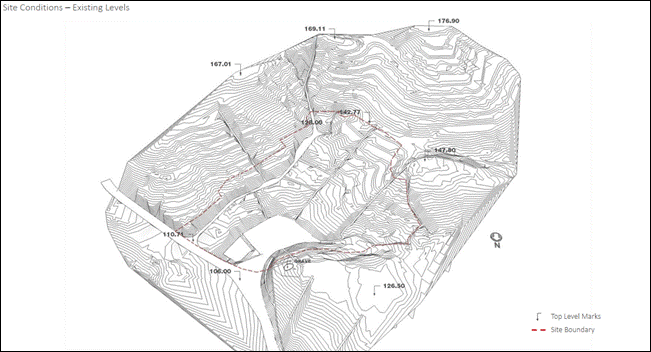
Diagram 2.1 Existing
Levels of Project Boundary and Surrounding Slopes
Cremation Technology
2.6.13. Cremation is a commonly utilized method for local disposal of the deceased in Hong Kong. It involves subjecting the body to high temperatures, leading to the decomposition of organic matter. After cremation, only incombustible remains such as bone ash are left behind. The complete cremation process typically takes around 90 - 120 minutes. Prior to being released into the surrounding air, the exhaust flue gas produced during cremation, which contains air pollutants, undergoes treatment through an air pollution control system.
2.6.14. Flat-bed type and free-falling type cremators are the two most commonly used types in Hong Kong due to their high combustion efficiency.
2.6.15. Free-falling cremators feature a primary combustion chamber positioned at a higher level, along with a mineralization chamber situated below. The cremains (a portmanteau of “cremated” and “remains”), resulting from the cremation process, descend from the primary chamber to the mineralization chamber, which serves as a collection area. This arrangement allows for a continuous cycle where, as the cremains are transferred, another coffin can be introduced into the primary combustion chamber for cremation. Notably, the primary combustion and mineralization chambers operate independently, ensuring efficient and separate functionalities.
2.6.16. Flat-bed cremators are comprised of essential components such as a furnace slide door, primary combustion chamber, secondary combustion chamber, cease-burning chamber, and ash cooling zone. These cremators are constructed using high-quality fire-bricks and insulating materials to ensure durability and efficiency. The primary and secondary chambers are arranged in a compact configuration, facilitating optimal heat exchange between them for improved performance.
2.6.17. The choice of cremation technology will be subject to future tendering process. Nevertheless, the new cremators will incorporate state-of-the-art technology for flue gas filtering and emission monitoring in order to meet the BPM 12/2 (2020) requirements.
Selection
of Size of Cremators
2.6.18. In order to adequately accommodate deceased individuals with significantly heavier body weights, it is imperative to incorporate large cremators capable of handling up to body weight of 250 kg. However, it is important to note that standard cremators, with a handling capacity of 170 kg, offer advantages in terms of energy consumption and fuel requirements per cremation session. As an optimal configuration, the proposed WHS Crematorium is designed to have a combination of one large and nine standard size cremators for the Project. This approach balances the need to handle heavier bodies while promoting energy efficiency and reducing air pollutant emissions.
Choice
of Fuel for Cremators
2.6.19. In existing local crematoria, ultra-low sulphur diesel (ULSD) and Towngas have been utilized. As required by Section 4.2 of BPM 12/2 (2020)), the temperature of 850oC shall be maintained during the entire cremation process. For electric cremators, they are currently very limited in the market and cannot maintain 850oC during the cremation process according to cremator suppliers. Therefore, electric cremators are not considered suitable for this Project.
2.6.20. ULSD is currently used as fuel at the Diamond Hill Crematorium, while Towngas is employed at recently renovated crematoria like Cape Collinson Crematorium and the existing Wo Hop Shek Crematorium at Kiu Tau Road. ULSD combustion may result in emissions of sulphur dioxide (SO2), while Towngas has negligible sulfur content, making SO2 emissions unlikely. In addition, Towngas emits less carbon dioxide (CO2) and carbon monoxide (CO) than ULSD due to its lower carbon intensity, enabling more complete combustion. Therefore, Towngas is the preferred fuel for the proposed cremators at the proposed WHS Crematorium, offering reduced air pollutant emissions and improved combustion efficiency.
Preferred Development Parameters
2.6.21. Based on the above evaluation and discussion, the preferred development parameters and their associated environmental benefits and disbenefits are summarised in the table below.
Table 2.1 Summary of Considered Alternative Development Parameters and Environmental Benefits and Disbenefits
|
Development
Parameter |
Considered Option (* indicates preferred
option) |
Environmental Benefit |
Environmental Disbenefit |
|
Location |
New sites in more remote
areas |
- Less constraints from existing building structures
and more scope for flexible planning |
- Longer construction traffic movement and associated
vehicular emission and traffic noise - Longer commutes for the staff and visitors, resulting
in more vehicular emissions to the environment and newly introduced traffic
noise during operation - Greater habitat loss due to extensive site formation
works - Visual impact of the new crematorium facility |
|
New Site at the bottom of a trough
area in Wo Hop Shek Cemetery* |
- The location with a trough partially screens the
crematorium and hence minimise visual impact - Minimise the extent of slope cutting
and site formation works - Generate less amount of inert and non-inert C&D
materials - Less fugitive dust generated during construction
stage - There are existing access roads which does not require
construction of road and hence less associated environmental pollutions |
- Less efficient dispersion of air emissions from the
cremators but can still achieve AQO |
|
|
Extension at other existing
crematorium sites |
- Not applicable. |
- Maximum site utilization reached and/ or constrained
by site physical and environmental conditions |
|
|
Design – Building Layout |
Cremator room on 1/F and
service halls scattered around* |
- Make use of site topology and avoid extensive
excavation work - Generate less amount of inert and non-inert C&D
materials - Substantially reduces the amount of deep excavation |
- Slightly higher visual intrusion |
|
Ten cremators grouped
together |
- Better operation and higher efficiency in internal
circulation space |
- Larger floor area - More extensive excavation on the existing slopes - Greater habitat loss and generation of construction
waste |
|
|
Design – Chimney Height |
Chimney at a higher level |
- Provide better drafts and facilitate dispersal of
cremator emissions |
- Higher visual intrusion |
|
Chimney at a lower level* |
- Optimised heights to be better screened by natural
terrain |
- Less efficient dispersal of pollutants but can still achieve
AQO |
|
|
Cremation Technology |
Flat-bed |
- Proven technically feasible in HK |
- Not applicable |
|
Free-falling |
- Proven technically feasible in HK |
- Not applicable |
|
|
Selection of Size of
Cremators |
All ten large 250kg
cremators |
- Not applicable |
- Require additional amount of fuel for cremation
process |
|
Nine standard 170kg
cremators and one large 250kg cremator* |
- Balancing the need to handle
heavier bodies while promoting energy efficiency and reducing air pollutant
emissions |
- Not applicable |
|
|
Choice of Fuel for Cremators |
Ultra-low sulphur diesel (ULSD) |
- Need not connect to Towngas network |
- Emission of SO2 - Higher emission of CO2 and CO - Extra exaction required for an underground fuel tank |
|
Towngas* |
- Negligible emission of SO2 - Less emission of CO2 and CO - No need to construct underground fuel tank |
- Need to connect to Towngas network |
2.7. Visual Treatment of the Proposed Development
2.7.1. The Project has no direct impact on landscape with distinctive character/resources and would not induce pronounced visual change from key public viewing points or on existing visually sensitive areas and major visual resources enjoyed by the public being affected (Appendix A and Appendix B in Annex 18 to the EIAO-TM refer).
2.7.2. The Project Site is located in a vegetated trough area surrounded by slopes on three sides in Wo Hop Shek area. In order to avoid extensive excavation works, the proposed crematorium will sit at the bottom of the trough area with ancillary facilities planned largely according to existing topography. As shown in the photomontages from different view points (Figure 2.3a and Figure 2.3b), the crematorium is largely screened by the surrounding natural terrain with dense vegetation and its visual impact would be minimised.
2.7.3. To balance other environment impact, the heights of the chimney structure have been optimised to approximately +148.950mPD, which would be largely screened by the natural terrain with higher ridgeline levels. Only the tips of the chimneys could be seen from distant views according to the photomontages. Natural materials such as fairfaced concrete and timber pattern materials, together with adequate plantings and greening, will be implemented to further blend the building structure into the surrounding natural environment (Figure 2.4).
2.8. Community Consultation
Comments Received during EIA Process
2.8.1. Project Profile No. PP-657/2023 was submitted to EPD on 19 July 2023 and was exhibited for 14-day public inspection between 19 July 2023 to 1 August 2023. Two sets of public comments were received during the public inspection. One indicated no comment on the Project while the other expressed concerns over aspects including air, landscaping and trees, ecology and waste management. Sections 3 to 7 of this EIA report address the potential environmental impacts of the Project. The following table summarizes the key comments and responses of the Project Proponent.
Table 2.2 Key Comments Received during EIA Process
|
Key Concern / Issue |
Comment |
Response and Measures Adopted |
|
Air |
-
Outdoor joss paper or joss sticks burning activities should be
prohibited within the project area to avoid significant air pollution and
reduce the risk of hillfire |
Joss paper burning will
only be allowed at the eco-joss paper burners. The design and operation of eco-joss
paper burners will be based on EPD’s “Guidelines
on Air Pollution Control for Joss Paper Burning at Chinese Temples,
Crematoria and Similar Places”.
With the adoption of proper flue gas treatment technology and other
administrative measures according to the above guideline, adverse air quality
impact due to operation of outdoor joss paper burning activities is
anticipated to be insignificant. The eco-joss paper burners will be covered on the
sides with only a small inlet to ensure that the burning joss paper are kept
within the burners to minimise risk of hillfire. For details, please refer to Section 3. |
|
Landscaping
and Trees |
-
Adopt proper greening measures for the building structure of the
crematorium, such as using green roofs, walls and facades -
Crematorium should blend in with the natural landscape and minimize its
disturbance to the scenic value -
Trees of particular interest within the Project Site should be retained
and allow sufficient growing space |
Design of the proposed WHS Crematorium has considered
as far as practicable preserving and enhancing the greenery effect of the
site by retaining the existing trees and planting new trees. Natural materials such as timber pattern trellis and
fair faced concretes will be used to blend the proposed cremators to the surrounding environment. Trees of particular
interest (including
Eucalyptus citriodora and Dalbergia
balansae, see locations shown in Figure 2.5
(1 of 4)) within
the Project Boundary will be retained on site without
compromising their growth. Figures
2.4 and 2.5 refer. |
|
Ecology |
-
Use greening to provide habitats for
wildlife wherever possible. -
Reduce light pollution at night by controlling the outdoor illumination
intensity and angles of the crematorium, so as to
reduce impact on nocturnal activities, reproduction and other behaviors of
wildlife. -
Avoid bird collision on glass wall by avoiding the use of large-sized glass
surface or taking proper preventive measures, such as applying patterns or
stickers on the glass, installing bird deterrent devices or screens, or
adjusting the reflectivity or transparency of the glass. |
Will maximise the use of native plant
species for tree compensation to provide habitats for wildlife. Lighting control measures at night during
both construction and operation phases are proposed as one of the ecological
mitigation measures to minimise the development’s impact on nocturnal
species. Excessive use of large-sized glass
surfaces for the building structure has been avoided in the design stage to
reduce the risk of bird collisions. |
|
Waste
Management |
-
Construction and demolition (C&D)
materials, chemical wastes, dredged sediments, refuse etc. should be properly
stored, transported, and finally disposed of at the designated facilities. -
Unauthorized disposal of solid waste
should be strictly prohibited. -
Deterrent clauses should be incorporated in the work contracts to
monitor and penalize any fly-tipping activities. |
Section 6 of this EIA Report discusses the
construction and operation activities that would generate C&D materials,
chemical waste and general refuse, etc.
Waste management measures have been proposed to avoid, minimize,
reuse, recycle and finally dispose of waste to be generated by the proposed
crematorium development. Disposal will be undertaken in
compliance with statutory requirements.
All the recommended waste management measures will be incorporated in
the contract documents with the future contractor(s). |
Comments from North District Council and Other Received
Public Comments
2.8.2. District Council (DC) Members have expressed their comments concerning the development of the Project and other interfacing projects within the WHS Cemetery during the 17th Meeting of North District Council in June 2023 [[1]]. In addition, public consultations were also carried out for the residents of nearby estates and villages to be possibly affected by the Project, as well as green groups and other concern groups, on 6 June, 9 June, 21 July and 15 August 2023 to obtain the views and concerns from the public and stakeholders. The relevant environmental comments have been reviewed and our responses and recommended measures are summarized in the Table 2.3 below.
Table 2.3 Environmental Comments Received
|
Key Concern / Issue |
Comment |
Response and Measures Adopted |
|
Air Quality |
Emissions from the
crematorium may be trapped within the trough area |
De-NOxification (DeNOx) system will be adopted to ensure the emission concentration
level can fulfil the requirements of the latest concentration limit for
emission in the BPM 12/2 by EPD. Besides, quantitative air quality assessment has been
conducted and demonstrated that there will be no adverse air quality impacts
at the identified representative sensitive receivers. Details can be referred
to Section 3. |
|
Air Quality |
Emissions from joss
paper burners from the Project and future columbarium projects will worsen
the air quality |
Eco-joss
paper burners will be adopted. EPD’s “Guidelines
on Air Pollution Control for Joss Paper Burning at Chinese Temples,
Crematoria and Similar Places” will be complied with. With the adoption of proper flue gas
treatment technology and other administrative measures, adverse air quality
impact due to operation of joss paper burners is anticipated to be
insignificant. Details can be referred to Section 3. |
|
Landscape/ visual |
Greening enhancement and
visual mitigation measures |
The Project Site
is located at the bottom of a trough area in the WHS Cemetery. Its visual
envelope will be largely screened off by the natural terrain and the visual
impact would be minimised. The chimneys of the
cremators in the proposed crematorium have been carefully designed to
minimize their visual impact on the surrounding area. Their heights have been
optimized to be below the ridgeline levels of the terrain, effectively
concealing them behind the natural landscape. This strategic placement
ensures that the chimneys are mostly hidden from view, reducing any potential
visual disruption they may cause. Due to the site
constraint, felling of existing trees is needed for the construction of the
crematorium. Compensation trees will be planted around the crematorium, which
can also enhance the greening of the proposed crematorium. In addition, natural materials (e.g. timber
pattern trellis and fairfaced concretes) will be used to blend crematorium
into the surrounding natural environmental.
The use of vertical greening will also help the building structures
harmonize with the nearby environment, creating a sense of unity and
continuity. A detailed vegetation
survey will be carried out before construction phase to confirm the
plant/tree species found within the Project Boundary. Preservation,
transplant and compensation proposal for flora of Conservation importance
following relevant guidelines by the DevB will be
prepared and submitted to AFCD for agreement before the commencement of the
related works. Figures
2.3 - 2.5 refer. |
2.9. Proposed Development Scheme
Overall Design and layout of plants
2.9.1. The proposed WHS Crematorium comprises a number of elements, which are described in Section 2.4.1. Its layout plans and section plans are shown in Figure 2.1 and Figure 2.2, respectively. Figure 2.4 illustrates the landscaping treatment, structures and facilities/ chimneys etc. of the proposed crematorium. Specific building design parameters are summarised in Table 2.4 below.
Table 2.4 Summary of Conceptual Building Design Layout
|
Parameters |
Units |
|
Number of Buildings |
3 |
|
Number of Storeys |
4 |
|
Building Height |
+137.560 mPD
(Service Halls 1) +138.000 mPD
(Service Halls 2) +137.280 mPD
(Service Halls 3) +136.600 mPD
(Service Halls 4) +136.200 mPD
(Service Halls 5 & 6) +125.550 mPD
(Crematorium) |
|
Number of Cremators |
10 (9 standard cremators and
1 large cremator) |
|
Number of Chimney(s) (1)
|
3 |
|
Exhaust Stack Release Height
(2) |
Chimney nos. 1 and 2: +141.6mPD
(~28m from cremator plant room at 1/F of crematorium building block) Chimney no. 3: +144.84mPD (~31m
from cremator plant room at 1/F of service hall block) |
|
Notes: (1) Each cremator will have
its own individual exhaust stack. For
the 9 standard cremators, 4 of their individual stacks will be grouped inside
Chimney no.1, the other 4 stacks will be similarly grouped inside Chimney no.
2. The last standard cremator stack and
the large cremator exhaust stack will be grouped inside Chimney no. 3. (2) The chimney structures
are designed to be several metres higher than the release height of the
individual cremator stacks to reduce visual impact. Refer to Appendix 3.7. |
|
Cremation System
2.9.2. The Project entails the installation of 10 cremators, consisting of 9 standard cremators and 1 large cremator with handling capacities of 170 kg and 250 kg respectively. The normal operating hours for cremation will be from 08:30 to 23:00, but occasional extensions may occur. On average, there will be an estimated 68 cremation sessions per day (9 standard cremators x 7 sessions per cremator per day + 1 large cremators x 5 sessions per cremator per day). The duration of each cremation session, whether using standard or large cremators, is approximately 90 - 120 minutes. Towngas will be utilized as the fuel for combustion, and incombustible residues will remain after the cremation process. In the event of a utility electricity supply failure or interruption, an emergency generator will serve as a backup power source to ensure the completion of the cremation session.
2.9.3. The cremation process involves the delivery of the coffin to the cremator via an insertion system, where it enters the primary combustion chamber. The chamber is preheated using burners, and the coffin self-ignites upon entering. To combust the remaining suspended particulates generated during the process, the secondary chamber is heated to a minimum of 850ºC. This temperature is maintained throughout the entire cremation process. A heat recovery system is implemented to utilize the thermal energy of the exhaust gas, preheating the combustion air to help sustain the temperature in the combustion chamber, with the supplied air being preheated to over 300ºC. The heat exchanger in the heat recovery system is designed to rapidly cool the flue gas through the temperature range where dioxins may reform, minimizing the potential for dioxin reformation.
2.9.4. During the cremation process, the bone ash remains within the primary combustion chamber. It is then fed into the mineralization chamber and subsequently into the cooling zone. The flue gas undergoes cooling in a three-stage heat exchanger, reducing its temperature from 1000ºC to approximately 180ºC - 200ºC. Prior to discharge, the flue gas is filtered, and the emissions are released through the chimney. Diagram 2.2 provides a schematic representation of the sample cremation system's process flow.
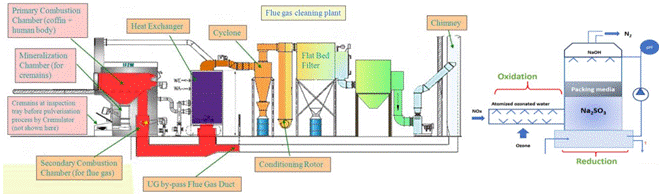 Diagram 2.2 Schematic Key Process Flow of a Sample Cremation System
2.9.5. The design of the cremation system will take into account the parameters used in other crematoria that utilize Towngas for combustion. Specifically, references have been made to the design parameters from the approved Environmental Impact Assessment (EIA) studies for the Phased Reprovisioning of Cape Collinson Crematorium (AEIAR-137/2009) and the Provision of Cremators at Wo Hop Shek Crematorium (AEIAR-119/2008), as well as cremator stack monitoring data from the Cape Collinson Crematorium.
2.9.6. For the 170 kg standard cremators, the flue gas volumetric flow rate will be 2,807 m3/hour (at 15.1% oxygen, 9.4% moisture, and 130°C). In comparison, the 250 kg large cremator will have a flue gas volumetric flow rate of 3,474 m3/hour (at 15.2% oxygen, 8.4% moisture, and 106°C). The exhaust diameter will be 0.29m for standard cremator and 0.33m for large cremator. The exit velocity of the flue gas at full load conditions will meet the minimum requirement of 10m/s as specified in BPM12/2(2020). The individual cremator exhausts will be grouped together in three large chimney stacks (refer to Table 2.4 and Appendix 3.7, which will emit from approximately 30m aboveground. The specific locations of the chimneys can be found in Figures 2.1a to 2.1f.
2.9.7. A Continuous Emission Monitoring System (CEMS) will be installed at designated locations throughout the entire cremation process. This system monitors the levels of pollutants, temperature, and oxygen content in the flue gas. In the event of abnormal pollutant emissions, an audio and visual alarm will alert the operator. Additionally, a monitoring system will be implemented to facilitate data and signal communication within the cremation plant. This system enables EPD and operators to monitor the emissions and process parameters of the cremator lines, ensuring compliance with regulations and facilitating effective management of the cremation process.
Air Pollution Control Technology -
Cremators
2.9.8. In order to reduce the emissions of air pollutants generated during the cremation process, the installation of an Air Pollution Control (APC) equipment is required. The following APC technologies are applicable to cremation technologies. The ultimate air pollution control system adopted will be subject to detail design.
Wet Scrubbing
2.9.9. This method removes air pollutants by dissolving and chemically absorbing them in a scrubbing solution, which can be water or other chemical solutions such as sodium hydroxide, acidified potassium permanganate, hypochlorite, or acidic solutions.
Rapid Quenching
2.9.10. To prevent the formation of dioxins, which are toxic compounds, during the cremation process, rapid quenching is used. Rapid quenching involves quickly cooling down the flue gas to a temperature below 200°C within a couple of seconds. By doing so, the time window for dioxin formation is minimized, reducing the chances of dioxins being created. This helps improve the environmental performance of the crematorium.
Electrostatic Precipitation
2.9.11. Electrostatic precipitators are utilized to collect fine particulate matter in the flue gas. An electric field is generated to charge the fine particles, which are then collected on oppositely charged collector plates. The collected particulates can be easily handled and disposed of.
Cyclone Separator
2.9.12. The cyclone separator helps remove larger particles from the flue gas. It uses spinning motion to separate the particles, which then fall into a collection hopper. This helps ensure cleaner air by filtering out the bigger particles. To capture the filtered dust from the cyclone separator, a dust removal device such as a collection hopper or bag filter can be employed.
Flat Bag Filters
2.9.13. Flat bag filters are commonly employed to collect particulate matter. The flat bag filter system used in cremation has three main parts: a conditioning rotor, a flat bag filter, and a particle recycling system. The conditioning rotor evenly distributes additive particles in the flue gas to prevent clumping. The flat bag filter, operating under negative pressure, captures dust particles. It has a top inlet for smooth gas flow and a synthetic fibre filter element. A dust collection hopper collects the captured dust. The particle recycling system reuses additive particles by reintroducing them into the flue gas stream.
Neutralization with Chemicals
2.9.14. Used when the flue gas is highly acidic or alkaline. Lime or soda lime solution is sprayed into the flue gas to neutralize acidic gases, while inorganic acids are used to neutralize highly alkaline flue gas. Spray nozzles or jet nozzles are used to introduce the neutralizing solution into the flue gas stream.
Carbon Injection
2.9.15. Removes organic air pollutants by injecting fine activated carbon/charcoal powder into the flue gas ducting, where it adsorbs the organic pollutants. The charcoal powder is then collected using a bag filter. This method helps control the emissions of dioxins and is a dry APC process.
2.9.16. In view of EPD’s requirement in BPM12/2(2020) that cremators shall be equipped with flue gas denitrification system(s) (DeNOx system(s)) with a minimum nitrogen oxides (NOx) removal efficiency of 50%, below are the common DeNOx technologies.
SCR (Selective Catalytic Reduction)
2.9.17. SCR involves the use of a catalyst to convert NOx into nitrogen and water through a chemical reaction. In this process, a reducing agent, typically an ammonia-based compound such as urea or ammonia, is injected into the flue gas stream. The flue gas, along with the injected reducing agent, is then passed over a catalyst bed, where the NOx reacts with the reducing agent to form harmless nitrogen and water.
Selective Non-Catalytic Reduction (SNCR)
2.9.18. SNCR is a process that reduces NOx without the use of a catalyst. In SNCR, a reducing agent, typically ammonia or urea, is injected into the combustion chamber or post-combustion zone at a specific temperature range. The injected reducing agent reacts with the nitrogen oxides in the flue gas to form nitrogen, water, and other harmless compounds. The reaction occurs due to the high temperature in the combustion process.
NOx Scrubbing
2.9.19. NOx scrubbing is a wet scrubbing technology that reduces NOx in the flue gas. It involves first oxidizing the flue gas with substances like ozone (O3) into soluble nitrogen dioxide (NO2), and then further converting it into nitrogen gas via a reducing agent in a packed bed.
Air Pollution Control Technology –
Joss Paper Burners
2.9.20.
This Project
involves the installation of six eco-joss paper burners with a burning capacity
of 40kg/hr each at the crematorium. The burners will generally operate between
08:30 and 18:00 at the proposed crematorium.
2.9.21. For the proposed joss paper burners, the flue gas from the burning of joss papers will be properly treated through water scrubbers and electrostatic precipitators before being discharged, in accordance with EPD’s “Guidelines on Air Pollution Control for Joss Paper Burning at Chinese Temples, Crematoria and Similar Places”. With the adoption of proper flue gas treatment technology and other administrative measures, air quality impact due to operation of joss paper burners is anticipated to be insignificant and will be assessed qualitatively in the Section 3.
Sequence of Construction Works
2.9.22.
After site clearance, soil excavation and cart
away from site will be carried out to the site formation levels. Local pipe
pile/ sheet pile walling will be installed to facilitate the excavation for
footing foundation and retaining wall construction. After completion of footing
foundation, erection of formworks, fixing of rebars and concreting of
superstructure will be carried out floor by floor. Then, building services,
facilities and finishes installation will be carried out when the
superstructure is substantially completed.
2.10. Project Implementation Programme
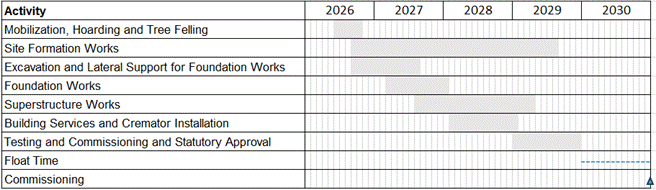
2.10.1. Construction of the Project is planned to commence in 2026 and end in 2030. Commission of the proposed WHS Crematorium is in 2030 tentatively. The tentative construction programme for the Project is provided in Table 2.5.
Table 2.5 Tentative Construction Programme
2.11. Concurrent Projects
2.11.1. In order to assess the cumulative impacts, a review of best available information at the time of preparing this EIA report has been conducted to identify concurrent projects in the vicinity that are undergoing planning, design, construction and/or operation within the same construction and/or operation period of the Project.
2.11.2. There are a few concurrent projects identified in the vicinity of the Project, which may bear potential direct / indirect / cumulative environmental impacts with the Project. These projects are:
· Provision of Columbarium at Wo Hop Shek – Phase 2,
· Provision of Columbarium at Wo Hop Shek – Phase 3,
· Provision of Columbarium at Wo Hop Shek – Phase 4,
· Road Improvement Works at Wo Hop Shek Cemetery for Phases 2 and 3 Columbarium Development, and
· Utilities Improvement Works connecting to Kiu Tau Road
2.11.3. The potential impacts of concurrent projects during the construction and operation of the proposed Project are identified as follows. Figure 2.6 shows the locations/ alignments of these concurrent projects.
Provision of Columbarium at Wo Hop Shek (Phase 2, Phase 3 and Phase 4)
2.11.4. As the largest public cemetery in Hong Kong, WHS Cemetery occupies an area of about 220ha. With the increase in cremation rate over the past decades, the demand for coffin burial in WHS Cemetery is declining. To better utilise land resources, some of the vacant land and unused coffin burial grounds would be used for niche development. To this end, FEHD has identified a number of sites within WHS Cemetery for conversion into columbarium development. Given the scale of the development, the sites will be developed in phases. While the Phase 1 columbarium has been commissioned since 2020, the construction of Phase 2 and Phase 3, with proposed 35,000 niches and 45,000 niches respectively [2], will commence in 2026 and 2027, which overlaps with the construction period of this Project. Cumulative impacts during construction phase such as construction dust, construction noise, water quality and ecological impacts are anticipated and will be addressed. Cumulative impacts during the operation phase including the vehicular emissions and road traffic noise impact from the operation of the access road and ecological impacts due to the increased public access (e.g. human disturbance and road traffic) will be anticipated and addressed as appropriate.
2.11.5. Construction of Phase 4 columbarium development is planned to start in 2031, when the WHS Crematorium would begin its operation. As the development is located within 500m of the Assessment Area of the Project. The traffic forecast has also been taken into account the induced traffic from this concurrent project, and the cumulative impacts of vehicular emission and traffic noise will be addressed as appropriate in Section 3 and Section 4 respectively.
Road Improvement Works at Wo Hop Shek Cemetery for Phases 2 and 3 Columbarium Developments, and
Utilities Improvement Works connecting to
Kiu Tau Road
2.11.6. The captioned road works involve road widening and general road improvement works for Phases 2-3 columbarium development at WHS Cemetery. According to the latest available information, the works would mainly include the following:
a. construction of a new single lane two-way road of about 1.6km long and 7.3m wide with minimum 2.75m wide footpath on both sides, from WHS Cemetery main entrance to its junction with the slip road to Gallant Garden, catering for the Phase 2 columbarium development;
b. widening of the existing connection slip road to Gallant Garden of about 1.0km long and 7.3m wide with minimum 2.75m wide footpath on both sides, catering for the Phase 3 columbarium development;
c. works for road connection, drainage, sewerage, waterworks, geotechnical works, landscaping, environmental mitigation measures and other utilities services; and
d. other associated works etc.
2.11.7. In consideration of the increased numbers of niches planned in the Phases 2-4 columbarium development, it is anticipated that the numbers of visitors would be significantly increased. Therefore, additional services such as power supply, water supply, sewerage connection, drainage connection, communication cables and street lightings will be required to cater for the visitor increase. Besides, there is a lack of utilities along existing Wo Hop Shek Road to serve the Project. Hence, the road improvement works and utilities improvement works, which are undertaken by CEDD, will take place for the columbarium and crematorium development at WHS Cemetery and the associated ancillary works. In accordance with the utilities record plans received from the Government departments and utilities company, it is identified that most of the existing utilities are located at the junction of Kiu Tau Road/ Ming Yin Road.
2.11.8. The tentative construction period of the road improvement works is between 2026 and 2029, whilst that of the utilities improvement works would be from 2023 to 2026. These construction works overlap with the construction period of the current Project. Cumulative impacts during construction phase such as construction dust, construction noise, water quality and ecological impacts are anticipated and will be addressed. Cumulative impacts during the operation phase including the vehicular emissions and road traffic noise impact from the operation of the improved road and ecological impacts due to the increased public access (e.g. human disturbance and road traffic) will be anticipated and addressed as appropriate.
2.11.9. The tentative implementation programme of these concurrent projects and the potential cumulative environmental impacts with this Project are summarised in Table 2.6.
Table 2.6 Potential Concurrent Projects
|
Potential Concurrent Project |
Within 500m Assessment Area of this Project |
Tentative
Construction Period |
Potential
Cumulative Environmental Impact |
||
|
Start |
Completion |
Construction |
Operation |
||
|
Provision of Columbarium at Wo Hop Shek – Phase 2 |
Yes |
2026 |
2029 |
§ Construction dust § Construction noise § Water quality |
§ Vehicular emission § Road traffic noise |
|
Provision of Columbarium at Wo Hop Shek – Phase 3 |
No |
2027 |
2030/2031 |
§ Nil |
§ Vehicular emission § Road traffic noise |
|
Provision of Columbarium at Wo Hop Shek – Phase 4 |
Yes
(partially) |
2031 |
2035 |
§ Nil. |
§ Vehicular emission § Road traffic noise |
|
Road Improvement Works at
Wo Hop Shek Cemetery for Phases 2 and 3 Columbarium Development |
Yes |
2026 |
2029 |
§ Construction dust § Construction noise § Water quality § Ecology |
§ Vehicular emission § Road traffic noise § Ecology |
|
Utilities Improvement Works connecting to Kiu Tau
Road |
Yes |
2023 |
2026 |
Nil. |
|
2.11.10. Various cumulative impacts from different concurrent projects have been identified and detailed justifications on consideration of various cumulative environmental impacts from individual concurrent project are included in the corresponding technical sections of the EIA Report. The construction works of this Project and concurrent projects shall be well coordinated among the relevant government departments to minimize the adverse effects brought to the vicinity.