|
|||
 |
|||
| In
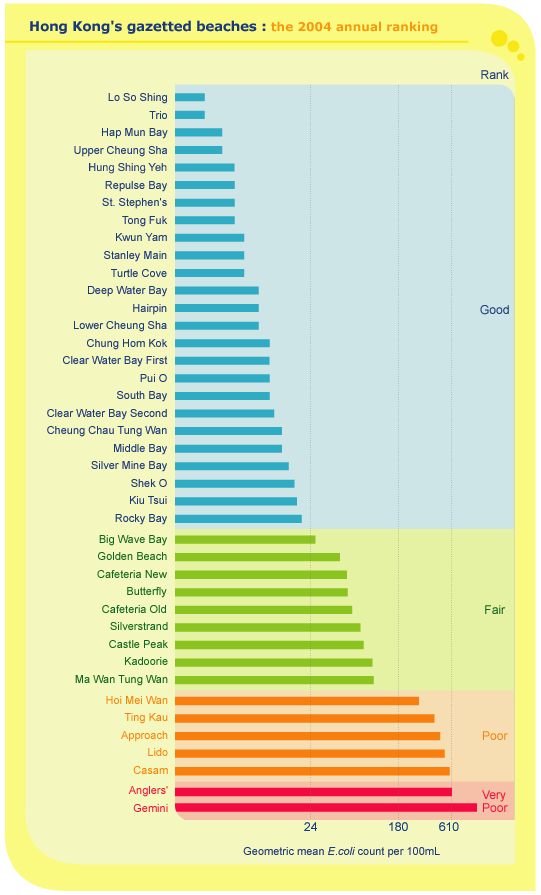
years when Hong Kong experiences relatively little rain, polluted run-off
from the hinterland and overflowing septic tanks are less of a problem,
resulting in a general improvement in beach water quality. Hong
Kong experienced a particularly dry year in 2004, and that seems
to have helped the overall water quality at its beaches. As the
2004 annual ranking chart shows, 25 beaches were ranked ‘Good’
for the year and nine were ranked ‘Fair’. Five attracted
a ‘Poor’ ranking, and just two came in at ‘Very
Poor’. These rankings can to a certain extent be correlated
with rainfall across the year. In June, for example, rainfall recorded
at the Hong Kong Observatory was just 145 mm for the month, down
some 62% on the average for that month. Overall, for the swimming
season from March to October, Hong Kong experienced 21% less rainfall
than it does in an average year, while some specific areas received
even less. Tsuen Wan, for example, recorded a massive 34% drop. |
|||
 |
|||
 |
|||
|
|||
 |
|||
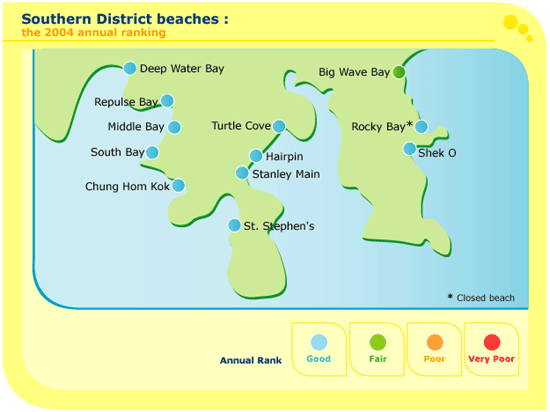
| In
2003, 10 of the 12 beaches in Southern District were ranked ‘Good’
and two ‘Fair’, and this year 11 achieved the ‘Good’
ranking. Big Wave Bay remained ranked as ‘Fair’, although
its E. coli count dropped
to a level close to ‘Good’. It remains to be seen whether
it can maintain this trend next year, since residents living behind
the beach are still dependent on septic tank and soakaway pit systems
which can overflow after heavy rain. Rocky Bay, meanwhile, made
significant improvements and moved from a ‘Fair’ to
a ‘Good’ ranking. Rocky Bay has been closed for some
years now for reasons beyond simply those of water quality. |
|||
 |
|||
 |
|||
|
|||
|
|||
 |
|||
 |
|||
 |
|||
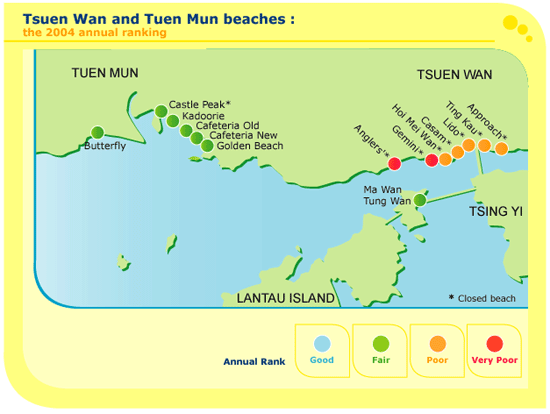
| Hong Kong’s western coastline includes a string of picturesque
beaches running from Tsuen Wan around to Tuen Mun. Six of these
beaches are in Tuen Mun District and eight in Tsuen Wan District,
but they are treated together here since they are all located along
the length of Hong Kong’s western coastline. Unfortunately,
a combination of factors has meant that despite their idyllic appearance
some of these beaches are unsuitable for swimming, especially those
closer to Tsuen Wan. Currently, seven of the eight beaches in the
Tsuen Wan District are closed, and one of the six beaches in the
Tuen Mun District. |
|||
 |
|||
|
|||
| One
factor continuing to affect water quality in the Tsuen Wan area
is the Harbour Area Treatment Scheme (HATS), which discharges effluent
approximately 8 kilometres away. Disinfection of the HATS effluent
has not yet begun, and although the discharged effluent has been
treated the sheer volume of discharge is enough to push up E. coli counts at the Tsuen Wan District beaches to high levels. This
effect is exacerbated by overflowing septic tanks from unsewered
villages in the hinterland during periods of heavy rain, a problem
that will continue until the public sewerage programme is completed. |
|||
 |
|||
|
|||
 |
|||
|
|||
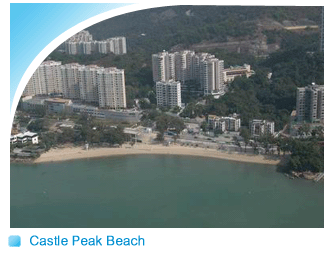 |
Castle Peak Beach is also of some interest.
This beach has been closed for many years, dating back to a period
in the 1980s before the EPD was even established. Over the years,
its water quality has gradually improved from its initial ‘Very
Poor’ ranking to ‘Poor’ in 1993. Following extensive
sewerage works at the beach, water quality there finally met the
WQO in 1999, and it was ranked ‘Fair’. It has remained
ranked ‘Fair’ consistently now for the past five years.
The EPD had advised the beach management that Castle Peak Beach
is suitable for re-opening, and it is hoped this will occur soon.
In the meantime, of course, the EPD continues with its regular monitoring
of the beach. |
||
 |
|||
 |
|||
|
|||
 |
|||
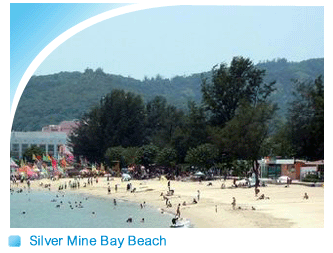
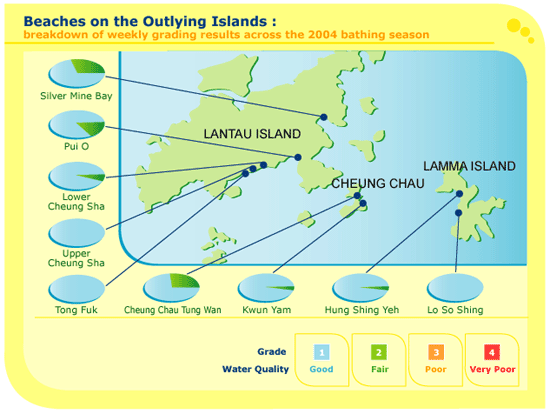
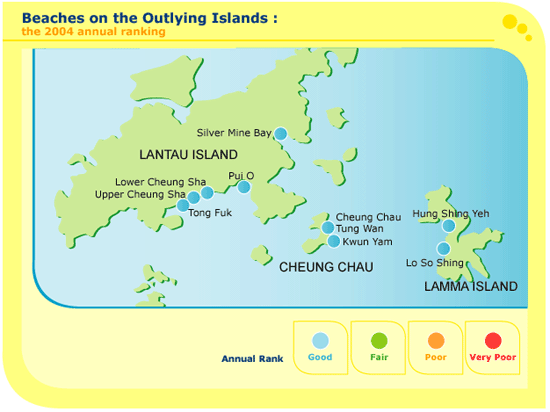
| All
of the beaches scattered around Hong Kong’s outlying islands
were ranked ‘Good’ in 2004. The most impressive performer
was Silver Mine Bay on Lantau. In 2004, its geometric mean E.
coli count decreased from 50 to just 14 per 100 mL, a quite
remarkable improvement that saw its annual ranking upgraded from
‘Fair’ to ‘Good’. Three beaches—Lo
So Shing, Tong Fuk, and Upper Cheung Sha—registered Grade
1 readings 100% of the time across the season. |
|||
 |
|||
 |
|||
|
|||
 |
|||
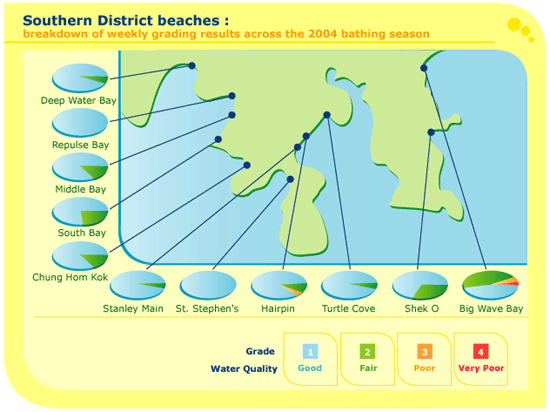
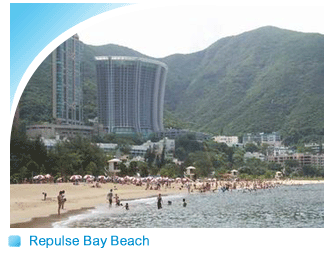 Southern District contains some of Hong Kong’s most popular and
most heavily-used beaches, and in 2004 visitors were able to enjoy
high quality water at beaches throughout the district. Of the 12
beaches in the district, the two best-ranked in terms of having
the lowest annual geometric mean E. coli levels across the year were Repulse
Bay and St. Stephen’s. Both these beaches achieved Grade 1
status across the entire swimming season. Repulse Bay Beach’s
wide stretches of sand and safe, beautiful swimming environment
made it one of the most popular in Hong Kong, with over 1.9 million
visits made there up to the end of October. Just around the headland,
the smaller but equally popular Deep Water Bay Beach managed to
attract nearly 2.3 million visits in the same period. These figures
are an obvious reflection of the importance of Hong Kong’s
beaches to public recreation and enjoyment, and a strong reminder
of the importance of maintaining beach water quality at the highest
possible levels.
Southern District contains some of Hong Kong’s most popular and
most heavily-used beaches, and in 2004 visitors were able to enjoy
high quality water at beaches throughout the district. Of the 12
beaches in the district, the two best-ranked in terms of having
the lowest annual geometric mean E. coli levels across the year were Repulse
Bay and St. Stephen’s. Both these beaches achieved Grade 1
status across the entire swimming season. Repulse Bay Beach’s
wide stretches of sand and safe, beautiful swimming environment
made it one of the most popular in Hong Kong, with over 1.9 million
visits made there up to the end of October. Just around the headland,
the smaller but equally popular Deep Water Bay Beach managed to
attract nearly 2.3 million visits in the same period. These figures
are an obvious reflection of the importance of Hong Kong’s
beaches to public recreation and enjoyment, and a strong reminder
of the importance of maintaining beach water quality at the highest
possible levels.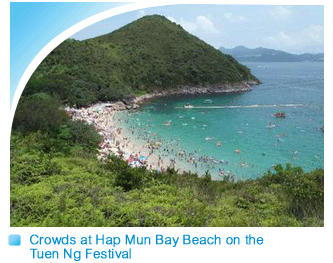
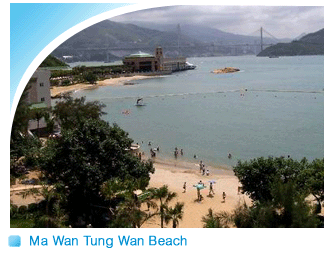 The
district saw improvements in water quality for all the Tsuen Wan
beaches except Gemini, so much so that four of the District’s
eight beaches were upgraded to ‘Poor’ from their previous
year’s ‘Very Poor’ ranking. The particularly dry
weather over the year was a contributing factor in this slight general
improvement in water quality. The change was not major enough to
warrant opening these beaches however, due to the fact that their
water quality can still fluctuate quite dramatically at times. The
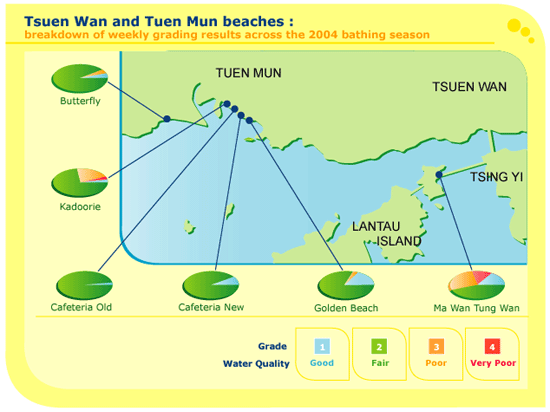
one beach that was not closed in Tsuen Wan District was Ma Wan Tung
Wan Beach, located on an island a little distance from the other
beaches, which maintained a ‘Fair’ ranking. Ma Wan Tung
Wan Beach also showed a general improvement in water quality for
the year, although occasional Grade 4 readings were recorded.
The
district saw improvements in water quality for all the Tsuen Wan
beaches except Gemini, so much so that four of the District’s
eight beaches were upgraded to ‘Poor’ from their previous
year’s ‘Very Poor’ ranking. The particularly dry
weather over the year was a contributing factor in this slight general
improvement in water quality. The change was not major enough to
warrant opening these beaches however, due to the fact that their
water quality can still fluctuate quite dramatically at times. The
one beach that was not closed in Tsuen Wan District was Ma Wan Tung
Wan Beach, located on an island a little distance from the other
beaches, which maintained a ‘Fair’ ranking. Ma Wan Tung
Wan Beach also showed a general improvement in water quality for
the year, although occasional Grade 4 readings were recorded.