 |

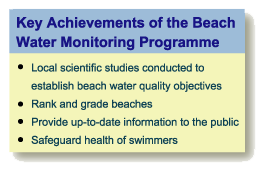 |
Established in 1986, the EPD has now been monitoring water quality at Hong Kong's beaches for twenty years. During that time, it has undertaken a number of important initiatives to improve and safeguard the health and safety of beach users. These initiatives include:
• |
developing a comprehensive scientific programme for monitoring beach water quality; |
| • | providing regular, reliable and up-to-date water quality information to the general public; |
| • | working in collaboration with other departments to extend the sewer network and improve sewage facilities, with a particular emphasis on reducing pollution from beach hinterlands; |
| • | enforcing environmental legislation designed to reduce pollution and help safeguard beach water quality. |
 |
Over the twenty years of its operations, the EPD has seen a great many changes that have affected beach water quality, for better and, sometimes, for worse. One of the most obvious is population growth: Hong Kong's population has grown from 5.5 million two decades ago to around 6.9 million in 2005. Such growth has brought with it rapid commercial and residential development, particularly in new towns such as Tsuen Wan and Tuen Mun. While Hong Kong's new towns were applauded as successful models of urban development, initially at least they placed severe stress on an overloaded drainage and sewerage network. Beaches suffered as a result, with sewage frequently finding its way into the sea. The result was that, for the first ten years or so of its existence, the EPD observed some signs of deterioration in beach water quality.
|
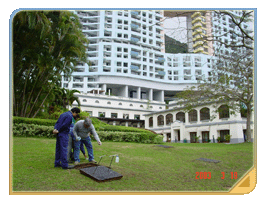
To improve beach water quality over the last two decades, the EPD has implemented a whole series of environmental protection measures designed to minimise the environmental impact associated with the pressure of development and rising population. Amongst these, perhaps the most significant was the implementation of Sewerage Master Plans drawn up for districts, a process of extending the public sewerage network right across Hong Kong. The EPD was also heavily involved in enforcing environmental legislation, most of it becoming effective in the late 1980s. Legislation controlling disposal of waste and water pollution was vigorously enforced, helping create a change of attitude amongst residents and leading to a significant improvement in water quality at most beaches. Pollution incidents were tackled and prevented effectively by the actions established in the Beach Pollution Response Plan.
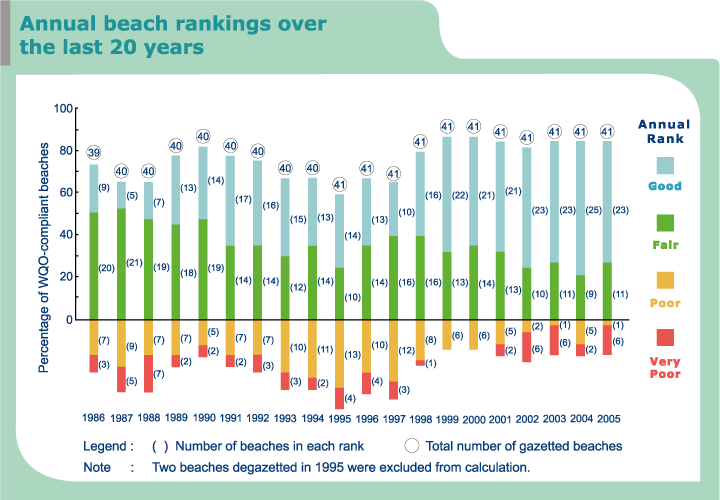
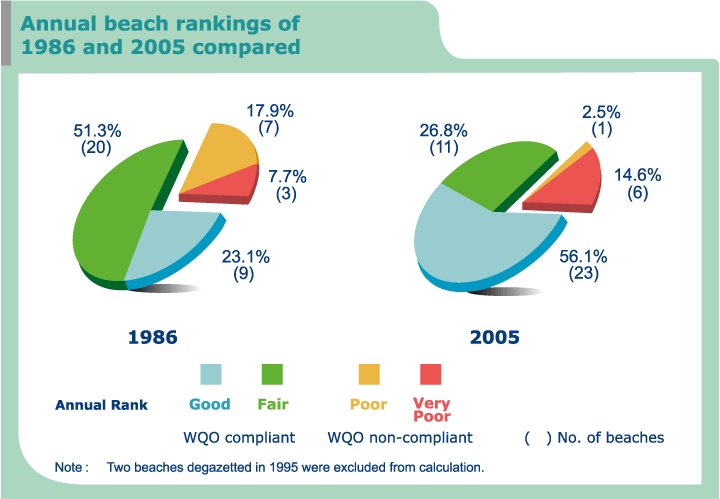
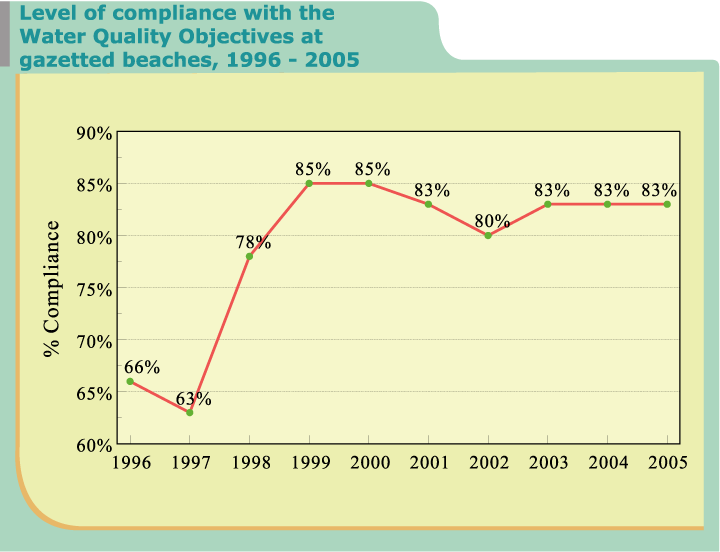
The positive achievements over the last twenty years have been reflected in the statistics. For example, the percentage of beaches complying with the WQO has risen from 74% in 1986 (29 of 39 beaches recorded in the statistics) to 83% in 2005 (34 of 41 beaches), after dipping dramatically low in the mid 1990s. Significantly fewer beaches now fail to meet the WQO: in 1987 fourteen beaches did not comply with the WQO, but in 2005 the number had been halved to seven. In addition, the percentage of beaches ranked 'Good' has more than doubled over the period, soaring from just 23% in 1986 to 56% in 2005. Since 1999, the WQO compliance rate has been steady at over 80%, a clear indication of a genuine long-term improvement in water quality.
|
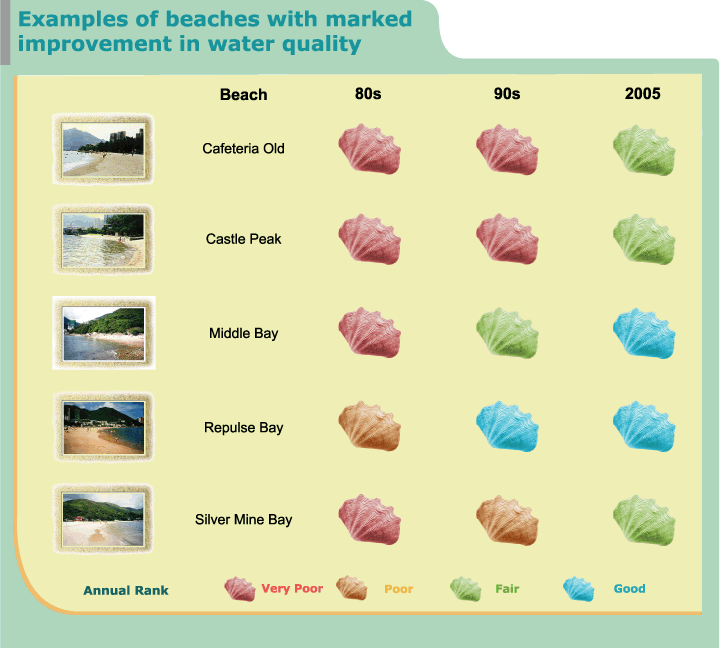
There is, unfortunately, still a small group of beaches which are WQO non-compliant, all of which are located in Tsuen Wan District. To a certain extent the water quality of these beaches is affected by the HATS discharge. The future holds promise here, though. With a view to opening the beaches again, the Government is pushing forward with the introduction of effluent disinfection. This development, part of HATS Stage 2A, is planned for commissioning at the Stonecutters Island Sewage Treatment Works in 2009, subject to acceptance by the community of the need for the full operating costs to be recovered from sewage charges.
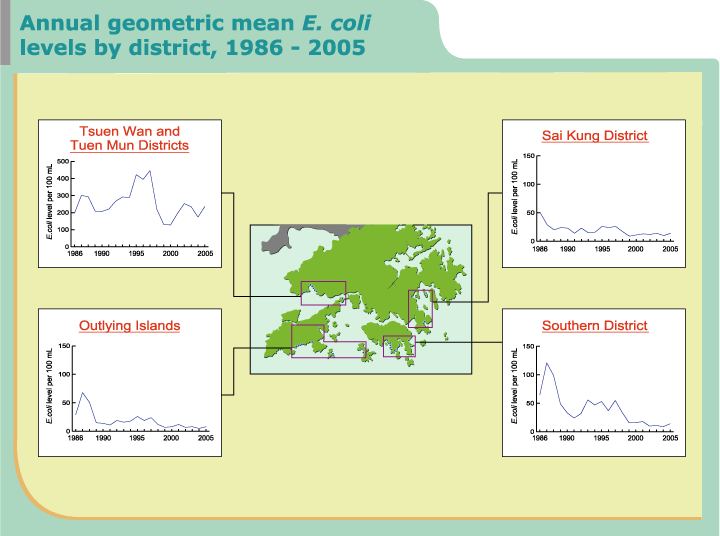
The chart above, which shows district E. coli levels (annual geometric
mean) over a twenty-year period, is an encouraging one. The drop in E.
coli levels has been particularly marked for Hong Kong South and, less
dramatically, for the beaches of Sai Kung and the Outlying Islands, which
had already achieved relatively good water quality by the early 90s.
The EPD is confident that what has been achieved at the once-polluted
beaches of Hong Kong South can, with time, also be achieved for Hong
Kong's western beaches.
In conclusion, Hong Kong swimmers have reaped the benefits of improvements
over the past twenty years that have significantly improved their opportunities
all round Hong Kong to fully enjoy the territory's beautiful beaches.
The EPD's rigorous sampling, testing and monitoring programme means that
today, beach users in Hong Kong can be confident about their health and
safety every time they go swimming. And the details of Hong Kong beaches
in 2005 also reinforce the story we have seen unfold over the last few
years: Hong Kong's water is getting better, and as a city we are successfully
reclaiming our wonderful beach resources for all to use.
 |