Welcome to the EIA e-learning platform. I will be happy to assist you to understand more about impact analysis in the EIA report.
Please select your question.
In this tutorial, you will be given chances to ask questions regarding impact analysis that are undertaken as part of the EIA process. Through your questions, you will learn more to understand the technical components of the EIA report and different methods or techniques used in the impact analysis.
Welcome to the EIA e-learning platform. I will be happy to assist you to understand more about impact analysis in the EIA report.
Please select your question.
Baseline information forms the foundation of an EIA, resembling piling of a building. A good baseline study enables potential impacts from a project to be predicted and evaluated. Where necessary, a baseline survey shall be carried out to determine the existing environmental conditions on the site. Let me give you some tips about the baseline data collection and survey for an EIA study.
For carrying out a baseline survey, both project proponents and consultants should possess first hand knowledge onA good planning is needed for baseline survey which might sometime be resource demanding.
Baseline surveys shall normally include the site of the project, its access, and any other areas likely to be impacted during construction and operation (or decommissioning).
The type and duration of baseline surveys shall be such that there will be adequate information taking account of natural variation to define the existing conditions.
Annex 13 of the Technical Memorandum on the EIA Process (EIAO-TM) delineate uses that are classified as noise sensitive uses.
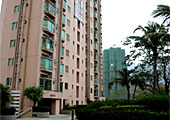
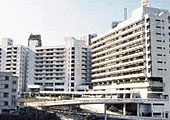
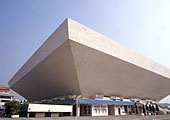
Some typical Noise Sensitive Receivers (NSR) are:*
| NSR | |
| Domestic premises & temporary housing |  ** ** |
| Hostel | ** |
| Hospital, clinic & nursery | ** |
| School, educational institution | ** |
* within 300m of the Study Area
**Relevant standards in the Technical Memorandum apply to the uses
rely on opened windows for ventilation only.
Annex 12 of the EIAO-TM sets out the definition of air sensitive receivers (ASRs). Some typical ASRs are summarized as follows*:
The aquatic system and beneficial uses sensitive to water pollution have been specified in Annex 14 of the EIAO-TM.
In general, these include:
Annex 16 of the EIAO-TM lists out the definition of "Recognized Sites of Conservation Importance", "Important Habitats Where an Ecological Assessment will be Necessary", and "Species of Conservation Importance".
There is also an EIAO Guidance Note No.7/2002 issued by EPD about the ecological baseline survey for ecological assessment.
Considerations of collecting ecological baseline information are:To obtain good results, ecological baseline survey should be carried out at the time of the year when target group is more active, conspicuous or easy to be identified.
Yes, certainly. Once the baseline conditions have been established, the next stage will be a detailed assessment undertaken to forecast the characteristics of the main potential impacts of the project and to determine their significance.
Remember, impact prediction can be a technical exercise. Different techniques ranging from simple qualitative description to advanced mathematical modeling can be used for impact predication. Let's see what you want to know more.
Annex 5 and Annex 13 of the EIAO-TM list down the criteria and guidelines respectively for noise assessment
In a nutshell, a generic approach in a noise assessment is in the sequence:EPD has produced an Educational Package on Environmental Noise and is available on the EPD website. Please click here to learn more about noise assessment
The assessment criteria and guidelines have been listed down in the EIAO TM Annexes 4 and 12. There are also guidelines issued by EPD about the assessment of air quality impacts using different models, they are:
These guidelines are available in the EPD website. Please click here.
In a nutshell, the generic approach in an air quality assessment follows the sequence below:Different types of air quality model would be used to assess the impacts from different sources. Please refer to the following table:
| Model | Application |
|---|---|
| FDM | Construction dust, fill bank, concrete batching plant |
| CALINE4 | Road traffic emission |
| ISCST3 | Stack, portal, odour, ventilation building |
| PATH | Cumulative regional assessment of different air pollution sources, especially for photochemical species such as ozone and nitrogen oxides |
| Wind Tunnel/CFD | Near to medium-field assessment for dispersion of air pollutants from air pollution sources in complex terrain |
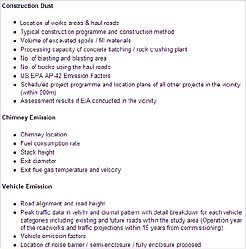
Typical Information required for air quality assessment (Modelling Input)
 |
| ⊕Zoom |
As stated in the EIAO-TM Annex 12, the presentation of assessment results should be assisted by a summary table and contour plots of pollution concentration. And the assessment results should be compared with the specified air quality standards where appropriate.
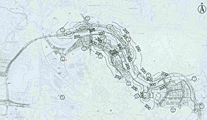 |
| Hourly TSP Concentration |
| ⊕Zoom |
The assessment criteria and guideline have been listed down in the EIAO-TM Annexes 6 and 14.
The generic approach in water quality assessment follows the sequence below:Quantifying Water Quality Impact
There are different models for quantifying water quality impacts:Some Tips......
When to Use Water Quality Modelling?Annexes 8 and 16 of the EIAO-TM set down the important habitats, criteria for evaluating ecological impact and guidelines for the assessments.
There are also guidance notes issued by EPD (EIAO GN 6/2002 and GN 7/2002) about ecological assessment.
Types of Ecological Impacts
Impacts due to a project are generally include:
Direct ImpactsOK. Mitigation is certainly a creative and practical part of the EIA process. As the rule of thumb, the mitigation measures are identified to avoid, minimize or remedy environmental impacts. What impact mitigation measures would you like to discuss more?
Annex 13 of the EIAO TM puts up a list of mitigation measures in the event of noise exceedance are predicted.
Please click here for the Educational Package on Environmental Noise to learn more about noise mitigation.
Typical Construction Dust Control Measures
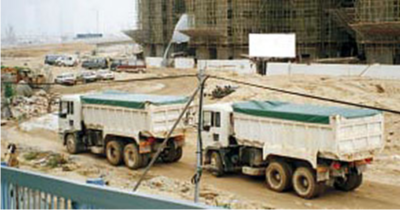
Covering dusty load with tarpaulin sheet
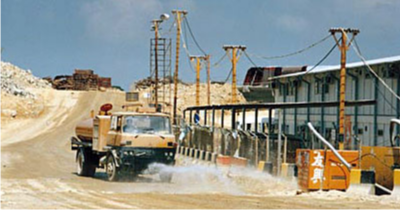
Watering on haul road
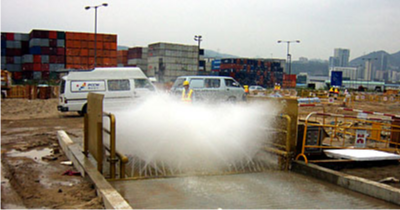
Automatic wheel washing facility
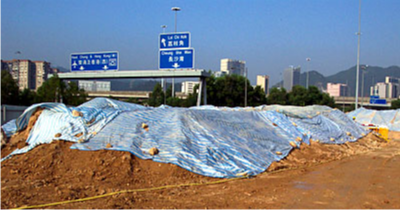
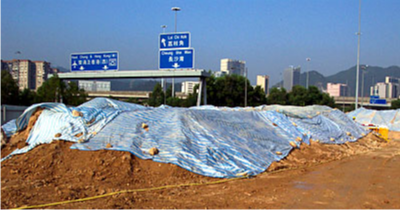
Stockpile covering by tarpaulin sheet
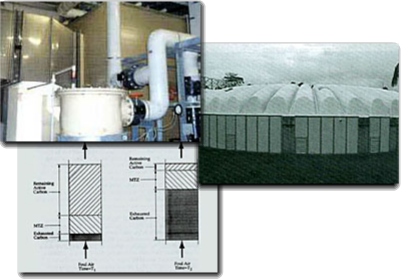
Compaction and hydroseeding
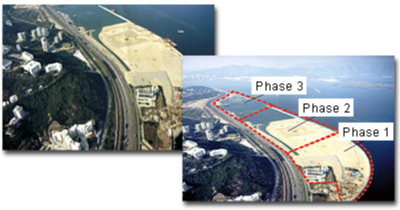
Reclamation phasing to minimise suspended sediments
Silt Curtain installed for and during dredging
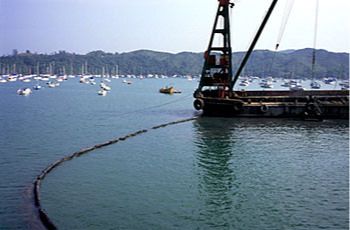
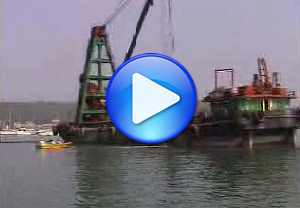
Dredging in Motion
The general policy for mitigating impacts on important and sensitive ecological resources, as per Annex 16 of the EIAO-TM, are in the following descending order of priority:
From an ecological point of view, mitigation measures for ecological impact shall preferably be carried out on-site and well in advance of the works, rather than off-site and after the completion of works.
You are welcome. I hope you have a better understanding of your EIA report.