



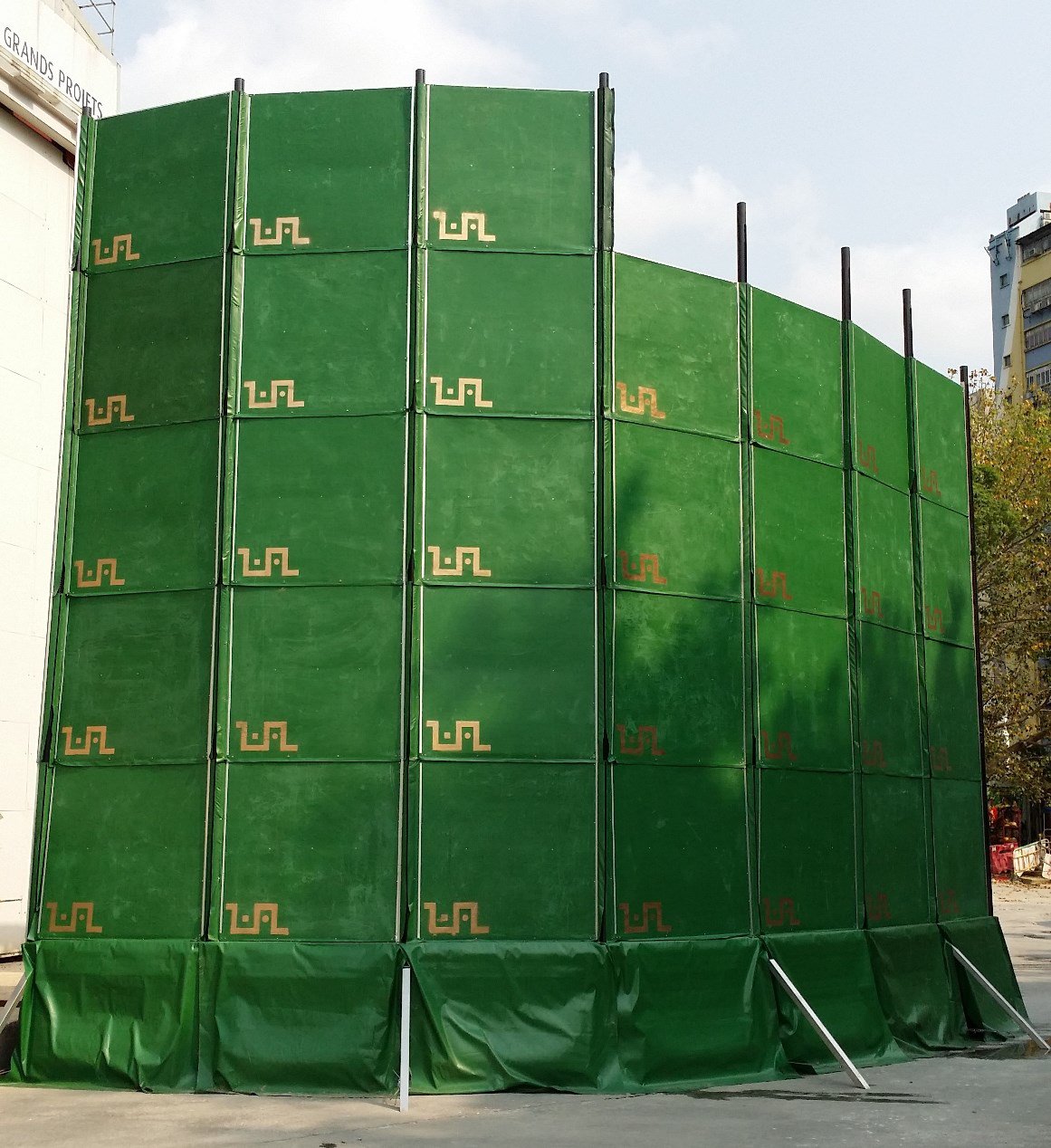
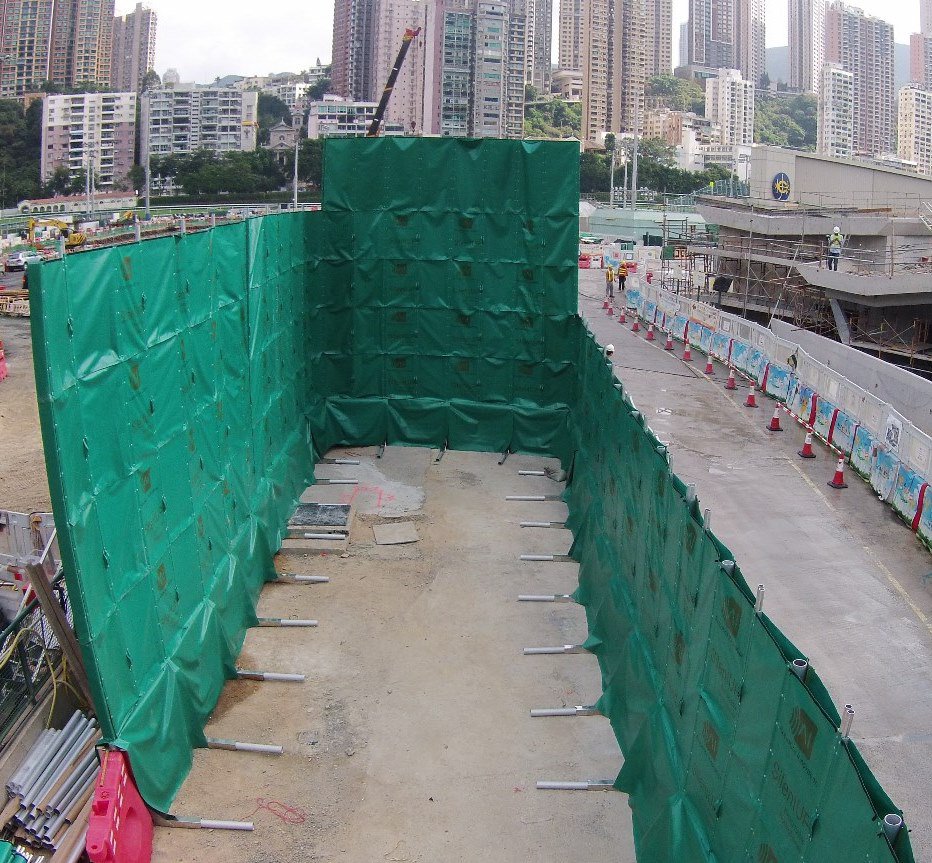
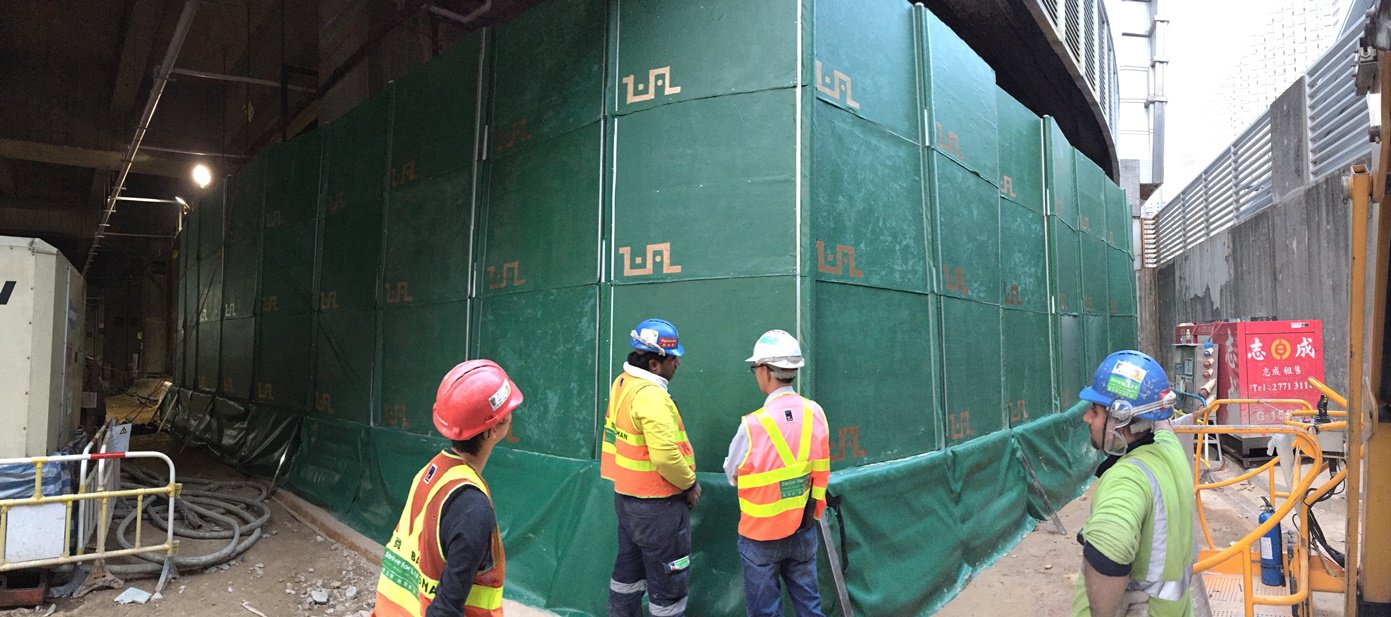
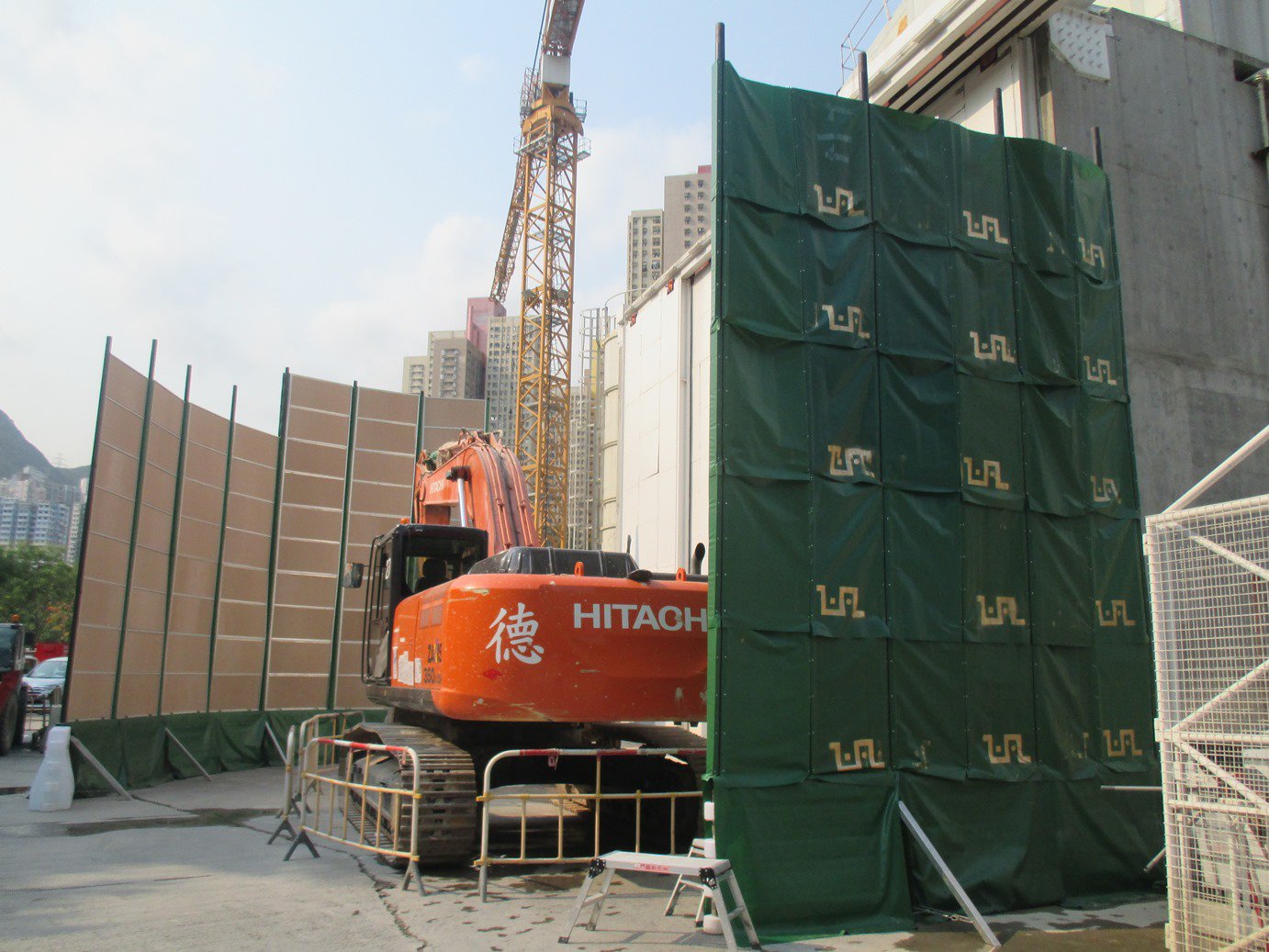
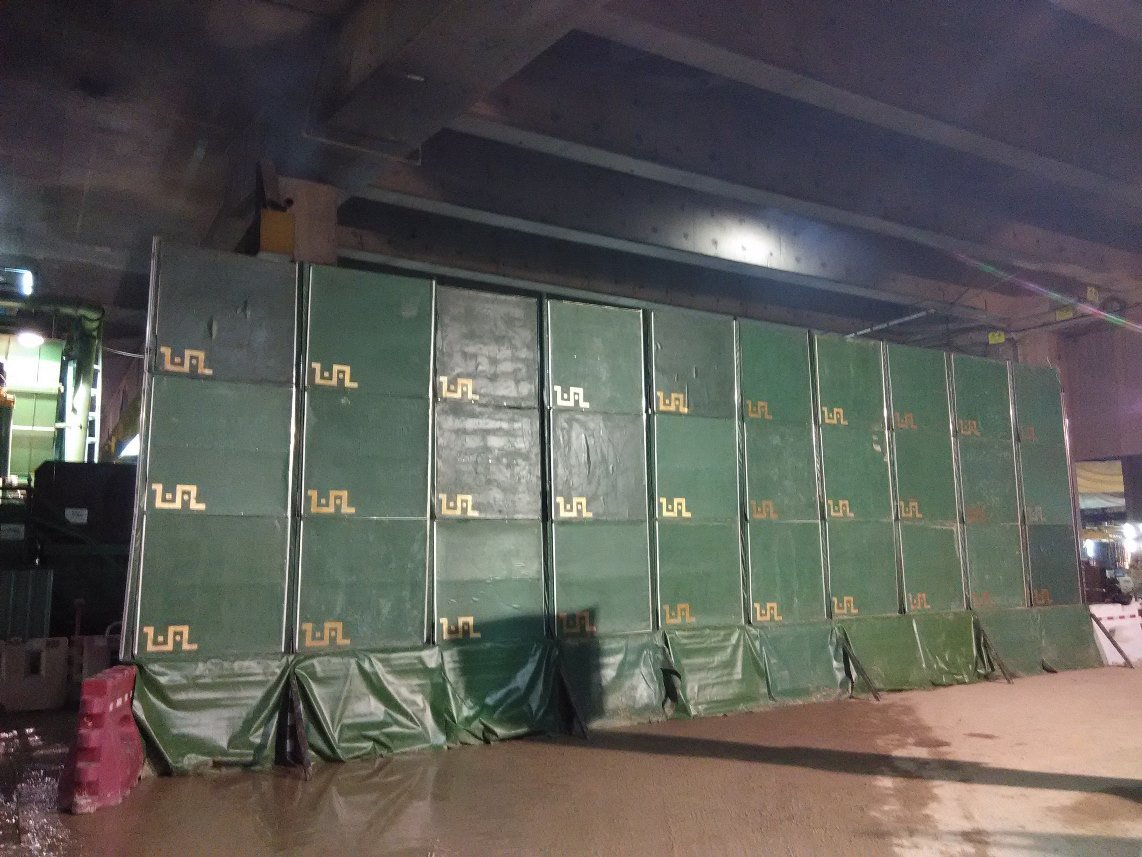
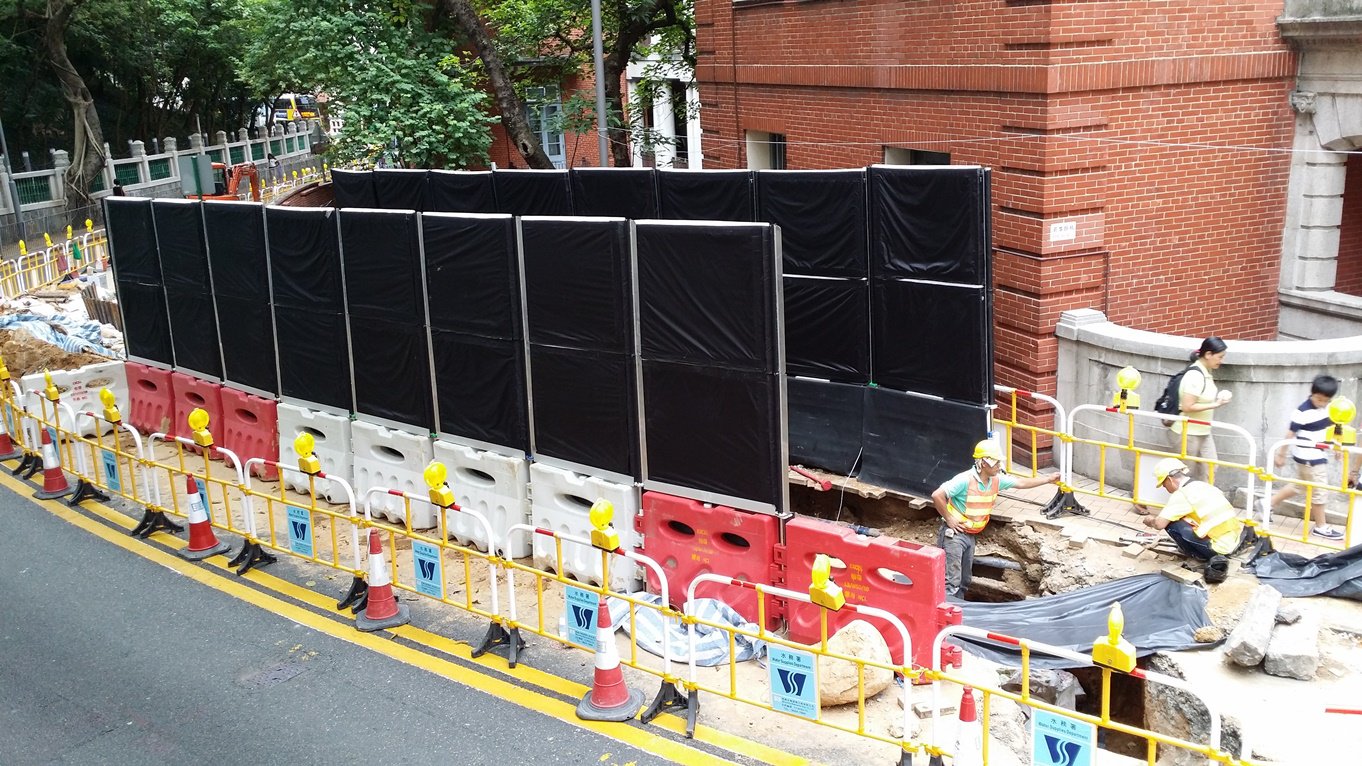
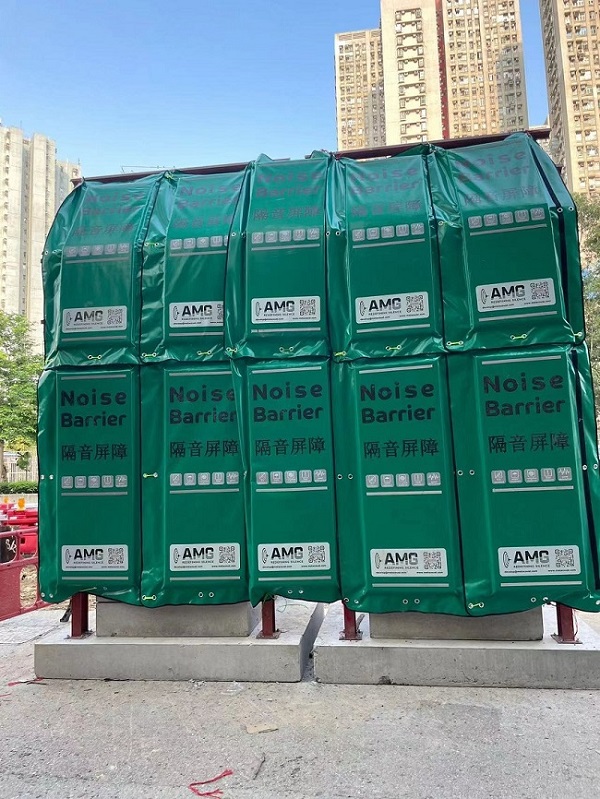
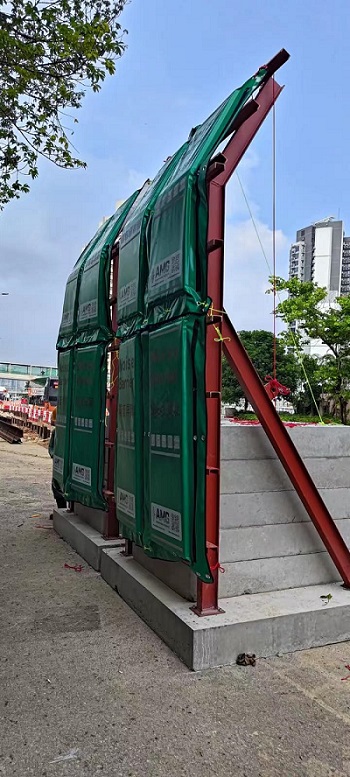
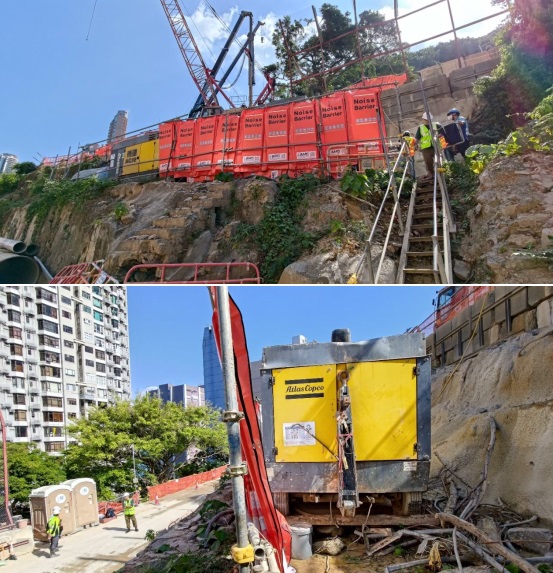
An effective way of reducing noise is to install a purpose-built barrier between the noisy equipment and the noise sensitive receiver. These can either be fabricated on site from readily available building materials or can be constructed from commercially available panels which are lined with sound absorbing materials to achieve the maximum shielding effect. For maximum effectiveness, a barrier should be located as close as possible to either the noise source, and should be built so as to shield totally the noise source. Gaps and openings at joints in the barrier material should be avoided. Barrier material of surface mass in excess of 7kg/m2 is desirable to achieve the maximum screening effect. The length of a straight vertical barrier should generally be at least five times greater than its height and minimum height of a barrier should be such that no part of the noise source will be visible from the noise sensitive receiver being protected. An overall reduction of between 5 to 10 dB(A) can be achieved by these means.
"Acoustic metamaterial" is a branch of "metamaterial" that has emerged in applied physics research in recent decades. Unlike conventional materials, the acoustic properties for noise reduction are derived from the specially designed structure and geometries that exhibit resonance characteristics. It can be tailored to create unique configurations that match the targeted frequency bands of sound waves. The surface mass density of acoustic metamaterials is lighter than that of the traditional acoustic barrier systems, which lessens physical strain on workers during handling and improves construction safety. Metamaterial can also be produced from recycled plastics, contributing to waste recycling, circular economy, and environmental protection. This advanced technology has been applied in different construction activities like road works, nighttime railway maintenance works, concreting and associated works etc.
Courtesy of Wilson Acoustic Limited
Courtesy of Acoustic Metamaterials Group Limited